

Britain’s best-selling vehicle so far in 2026 is the Ford Puma. Visit the south coast in holiday season, though, and you’d swear the Volkswagen California occupies that top spot. Whether trapped in tourist traffic, parked beside the beach or looking cool on a campsite, these things are everywhere. Volkswagen campers
 Tim Pitt



Friday 24 July 2026 4:23 pm | Updated: Friday 24 July 2026 4:25 pm
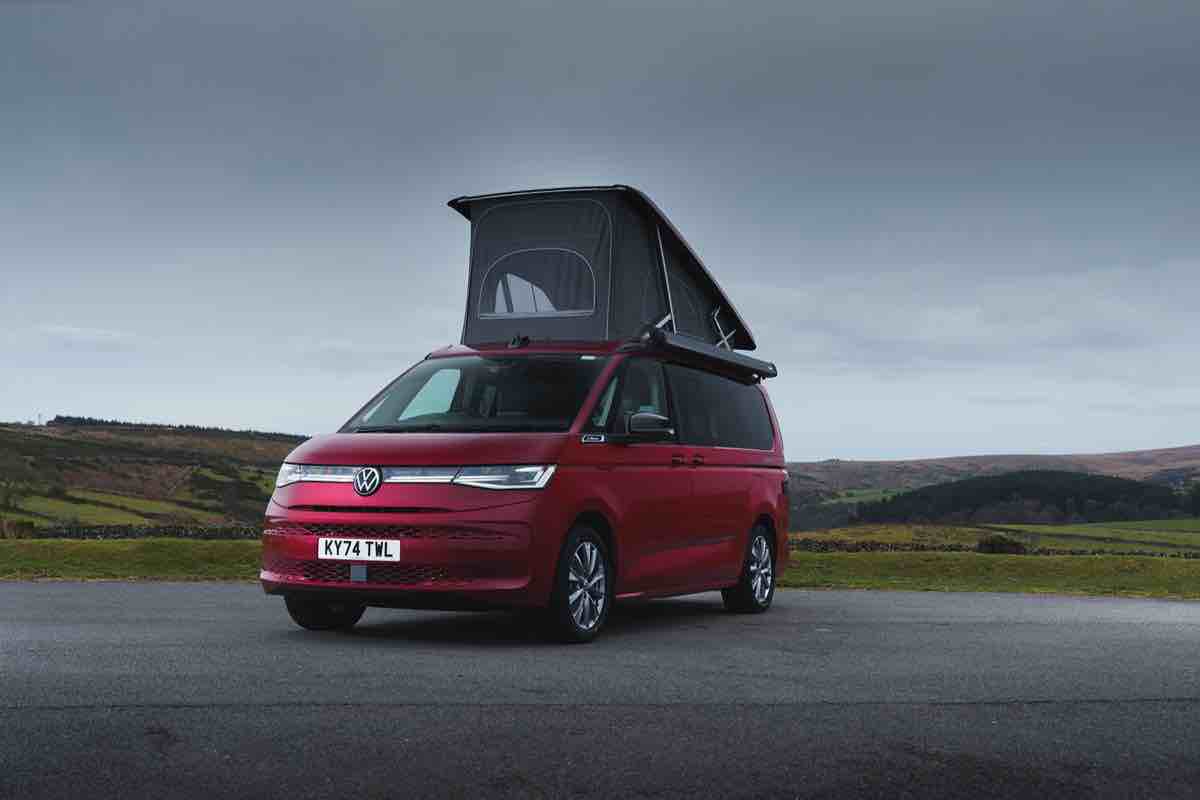
Britain’s best-selling vehicle so far in 2026 is the Ford Puma. Visit the south coast in holiday season, though, and you’d swear the Volkswagen California occupies that top spot. Whether trapped in tourist traffic, parked beside the beach or looking cool on a campsite, these things are everywhere.
Volkswagen campers have enjoyed cult status since the air-cooled, flower-powered T1 originals, while the California name dates back to 1988. This latest T7 model is based on the VW Multivan people carrier and costs from £64,432. There is also a larger Grand California, priced from £85,408, which is a close relative of the VW Transporter van.
Sadly, Motoring Research’s budget fell short of bankrolling my big idea: a road-trip to California in a California. So, along with seemingly every other VW camper in the British Isles, I headed south on the M3 to the New Forest, then Bournemouth and beyond. How would the T7 stack up as holiday transport, and a home-from-home for a family of four? We had a week to find out.
Beach Camper, Coast or Ocean?
California buyers get a choice of three engines: 150hp TDI diesel, 204hp TSI petrol and 245hp plug-in hybrid. All have four-wheel drive and make use of Volkswagen’s twin-clutch DSG automatic gearbox. There is no manual option.
We tested the PHEV, which combines a 1.5-litre petrol engine with a 19.7kWh battery. A lengthy electric-only range of 52.2 miles means official CO2 emissions of just 70g/km – with correspondingly cheap first-year road tax (VED).
#mc_embed_signup { background: #fff; clear: left; font: 14px Helvetica, Arial,sans-serif; width: 100%; max-width: 600px; margin: 20px 0; } #mc-embedded-subscribe-form { margin: 20px 0 !important; } .newsletter-form-flex { display: flex; gap: 0; align-items: center; margin-top: -10px; } .newsletter-form-flex input[type=”email”] { flex: 1; padding: 2px 10px; border: 1px solid rgb(18, 22, 23) !important; border-radius: 12px 0 0 12px !important; } .newsletter-form-flex input[type=”submit”] { padding: 4px 10px !important; margin: 0 !important; background-color: rgb(18, 22, 23) !important; color: rgb(255, 255, 255) !important; border: 1px solid rgb(18, 22, 23) !important; border-radius: 0 12px 12px 0 !important; } .newsletter-banner-content { margin-bottom: 15px; } .newsletter-banner-content h2 { margin: 0 0 10px 0; font-size: 18px; font-weight: 600; } .newsletter-banner-content p { margin: 0 0 10px 0; line-height: 1.5; } .newsletter-banner-content ul, .newsletter-banner-content ol { margin: 0 0 10px 20px; } .newsletter-banner-content a { color: #0073aa; text-decoration: none; } .newsletter-banner-content a:hover { text-decoration: underline; } .newsletter-banner-content img { max-width: 100%; height: auto; margin: 10px 0; } #mc_embed_signup #mce-success-response { color: #0356a5; display: none; margin: 0 0 10px; width: 100%; } #mc_embed_signup div#mce-responses { float: left; top: -1.4em; padding: 0; overflow: hidden; width: 100%; margin: 0; clear: both; }
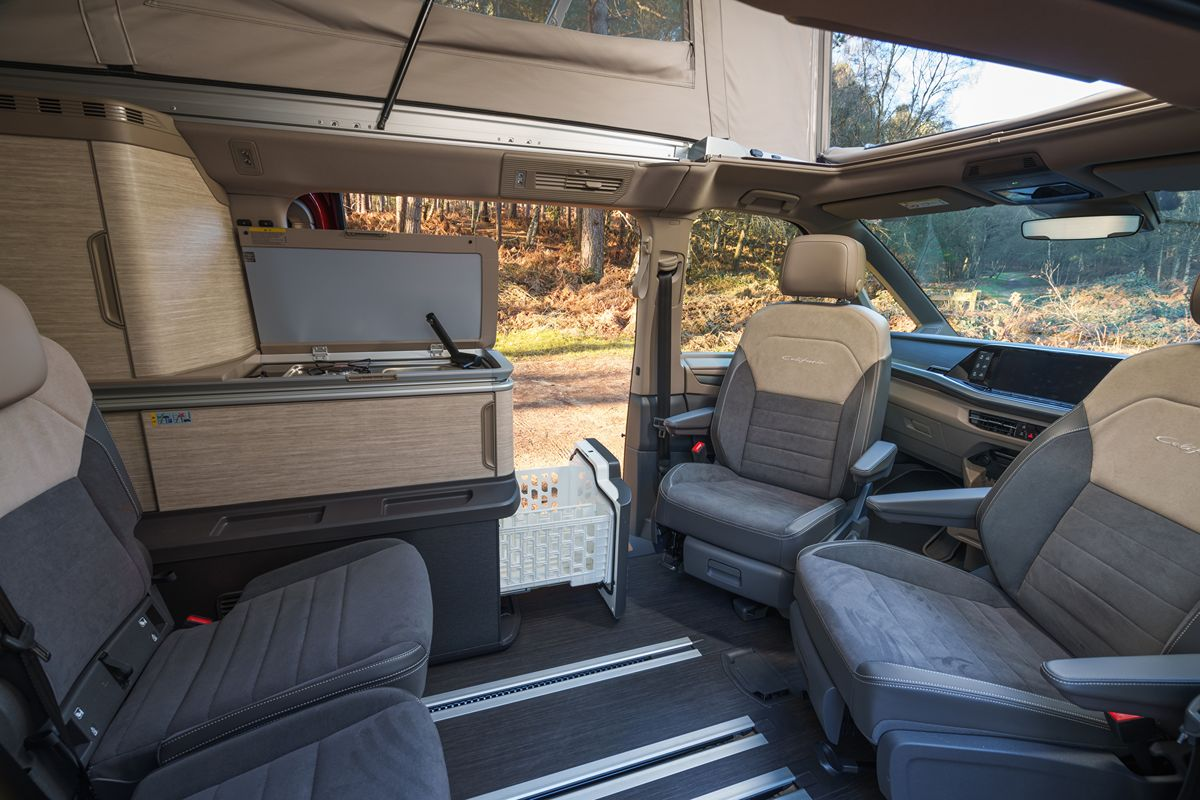
Every T7 California comes with a pop-up roof and can sleep four adults in a two-up, two-down arrangement. The entry-level Beach Camper has five seats and a simple, slide-out gas hob, while the mid-range Coast only seats four, but offers a more comprehensive kitchen, including robust cupboards, a basin and a small built-in fridge.
We tested the range-topping California Ocean, which has the same interior layout as the Coast, but adds luxuries such as an electric-opening roof, LED matrix headlights, heated seats and ambient interior lighting. Being the envy of the campsite doesn’t come cheap, mind; this example tipped the scales at £91,102.
Steady as she goes
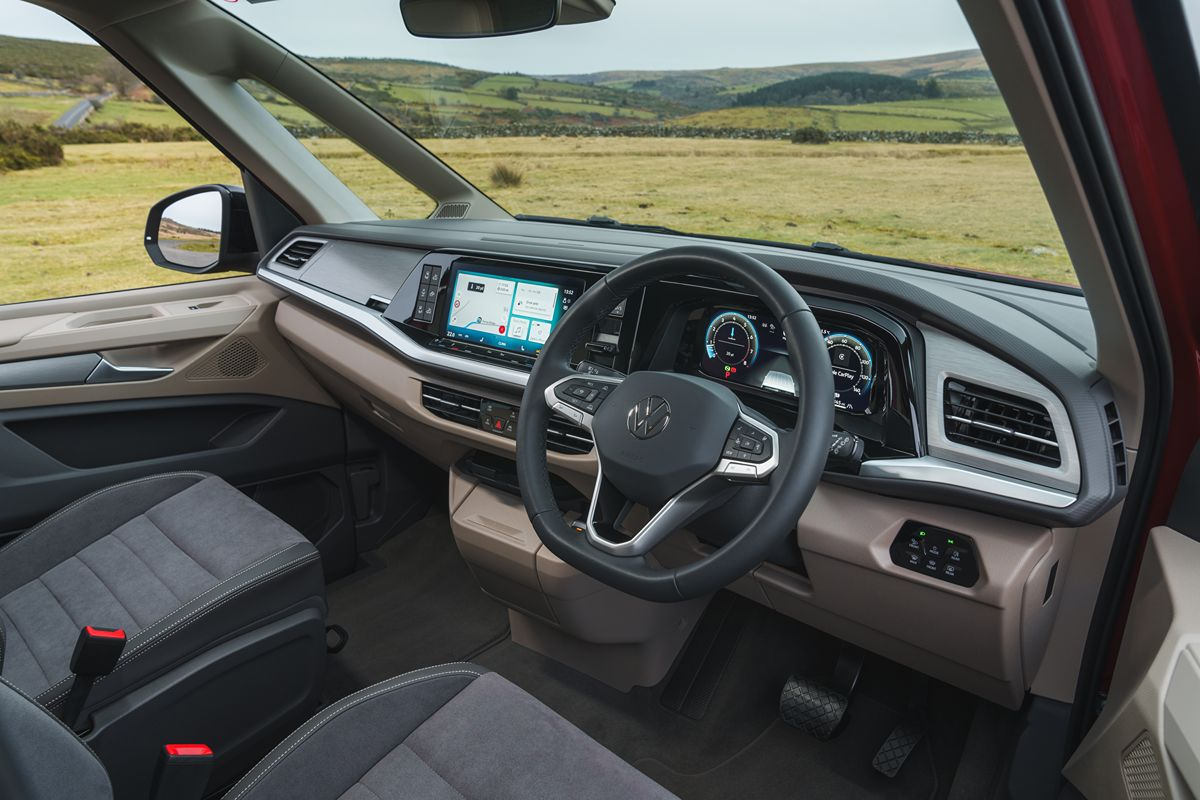
Being based on the Multivan, rather than an actual van like the previous T6, might seem like a downgrade for this T7 model. However, while its driving position isn’t as lofty as some might like, the California’s refined road manners are definitely more car-like than commercial.
The hybrid battery bolsters the engine’s pulling power – a total of 184lb ft from 1,500rpm – so progress feels acceptably brisk, even when loaded up with (literally) the kitchen sink. The steering is light, the DSG ’box swaps cogs smoothly and there are sensors and a reversing camera to help when parking.
You are always aware this is a relatively large and heavy vehicle, but its flat sides make it easier to place on the road and you’ll naturally find yourself travelling at a more relaxed pace. Who wants to drive a 2,693kg house-on-wheels like a hot hatchback, after all? The contents of your cupboards will soon be in disarray if you do.
Carry on camping
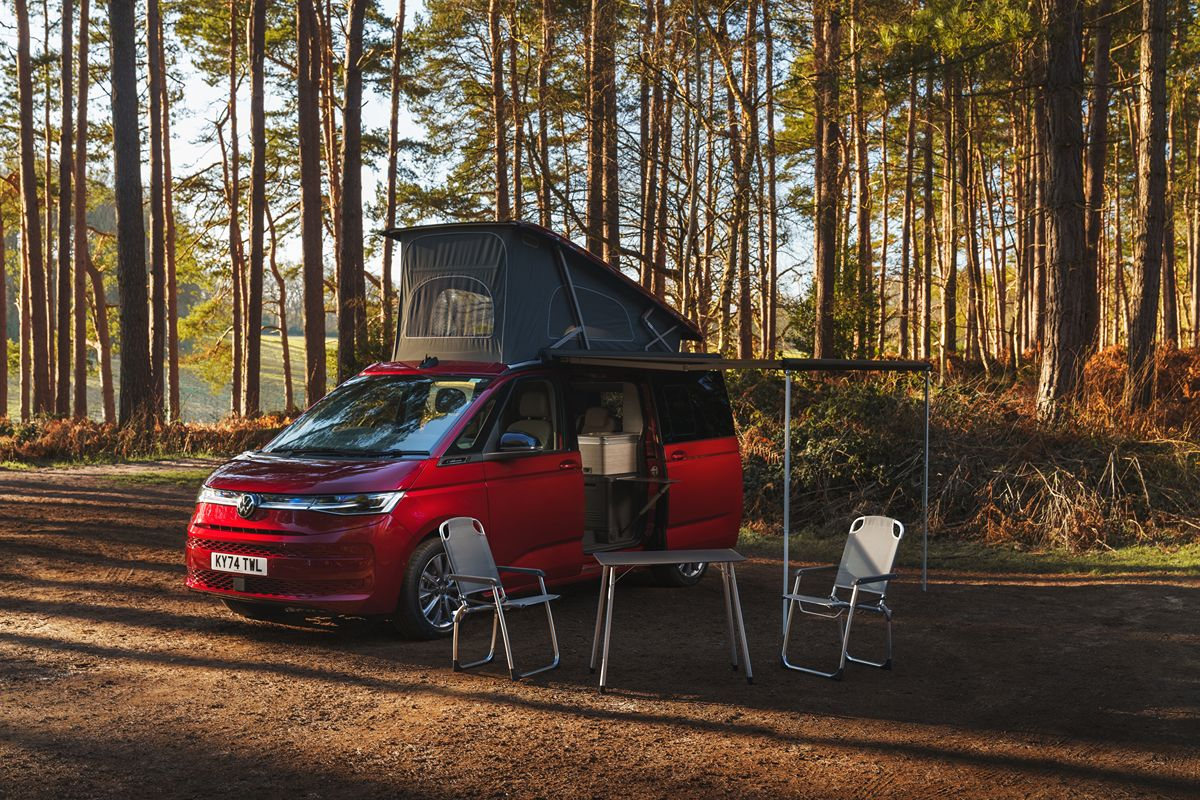
Park up and, after fielding questions from inquisitive T5 and T6 owners, you can plug into the campsite power supply (note – this only operates the interior lights and appliances, it won’t recharge the hybrid battery), then manually wind out the extendable awning and elevate the roof.
Read more No Wales? No problem: Why I travelled to the World Cup even though my team weren’t there
In the California Ocean, popping the top requires the touch of a button, whereby a tent-like structure cantilevers open to reveal a double bed overhead. Clambering up there demands a certain athleticism, and there isn’t a lot of space to stretch out. If you’re not intimately acquainted with your sleeping partner, you might be by the morning.
Still, its sprung mattress is more comfortable than being inside any two-person tent, and the VW’s touchscreen-controlled central heating system should keep it warmer, too. The bed downstairs is narrower due to the kitchen and side cabinets, but our two children (aged 15 and 12) slotted in side-by-side. The limited space means you need to use the available storage and tidy things away – not a noted strength of the Pitt siblings – but do so and the California feels cosy rather than cramped.
Not so Grand designs
Three years ago, we all undertook a similar trip in a (T6 van-based) Volkswagen Grand California. It had additional features, such as a dining table and a cubicle-like wet room with a toilet and shower. Yet despite being a smaller and simpler proposition, the T7 worked out just as well.
For starters, this model has a sliding door on both sides, which makes access easier throughout the day. Its lower roofline also means you can drive into supermarkets and coastal car parks with height barriers.
The slot-shaped overhead bed in the Grand version is also pretty claustrophobic, with no chance of even small children being able to sit upright. We did miss the table when it rained, but generally preferred to dine outside, using the fold-out camping chairs stored in the tailgate.
Other niceties inside the California include front seats that rotate to create a lounge area, plus a full complement of power points and USB sockets – including a USB-C in the upstairs ‘bedroom’.
Granted, if you venture off the beaten track, the Grand’s extra versatility would be a bonus. But for those who prefer campsites with electricity, showers and toilets – which is about as ‘wild’ as Mrs Pitt is willing to be – the California seems a better bet. It’s more usable for day trips and equally comfortable at night. There’s no trade-off in the quality of fittings and equipment compared to its pricier cousin, either.
Verdict: Volkswagen California Ocean
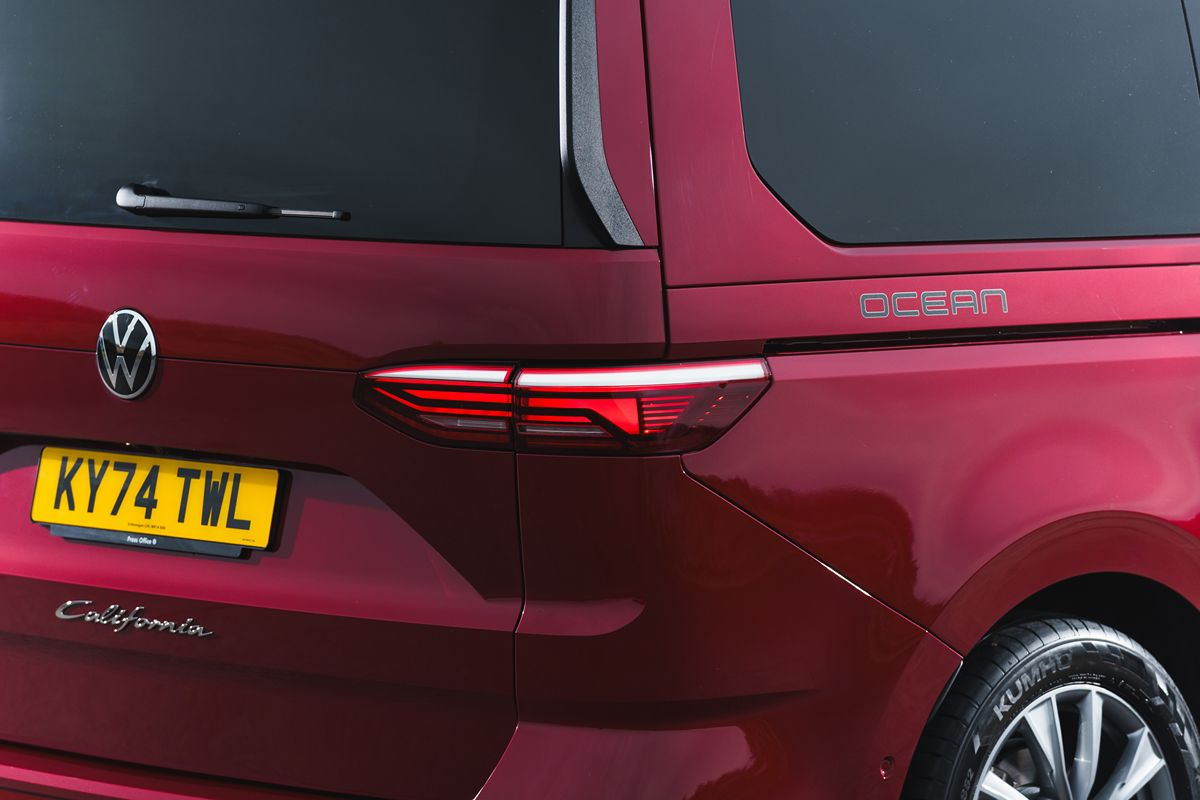
Like having a caravan, but infinitely cooler, owning a California would undoubtedly encourage me to be more spontaneous, take longer holidays and explore this green and pleasant land. I feel inspired to leave the sofa just thinking about it.
There are potentially cheaper camper van conversions from the likes of Ford and Citroen. And you could certainly stay in a lot of hotels for £91,102. Nonetheless, the California’s strong image and accordingly low depreciation mean running one might prove more affordable than you expected. Particularly if it can double up as your family car.
There’s also a sense of camaraderie about driving a Volkswagen camper – something reserved solely for cult cars like classic Land Rovers, the original Mini and this car’s distant relative, the Volkswagen Beetle. Fellow owners want to peer inside, share stories and show you what modifications they’ve made. You become part of an unofficial California club. Just don’t expect to stand out from the crowd, especially not on the south coast during the summer.
• Tim Pitt writes for Motoring Research
Read more Luxfer Announces Date of Second Quarter 2026 Earnings Conference Call
Similarly tagged content: Sections Categories People & Organisations