London-based Verkko Robotics, a DeepTech European AI research lab, has unveiled VOLTAIC, an AI system designed to keep learning over time, retain what it has learned, and operate using far less energy and computing power than today’s leading multimodal models. If its early performance claims hold true, the technology could
 Ethan Conroy



London-based Verkko Robotics, a DeepTech European AI research lab, has unveiled VOLTAIC, an AI system designed to keep learning over time, retain what it has learned, and operate using far less energy and computing power than today’s leading multimodal models.
If its early performance claims hold true, the technology could challenge the economics of the current frontier AI industry and help lay the foundation for AI sovereignty.
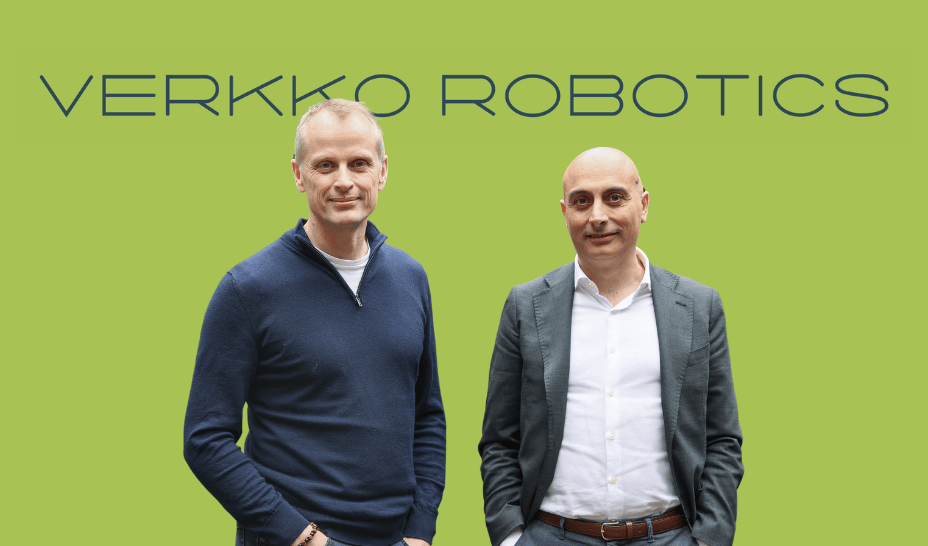
“The AI industry has been locked in an arms race of bigger models. With VOLTAIC, we aim to break that paradigm,” says Stephen McCreath, co-founder and CEO of Verkko Robotics. “As a consequence of what we are doing, in the future we will be less reliant on large data centres. This is the most exciting time in development, both within Verkko Robotics Ltd and artificial intelligence as we move towards continuous learning.”
A new approach to AI efficiency
VOLTAIC comes at a moment of intense scrutiny of frontier AI’s resource demands and reliance on external and large US AI providers. It is engineered for extreme energy efficiency, 98% less energy than a traditional LLM, with its architecture enforcing sparse networks, meaning most of the neurons, and therefore most computational pathways, remain inactive at any given moment.
This design lowers power consumption, making it well suited to deployment on private hardware.
In independent continual learning benchmarks, VOLTAIC achieved a catastrophic forgetting rate of just ~1.2% on Core50 and 77% accuracy on Split ImageNet-1K – 14 points above the previous record set by other systems.
These results place VOLTAIC at the top of its class while delivering performance at a fraction of the energy cost of conventional transformer-based systems.
Verkko’s internal benchmarks place VOLTAIC’s cost at 1/50th per query, against a comparable query on leading LLMs. While currently in active development ahead of its Q4 2026 release, these initial validation metrics signal a massive shift away from heavy transformer models.
Solving the catastrophic “forgetting problem”
Alongside McCreath is Giancarlo Cobino, Chief Scientist and co-founder, an artificial intelligence researcher with more than 20 years of experience spanning neuroscience-inspired computing and enterprise AI.
“By shifting from dense, brute-force computation to sparse, adaptive threshold dynamics, we have built an architecture that learns continuously in real time and resists catastrophic forgetting. This efficiency allows the system to adapt to personal behaviour and individual user habits locally, without massive power demands,” added Cobino.
Commenting on the launch, Dr. Fabio Vallone, a PhD physicist and researcher at the University of Pisa’s Department of Excellence in Robotics & AI at Scuola Superiore Sant’Anna, one of the world’s leading institutes for advanced robotics and artificial intelligence, noted: “Voltaic represents a significant breakthrough in continual learning by directly addressing the challenge of catastrophic forgetting, ushering in a paradigm shift in how we train adaptive systems,
“By introducing novel methodologies, the Verkko Robotics team is unlocking previously unexplored avenues for practical applications and redefining human-AI interaction. This development has the potential to fundamentally reshape our relationship with intelligent machines, and its long-term implications are incredibly promising.”
A foundation for European AI sovereignty
By default, queries sent to most US-based AI providers involve a transfer of data outside EEA jurisdiction, a dependency that contractual safeguards can manage but not eliminate.
As recently as 3 June, the European Commission unveiled its European Technological Sovereignty Package in which Commission President Ursula von der Leyen stated: “We cannot afford to depend on others for the technologies that keep our hospitals running, our energy grids stable and our services secure.”
By reducing dependency on massive cloud infrastructure, VOLTAIC is designed as a foundation for sovereign AI. The prevailing approach to AI so far has been built on transformer architecture, requiring billions of euros to build new-generation models – an exercise that only the largest tech companies can afford.
VOLTAIC is built on a different architecture entirely: Hierarchical Synaptic Consolidation (HSC), a proprietary biologically inspired design that draws on how the human brain retains and consolidates memory. The system retains prior knowledge as it learns, so that knowledge compounds rather than degrades. Where transformer models forget, VOLTAIC remembers.
The technology is aimed at consumers and large enterprises, where institutional knowledge is often siloed across disconnected systems and dependence on external AI providers raises questions around sovereignty and control.
In these environments, particularly in regulated sectors such as finance, legal services and aerospace, VOLTAIC’s continuous memory is designed to deliver the greatest value. Unlike conventional models that must be retrained to incorporate new knowledge, VOLTAIC learns in real time, compounding institutional intelligence rather than discarding it.