


Copenhagen-based DeepTech startup Acodyne has raised €2.5 million in pre-Seed funding to scale its unmanned cargo aircraft for heavy-lift logistics in defence, offshore and remote operations. The round is jointly led by Swedish defence VC Gungnir Capital and Danish PSV Hafnium with participation from EIFO, SAP9 Group and GreenUP IV
 David Cendon Garcia



Copenhagen-based DeepTech startup Acodyne has raised €2.5 million in pre-Seed funding to scale its unmanned cargo aircraft for heavy-lift logistics in defence, offshore and remote operations.
The round is jointly led by Swedish defence VC Gungnir Capital and Danish PSV Hafnium with participation from EIFO, SAP9 Group and GreenUP IV Invest.
“This round gives us the runway to take Acodyne from validated concept to flight-tested platform, and to do it alongside investors who understand both the operational reality of defence and offshore logistics and the technical demands of building heavy-lift unmanned aircraft. The cross-border setup with Gungnir, PSV Hafnium and EIFO is a strong signal that European capital is willing to back the hardware bets needed for true logistics resilience,” says Jasmina Pless, co-founder and CCO, Acodyne.
“Acodyne is a fundamentally new take on unmanned military logistics: jet-class speed, helicopter-class payload, full ground-to-air autonomy, all-electric. It collapses one of the most expensive line items in modern operations, manned helicopter logistics, into a platform that needs no crew in the threat envelope. NATO needs resilient, scalable resupply that works.
“This is exactly the kind of operationally driven DefenceTech Gungnir Capital was built to back: technical teams solving real warfighter problems with hardware engineered to ship,” adds Max Villman, Managing Partner, Gungnir Capital.
Founded in 2023, Acodyne is an aerospace company developing autonomous eVTOL cargo aircraft for high-speed, heavy-lift logistics. The company combines proprietary ducted-fan propulsion with an AI-driven autonomy stack to enable efficient delivery of critical goods in defence, offshore and remote environments.
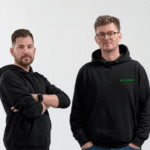
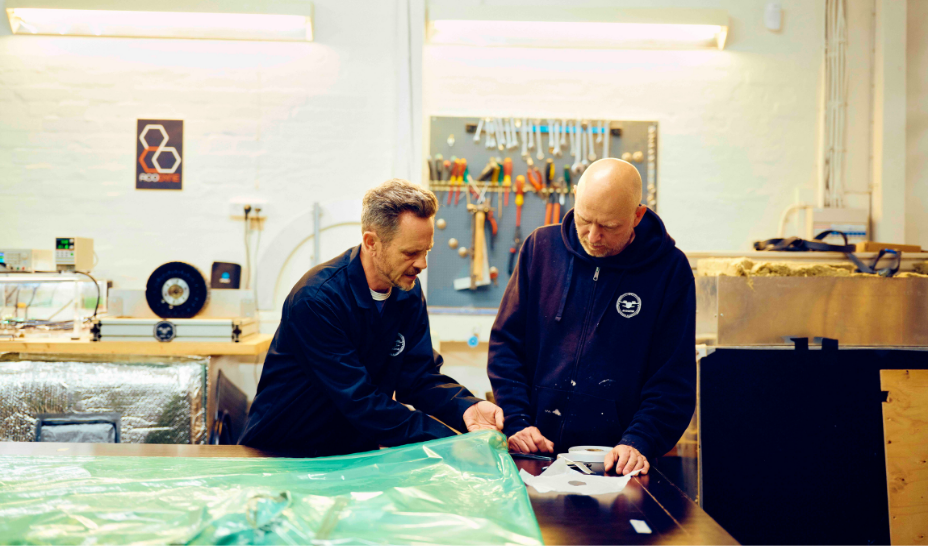
Acodyne’s four co-founders bring backgrounds from the Danish Ministry of Defence, Scandinavian Airlines, Cobham Aerospace Communications and DTU Space.
CEO Mads Schnack has worked on counter-drone systems and JTAC at the Danish Ministry of Defence. CTO Claes Nicolaisen is a helicopter and fixed-wing pilot with 25 years in aviation. Chief Electronic Engineer Martin Arndt brings 25 years in aerospace communications and aircraft systems certification. CCO Jasmina Pless is a former economic diplomat who supported DeepTech companies in Silicon Valley.
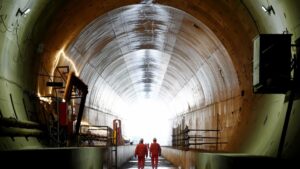
The company outlines that in defence, resupply still relies on either slow land transportation or helicopter missions that expose personnel and aircraft to threat. In offshore operations, a single missing component can halt production at hundreds of thousands of euros per day, and a helicopter is typically the only way to deliver it on time.
In remote regions such as Greenland, where towns are not connected by roads, critical supplies can take days to arrive.
Acodyne develops unmanned cargo aircraft for the most time-critical heavy-lift missions, combining vertical take-off and landing with fixed-wing flight at jet speeds. The platform is all-electric, modular and built to deliver payloads directly to forward drop-off points where helicopters are today the only fast option.
Autonomy is handled by eTHOR, an AI flight stack developed in collaboration with DTU Compute.
The company is currently developing its first model (the E100), with initial flight tests planned before the end of 2026. The pre-Seed funding supports prototype development and flight testing in real mission environments, while laying the groundwork for scaling toward commercial operations.
“We backed Acodyne early, and it was their engineering progress, including independent third-party validation, that convinced us to help bring Gungnir and EIFO into the round. This funding takes Acodyne from validated concept to pre-production prototype, and toward an aerial logistics network for defence, infrastructure and remote operations,” says Marianne Hyltoft, Managing Partner, PSV Hafnium
Acodyne says EU initiatives such as U-space are paving the way for unmanned aircraft to operate in regulated corridors across rural and inter-city routes in the future.
In parallel, NATO and the push for European defence-industrial autonomy are driving public and private demand for unmanned platforms. Together with rapid advances in AI and battery technology, that opens unmanned heavy-lift logistics as a new market category, with applications well beyond defence.