Pixel-Flo, a University of Sheffield spin-out developing a process for enabling scaled-up microLED display manufacturing, has raised €6.1 million (£5.25 million) in Seed funding to support its transition from laboratory development towards industrial scale-up. The round was led by Northern Gritstone with additional investment from SCVC, the Parkwalk Northern Universities
 Rahul Raj



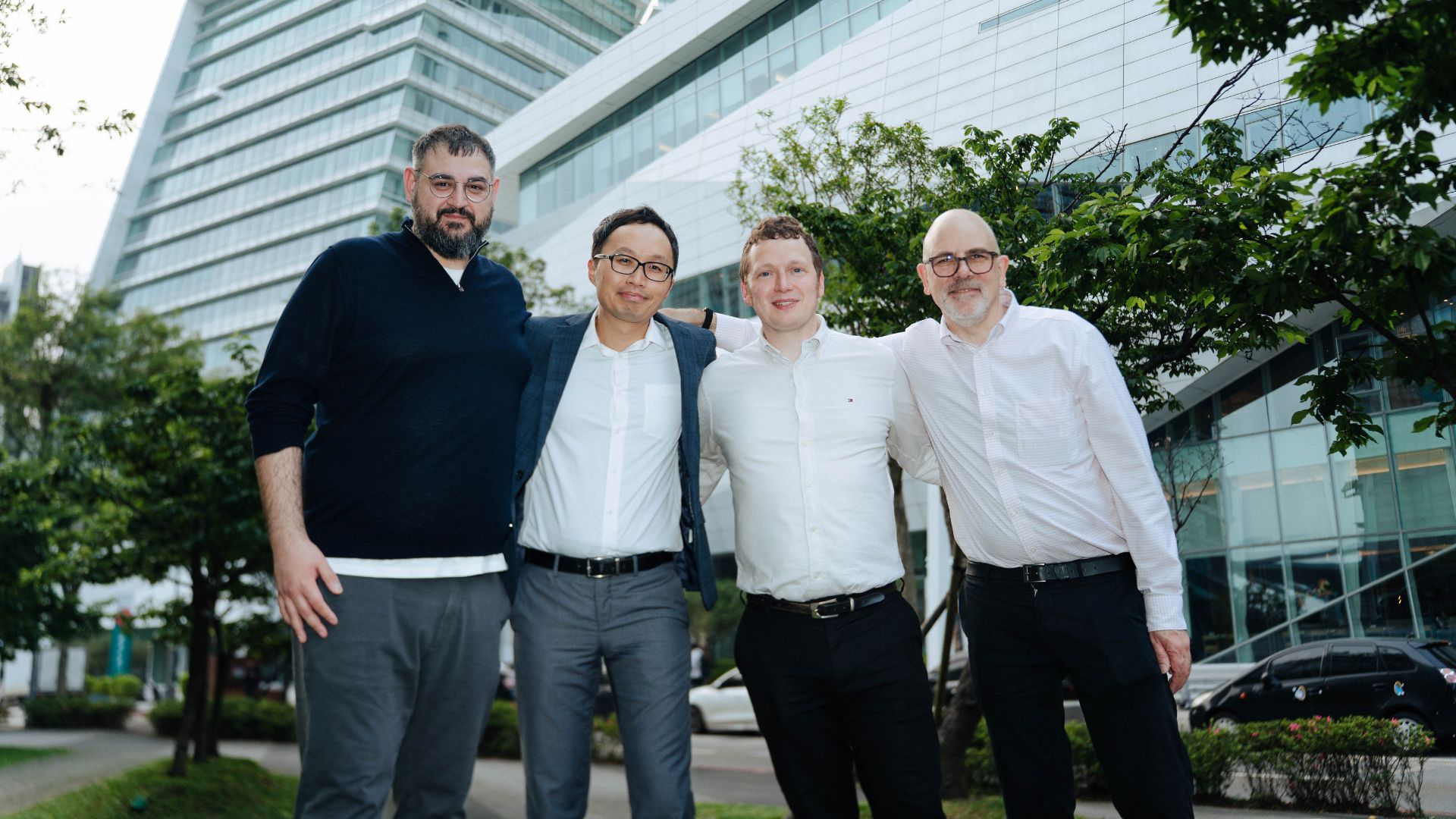
Pixel-Flo, a University of Sheffield spin-out developing a process for enabling scaled-up microLED display manufacturing, has raised €6.1 million (£5.25 million) in Seed funding to support its transition from laboratory development towards industrial scale-up.
The round was led by Northern Gritstone with additional investment from SCVC, the Parkwalk Northern Universities Venture Fund, and German investment firm HTGF.
Rick Smith, CEO and co-founder of Pixel-Flo, said, “This investment allows us to expand our team and demonstrate our unique technology on a commercial coating system, enabling partnership and evaluation by display manufacturing partners. We are proud to have a fantastic international consortium of complementary investors led by Northern Gritstone supporting our international ambitions to enable huge new market opportunities for microLED.”
Founded in 2025 by Dr. Smith, Dr. Suneal Ghataora and Simon Jones, Pixel-Flo addresses a critical bottleneck in microLED display manufacturing with its proprietary Continuous-Flow Mass Transfer technology.
The company states that it is developing the cost reduction breakthrough critically needed for microLED display manufacturing through its highly scalable, cost-efficient approach.
“MicroLED is the next wave of display technology, offering 2-5x higher brightness and 2-4x greater efficiency than traditional displays. However, volume adoption of microLED is currently limited by the fundamental scalability challenges of mechanical mass transfer techniques,” Pixel-Flo explained.
By comparison, the UK startup claims that its proprietary fluidic self-assembly technology offers extremely high continuous throughput, delivering the high performance of microLED at “radically reduced” processing and material cost. This will allow microLED-enabled products from smartwatches to TVs to be made available at mass market price points.
The company’s Continuous-Flo platform is based on two Pixel-Flo-owned technology elements: MicroLED ink and the equipment extension of industry-standard coating tools. Pixel-Flo’s Continuous-Flo technology extends the industry-standard coating approach, reducing processing costs with panel size, lowering material costs, and improving wafer utilisation.
Duncan Johnson, CEO of Northern Gritstone, said, “Pixel-Flo is a great example of the deep-tech innovation with global ambitions emerging from the Northern Arc that Northern Gritstone strives to support. As a graduate of our NG Studios venture building program, the company combines world-class science with a clear path to commercial impact. By developing a scalable, lower-cost solution, Pixel-Flo’s microLED mass transfer assembly process has the potential to unlock microLED displays for the mass market.”
The company plans to use the latest oversubscribed funding round to support its transition from laboratory development towards industrial scale-up, expanding its team and relocating to new lab and office space.
Pixel-Flo’s international expansion ambitions are underscored by its recent hiring of Sanger Hsu, a Taiwan-based Business Development VP, focused on early customer engagement in a critical market for display technologies. Last year, Pixel-Flo was part of the NG Studios cohort, Northern Gritstone’s deeptech venture builder.