

Ukraine’s drone war at sea is already driving up wheat and fuel prices, choking Russian exports through the Azov and Black Seas and raising the prospect of a new global food crisis if the blockade holds.
 Mirek Tóda



Every day, the Ukraine Battlefield update newsletter offers a clear look at how the war is unfolding on the ground. Subscribe for free here to get the full text delivered to your inbox.
Three examples of how Ukrainians can do as they please in the Black Sea and the Sea of Azov.
Operation Molochka has already recorded 183 strikes, Robert Brovdi boasts.
The situation is beginning to resemble the crisis in the Strait of Hormuz.
The blocked Sea of Azov is turning into a sea of dead Russian ships.
What comes next? Even greater escalation, an analyst from Odesa predicts.
Will Ukrainians also strike the Crimean Bridge?
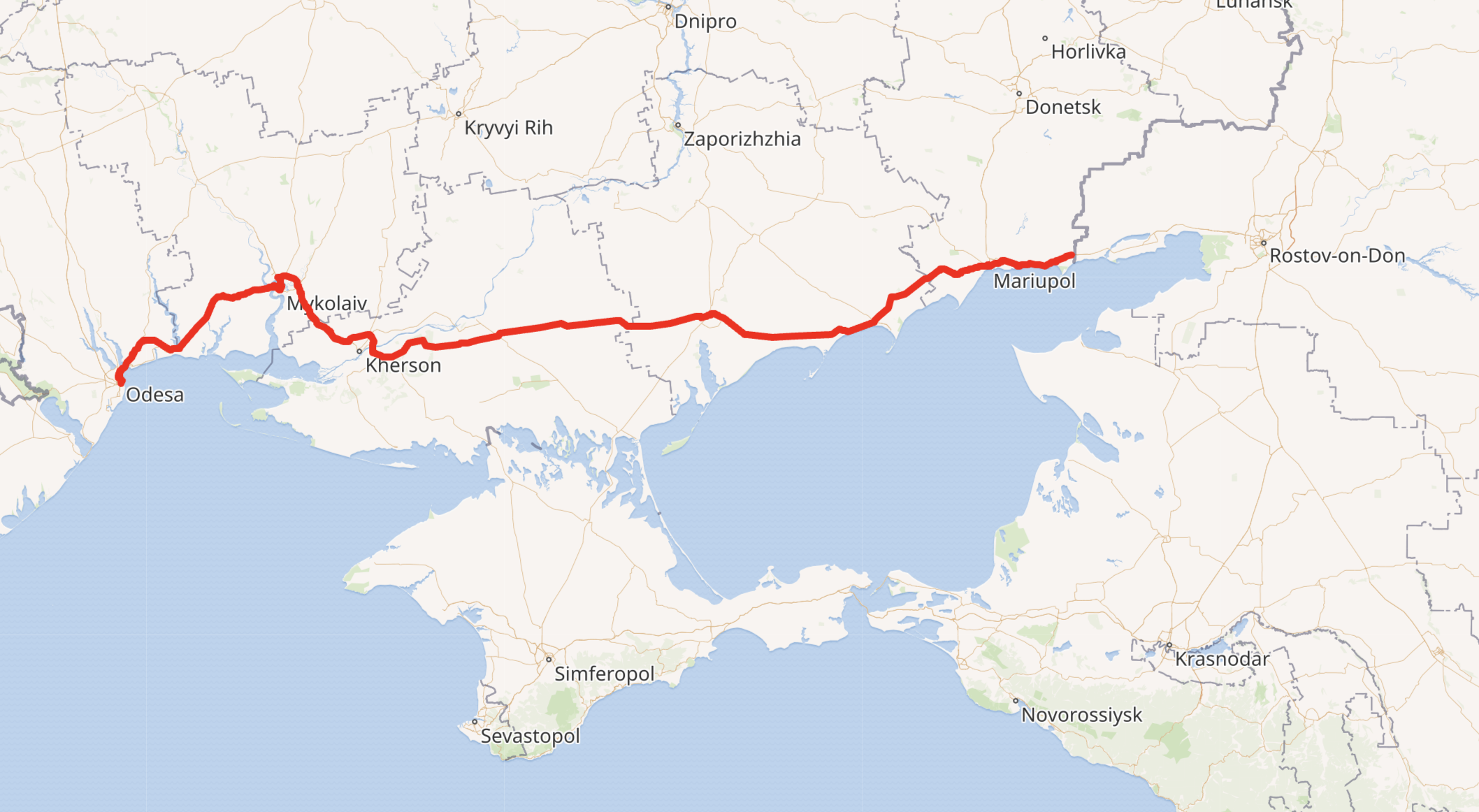
Map of the day: the highway to the annexed peninsula is still not safe, contrary to what Putin was told.
Videos of the day: Operation Crimean Blackout and an attack on an FSB base in Kherson region.
Three examples of how Ukrainians can do as they please in their own seas. The Ukrainian port of Zaliznyi in Kherson region, on the Black Sea coast, was once a popular resort. But since it was occupied by Russian forces after the invasion of Ukraine, it has become more like a ghost town. Its beaches are deserted and the front line is nearby.
[embedded content]
A few days ago, however, an interesting operation took place there, illustrating how Ukrainians have repeatedly managed to strike Russian positions in the Black Sea and the Sea of Azov.
In recent weeks, alongside attacks on logistics hubs and refineries deep inside Russian territory, they have also focused on strikes against the so-called shadow fleet, which transports sanctioned Russian oil or delivers it to Crimea.
Both seas have thus begun to somewhat resemble the situation in the Strait of Hormuz, which has become impassable because of the US-Israeli war with Iran, causing a sharp rise in global oil prices.
But back to the operation near Zaliznyi Port. A group of Ukrainian Barracuda unmanned boats approached the port, carrying FPV attack drones ready for deployment, as shown in a video by the 40th Separate Marine Brigade.
During a counter-operation that the Russians themselves boasted about, they destroyed one such Ukrainian boat. However, they needed as many as four Lancet drones, estimated to cost $50,000 each, to do so. According to the marines, this nevertheless did not stop the Ukrainian operation.
The remaining Barracuda unmanned boats approached the launch site of Russian attack drones, striking the logistics of Russian forces and personnel in the area in this way for the first time.
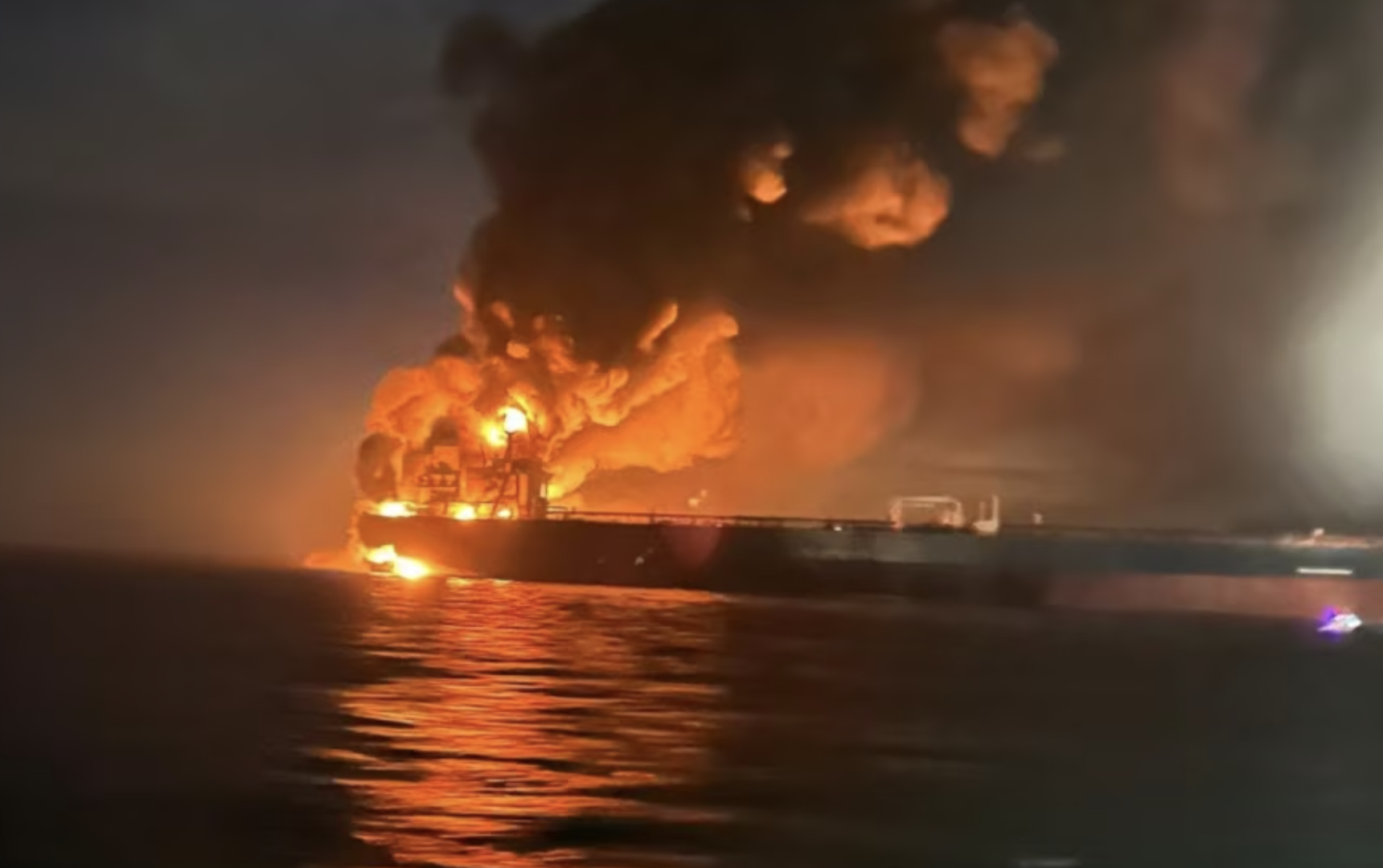
Elsewhere in the Black Sea, this time near the Russian port of Novorossiysk, an SBU Ukrainian naval kamikaze drone, the Mamai, approached the Russian tanker Avero, part of Russia’s shadow fleet.
Shortly afterwards, the fourth large Suezmax-class tanker in 10 days was damaged. These tankers carry large volumes of oil and petroleum products. (see video)
Mamai is one of two known types of naval drones deployed by the SBU in the Black Sea, alongside the Sea Baby. The latter was used, for example, in the attack on the Crimean Bridge two years ago.
Military intelligence agency HUR, meanwhile, has its own Magura V5 drone.
These Ukrainian “inventions” have contributed greatly to pushing Russian sailors out of the Black Sea and shifting the balance of power there, even without a proper naval fleet.
The name of the Mamai drone is derived from the legendary Ukrainian folk figure of Mamai, a Cossack philosopher. Ukraine’s security service says it is currently the fastest vessel in the Black Sea, capable of reaching speeds of up to 110 km/h.
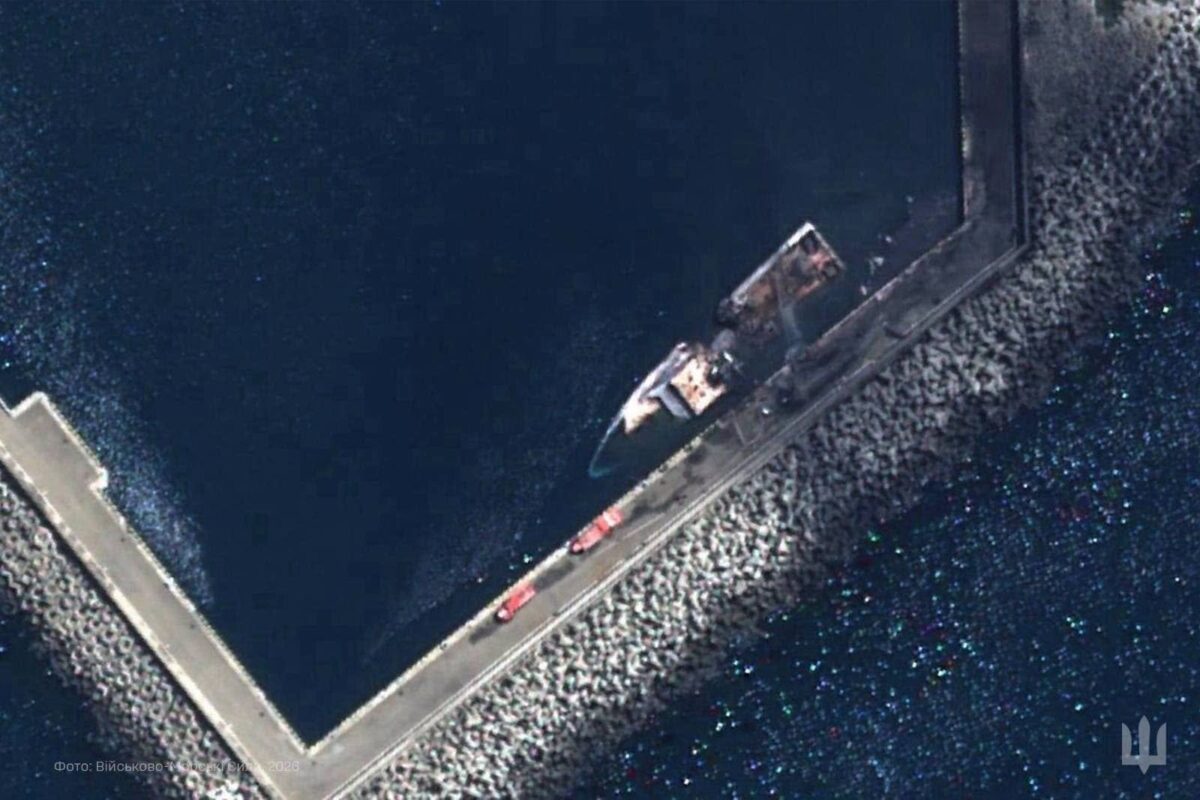
And thirdly, an operation that must have worried Vladimir Putin personally. One of Ukraine’s naval drones destroyed a Russian patrol vessel last Tuesday in the Black Sea resort of Gelendzhik.
The resort, as The Wall Street Journal noted, is located near a luxury compound highlighted by the murdered Russian opposition leader Alexei Navalny, who linked it to Putin.
According to Ukrainians, the Russian vessel Emerald was hit there by a Sargan-3000 naval drone. Some crew members were killed and others injured. A satellite image showing the ship split into two halves confirms this.
Source: Ukrainian Navy
This was no small vessel. It was 60 metres long, had its own helipad and was guarded by Russia’s FSB security service. According to the WSJ, the attack is further evidence of how Ukrainian naval drones are helping Kyiv gain ever greater control over the Black Sea.
Operation Molochka already has 183 hits. Ukrainians also struck the Russian tankers Louise 1 and Banda using Mamai drones during the ongoing Operation Molochka, as it was named by Robert “Magyar” Brovdi, commander of the Unmanned Systems Forces.
He said that since the operation began on 6 July, a total of 183 vessels from Russia’s shadow fleet had been hit — 119 in the Sea of Azov and 64 in the Black Sea. The statistics are published on a dedicated website.
The night leading into Monday (20 July) was among the successful ones: three tankers and four cargo ships were added to the list.
[embedded content]
The name Molochka has a hidden meaning. It is derived from the acronym MLChK — Moskva lyazhe cherez Krym (“Moscow will fall via Crimea”).
As Magyar said, the aim of the systematic attacks on Russian logistics routes in both the Sea of Azov and the Black Sea is to paralyse all oil and fuel logistics and prevent the circumvention of Western sanctions, which has a major impact on the Russian budget.
According to Radio Svoboda, the Russians are already responding by planning to assign three soldiers to each vessel, equipping them with twin machine guns, portable missile systems and anti-aircraft drones..
So far, however, this has not prevented Ukrainians from continuing the campaign, which has, among other things, brought about a severe fuel crisis in Russia and especially in occupied Crimea, where a litre of petrol now costs 280 roubles — more than €3 — and blackouts have become a daily reality.
According to Magyar, attacks on Russian ferries have taken out of service as much as 75 percent of the capacity of the Kerch ferry service, which carried cargo and passengers. Before the operation began, the ferries could, according to the Kyiv Independent, transport 180 to 250 vehicles a day, around 80 percent of which served the Russian military.
The destruction of tankers itself is highly problematic for Moscow. “More than 100 tankers have already burned. Russia has many tankers, but the number is not unlimited. If you sink or damage a dozen of them every day, they will eventually run out,” transport expert Maksym Gardus told Radio Svoboda.
The situation bears a striking resemblance to Hormuz. However, attacks have not spared the Ukrainian side either, mainly affecting foreign civilian vessels. Ten sailors were killed in an attack on the Golden Leo, a ship owned by a Turkish company. It was carrying maize from the port of Odesa.
[embedded content]
Ukraine’s campaign against Russia’s shadow fleet has, of course, also drawn international criticism. Kazakhstan has openly criticised Kyiv over the attacks, threatening Ukrainians with sanctions and lawsuits.
During the attacks of 19 July, Ukrainian drones hit the tankers Asia and Nissos Ios as they were loading Kazakh oil at the marine terminal of the Caspian Pipeline Consortium, Dzerkalo Tyzhnia reported. The terminal handles 80 percent of Kazakhstan’s oil, forcing the government to seek alternative routes.
As Bloomberg reported, intensive Russian retaliatory attacks on merchant ships and port infrastructure — with the same applying to the Ukrainian side — are also threatening the global grain trade. Russia resumed attacks this summer on grain ports in Chornomorsk, Odesa and Pivdennyi. The port of Izmail on the Danube has also long been among its targets.
But the threatened transport routes also affect Russia itself.
International wheat prices are at their highest level in recent years, and maize prices are also rising, although the situation is not yet as bad as it was in 2022, after Russia launched its full-scale war. Adding threatened supplies of fertiliser and fuel due to the situation in the Strait of Hormuz, as well as the effects of El Niño, creates the risk of a huge food crisis.
If Russian authorities do not militarily unblock the Sea of Azov and the situation continues for most of the second half of the year, Russia “may not be able to supply five to 10 million tonnes of wheat to the global market”, according to expert Andrei Sizov, quoted by Reuters.
Billions are at stake. According to Sizov, around 25 percent of Russian wheat exports are transported through the Sea of Azov.
“And the Black Sea plays a role in the wheat market similar to that of the Persian Gulf in the oil market. The Black Sea is undoubtedly the largest ‘supplier’ of wheat to the global market,” the expert told CNN, which compared the situation in these seas to the Strait of Hormuz.
However, the situation in the region needs to be distinguished, according to Odesa-based military analyst Oleksandr Kovalenko. The blockade of the Sea of Azov, which he said is completely blocked, is one thing; the Black Sea, where Russia still has more room to manoeuvre, is another.
“I would not compare it to the Strait of Hormuz, because these are two completely different dimensions,” Kovalenko told Denník N.
Significantly more vessels have been hit in the Sea of Azov over the past week than in the case of Hormuz.
“The Sea of Azov is a sea of dead ships, because there are now more than 100 — according to some data, more than 150 — damaged vessels there that need to be evacuated and are simply drifting uncontrollably at sea. In addition, Russian shipping along the entire Azov coast, from Taganrog to Temryuk, is disappearing altogether,” he said.
The situation in the Black Sea is somewhat different, because it is not as enclosed as the Sea of Azov and cannot be blocked so easily.
“In the Black Sea, Russians have more room to manoeuvre and can use, for example, Turkey’s exclusive economic zone to avoid Ukrainian strikes. They try to move quickly into Turkish waters and airspace, and we cannot strike Russian targets there, because these are already the borders of another country, which we respect,” the Ukrainian analyst explained.
According to him, the ratio of strikes by the two sides differs radically. For Russia, these are isolated strikes using Shahed kamikaze drones, as well as fighter aircraft and even missile attacks. Ukraine, including with FPV attack drones, hits far more targets every day.
According to the Financial Times, the pace of Ukrainian strikes in the Sea of Azov is much faster than during the tanker war between Iran and Iraq in the 1980s, when both sides attacked ships from different countries in the Persian Gulf more than 450 times over seven years.
“This situation is completely unprecedented,” analyst Tomas Alexa told the US newspaper. “We have never seen anything like this on such a scale globally.”
What comes next. Kovalenko is convinced that Ukrainians will not stop any time soon, and that no scenario other than an escalation of the war is conceivable. In his view, a complete blockade of the Sea of Azov will prevent Russia from maintaining the flow of cargo there and directly supplying Crimea and the occupied mainland part of Ukraine, for example through the ports of Mariupol and Berdiansk.
Port infrastructure in general will not function, he said, and this will mean huge economic losses for the Kremlin, particularly due to the destruction of ferries.
“It means being unable to supply Crimea and the temporarily occupied mainland part of Ukraine by sea. This will significantly worsen the situation for both the peninsula and Russian forces on the mainland. And economic losses are very important for us in terms of their impact on Russia,” Kovalenko said.
He is convinced that no scenario other than escalation is possible. “Until we completely take Russia’s tanker fleet in the Sea of Azov out of operational service, we will continue putting pressure on the Black Sea fleet and intensify strikes with both naval and aerial drones. Russia will, of course, try to influence the situation by attacking vessels heading for the ports of Odesa and Chornomorsk, specifically in Odesa region, but in general it will not achieve the scale that we are now achieving,” Kovalenko said.
He therefore predicts a scenario of the complete neutralisation of the Azov shadow fleet and the maximum destruction of Russia’s Black Sea shadow tanker fleet. “Russia is currently unable either to stop this or adapt to it; it can only react reflexively,” he added.
When will they strike the Kerch Bridge?
Paradoxically, all Ukrainian attacks have avoided the Crimean, or Kerch, Bridge, which Russia built on the annexed peninsula to connect it with the Russian mainland.
According to Ukrainian experts, there is a clear logic behind this.
“We are not touching this bridge because it is already damaged. It is no longer suitable as a lifeline for transporting large quantities of cargo — above all fuel — to Crimea,” former Aidar battalion commander Yevhen Dykyi told NV. According to him, passenger vehicles are travelling predominantly in one direction — to Russia.
“We are deliberately leaving them a way to get out of Crimea. The more of them leave, the better for us,” he said.
Kovalenko takes a similar view, saying that they are leaving the bridge intact for evacuation.
“Many people are already leaving Crimea. Those who have not yet left still have an opportunity to do so, and I think they should hurry. Because once maritime traffic in both the Sea of Azov and the Black Sea is completely halted, there will be no sea connection to Crimea at all — and if any did exist, it would be extremely risky,” he explained.
And once Crimea has been emptied and suitable conditions have been created, he said, a strike on the Kerch Bridge will follow.
“These conditions involve accelerating negative trends — not only the fuel crisis, but also a humanitarian crisis, shortages of food, medicines and basic goods, a total blackout and the absence of water supplies. Crimea is turning into a dead zone,” the analyst explained.
According to Kovalenko, the final phase will be an attack on the Kerch Bridge. “Those who do not manage to leave Crimea before the strike will have to deal with their own problems,” Kovalenko said, describing what Ukrainians see as the ideal scenario.
Map of the day
They also call it the road to hell. Although the Russian-appointed governor of the occupied part of Zaporizhzhia region in south-eastern Ukraine told a meeting with Putin that they had regained “full control” of the M-14 highway, a key supply route towards Crimea, the reality is entirely different.
Russian military bloggers themselves refuted this, according to ISW.
Source: Wikipedia
Pro-Kremlin blogger Rybar claimed that Ukrainian forces have recently carried out fewer attacks along the M-14 highway only because traffic there has fallen sharply due to the threat from Ukrainian drones, not because Russian air defences have become more effective.
What are the losses?
No change on Tuesday.
As of this morning, Russia had demonstrably lost 23,888 pieces of heavy equipment (23,837 on Friday). Of these, 18,866 (18,815) were destroyed by Ukrainians, 993 (993) damaged, 1,199 (1,199) abandoned by their crews and 2,830 (2,830) captured by the Ukrainian army. This includes 4,430 (4,427) tanks, of which 3,332 (3,329) were destroyed in combat.
Ukraine has lost 11,781 (11,690) pieces of equipment, of which 9,205 (9,123) were destroyed, 694 (689) damaged, 689 (687) abandoned and 1,193 (1,191) captured. This includes 1,450 (1,443) tanks, of which 1,111 (1,104) were destroyed in combat.
Note: Neither side regularly reports its own fatalities or destroyed equipment. Ukraine publishes daily figures for Russian casualties and equipment losses, which cannot be independently verified. This overview uses data from the Oryx project, which has compiled a list of equipment losses documented exclusively through photographs since the start of the war.