
A fight over one Kharkiv developer and 143 dirt‑cheap apartments has escalated into a showdown between Ukraine’s embattled anti‑corruption reporters and the law‑enforcement hierarchy tied to President Zelensky’s circle.
 Tomáš Čorej



Eight Ukrainian media outlets published the text that a court had temporarily banned from publication. Investigative reporters thanked them for their courage.
Oleksii Sukhachov is known in Ukraine as the controversial director of the State Bureau of Investigation. He became head of the institution, established ten years ago as Ukraine’s equivalent of the US FBI, despite criticism from anti-corruption activists.
Until recently, far less attention had been paid to his older brother Oleksandr, a businessman from Kharkiv, who, according to available information, previously worked in the security department of Ukrainian Railways.
But he is the central figure in an investigation that journalists from the Slidstvo.info website and the Anti-Corruption Action Centre spent months working on.
Shortly before they were due to publish it, a Kyiv court temporarily banned them from doing so. The editorial teams subsequently described the move as a “dangerous precedent” and an attack on freedom of expression.
In a show of solidarity with the journalists, eight Ukrainian media outlets — including Ukrainska Pravda and the Dzerkalo Tyzhnia website — jointly published the article despite the court ban.
What the banned article says
The Ukrainian investigators’ central finding is that Sukhachov acquired a large number of properties — specifically flats and offices — at exceptionally low prices. In total, he managed to obtain 143 of them.
For example, according to the article, in July 2018 he bought 30 flats in the IT-Park Manufactura residential complex. On its website, the developer describes it as a “unique project” combining small flats and offices.
Sukhachov allegedly paid only around €800 to €1,600 for each of them, with all of the properties costing him less than €35,000 in total. He then struck lucky again when he bought another 28 flats for less than €30,000 altogether. Journalists therefore wrote that he had obtained the flats for the price of a smartphone.
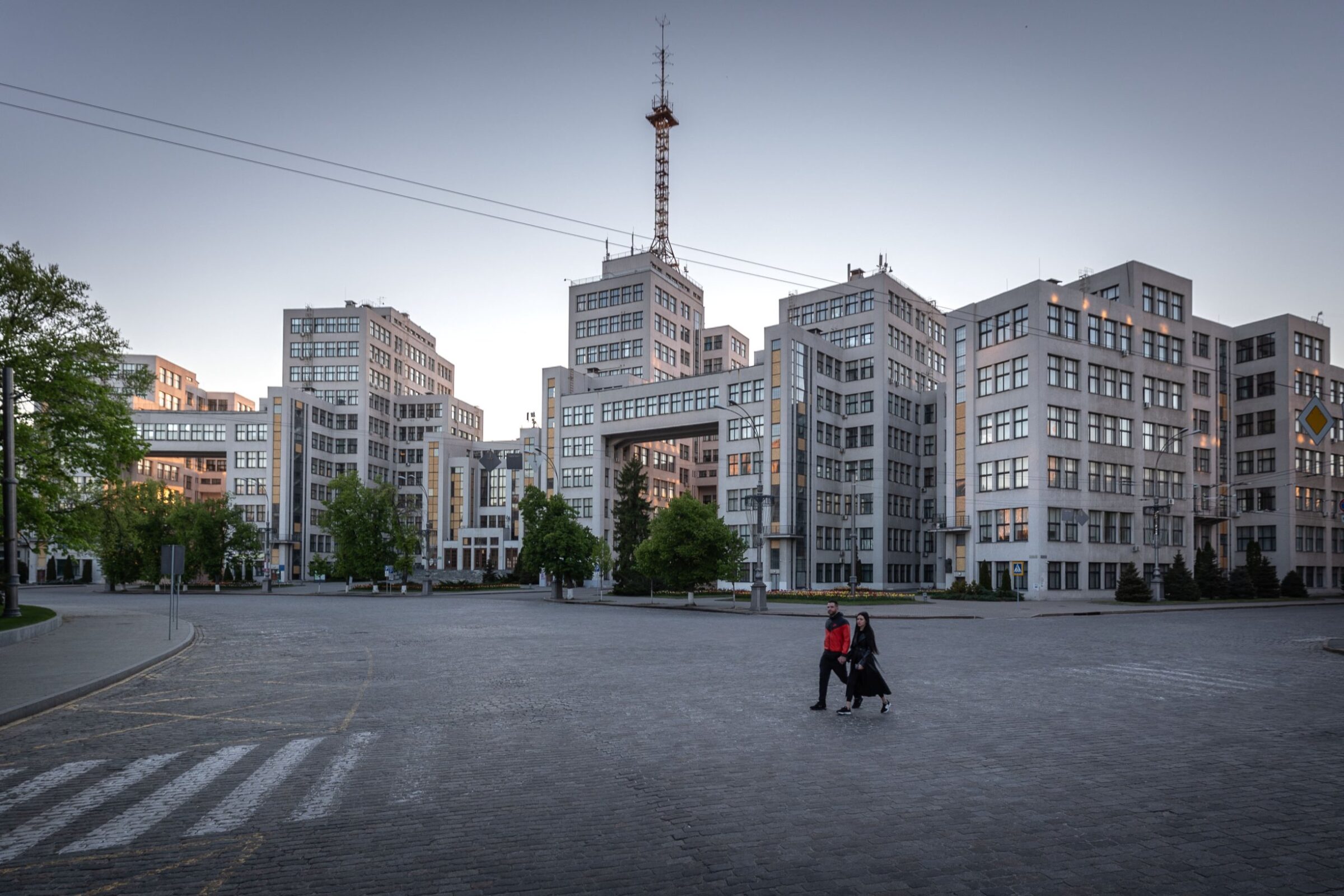
The IT-Park Manufactura complex is located in a prominent area in eastern Kharkiv, around a 20-minute walk from the central square. Sukhachov allegedly owned as much as 40 percent of all flats there.
The investigators stressed that the average price of flats there was around €700 per square metre as early as 2019. “It would therefore be logical to assume that Oleksandr Sukhachov spent millions on these properties. But that did not happen,” the article said.
In addition to flats in this complex, the report said he owned properties on Heroes of Kharkiv Avenue, the longest street in the entire city.
The article also suggests that he was apparently not merely an ‘ordinary’ buyer. Five years ago, the security service suspected the developer of having illegally built the flats that Sukhachov bought.
When police subsequently raided the developer’s premises, they also found documentation belonging to Sukhachov’s companies.
Police and prosecutors launched an investigation into the matter in 2021, which was subsequently taken over by the State Bureau of Investigation, now headed by Sukhachov’s brother. No one was charged in the case, and the police later closed the investigation.
The investigators added that Sukhachov no longer owns most of the 143 properties.
A controversial judge ruled on the ban
Two journalists worked on the report: Maksym Savchuk from the Slidstvo.info editorial team and Alina Stryzhak from the Anti-Corruption Action Centre.
While working on the report, Stryzhak approached the developer, Parkovyi-2 LLC — from which Sukhachov had bought the flats for a nominal price — with questions. But something rather unusual then happened: the company applied to a district court in Kyiv for an interim injunction, and the court granted its request.
Judge Serhii Vovk immediately prohibited the investigators from publishing information about Sukhachov, arguing that it could cause irreparable harm to the developer. According to the Kyiv Independent, such a ban on an investigative media outlet has no precedent in Ukraine.
The company has also since filed a lawsuit against the Slidstvo.info website, the Anti-Corruption Action Centre and journalist Stryzhak.
What exactly happened On Wednesday (24 June), journalist Stryzhak sent her questions to Oleksii Sukhachov, director of the State Bureau of Investigation, and representatives of Parkovyi-2 LLC. On Friday (3 July), Parkovyi-2 LLC applied to the court to prevent the journalist from disseminating any information about the company. On Monday morning (6 July), Judge Serhii Vovk granted the developer’s request through an interim injunction.
Source: Organized Crime and Corruption Reporting Project (OCCRP)
As the Slidstvo.info website recalled, Vovk is a rather controversial judge who convicted former minister Yurii Lutsenko in 2012. International organisations described the case at the time as politically motivated; for example, the Council of Europe immediately called for Lutsenko’s release.
The report’s other author, Savchuk of Slidstvo.info, tried to circumvent Vovk’s decision. He wrote on Facebook that while the court had prohibited his website, Alina Stryzhak and the Anti-Corruption Action Centre from publishing the report, it had not prohibited him personally.
“I therefore have both the moral and legal right to pass on the report I worked on with Alina to other media outlets,” he wrote on Facebook.
An unprecedented wave of solidarity
Eight leading Ukrainian media outlets ultimately jointly published the investigative report under the common title Initiative 143, referring to the number of properties owned by Sukhachov.
In a joint statement, the media outlets said they viewed the Kyiv court’s ban as censorship. The editor-in-chief of the Slidstvo.info website thanked them for an “unprecedented display of solidarity”.
“Our colleagues are taking a risk by publishing the banned investigation. If the authorities have curtailed freedom of expression in the case of our editorial team and the Anti-Corruption Action Centre, why could they not put pressure on others as well?” she asked in her statement.
Media outlets that published the banned report Ukrainska Pravda Suspilne Schemes (Radio Svoboda) Hromadske Dzerkalo Tyzhnia NV Bihus.info Toronto Television
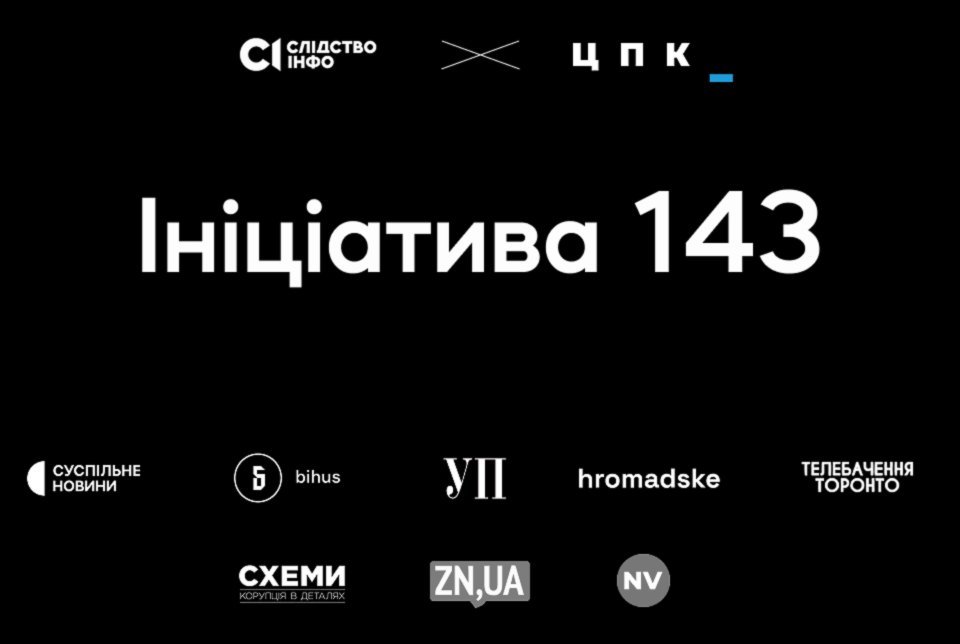 Source: X/Anti-Corruption Action Centre
Ukrainska Pravda editor-in-chief Sevgil Musaieva said that this was not only about this investigation or a single court ruling, but about “the boundaries of what is permissible in a democratic state”.
“A preliminary ban on publishing journalistic material is one of the most dangerous interventions in freedom of expression,” she wrote on Facebook.
A large part of Ukrainian civil society praised the Ukrainian media outlets for publishing the report.
The businessman’s brother’s role remains unclear