
As its refineries and warehouses burn, Russia’s financial markets are starting to freeze.
 Geoffrey Smith



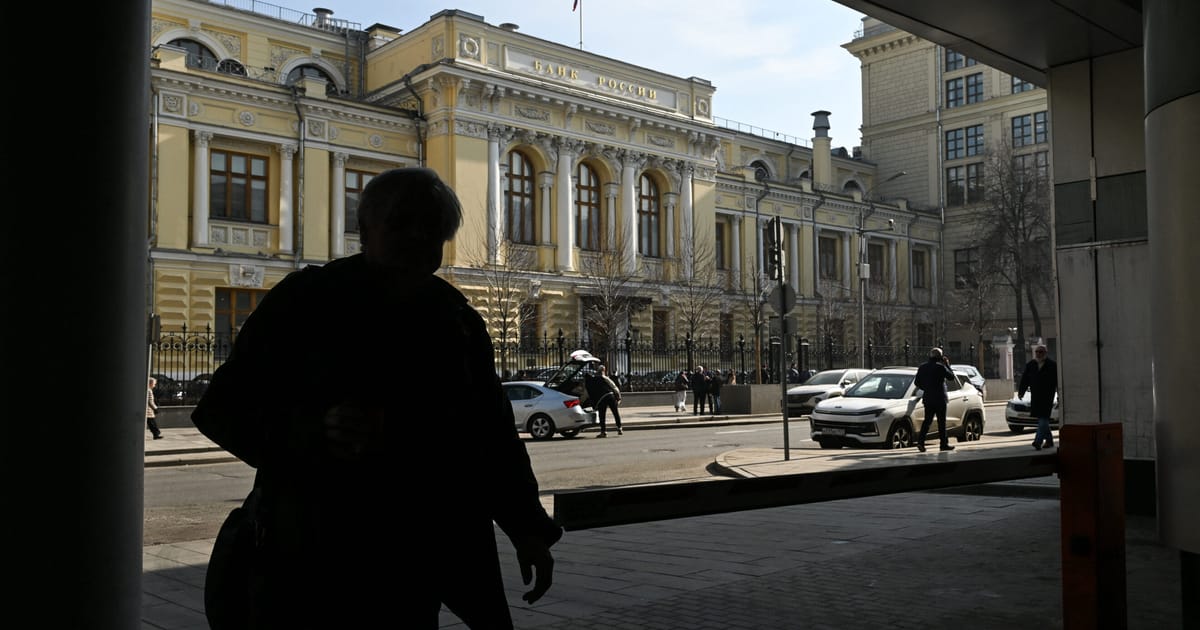
The central bank has had to keep interest rates painfully high to keep a lid on inflation, at a time when the budget deficit is widening sharply. Its key rate currently stands at 14.25 percent.
Businesses typically have to pay well above that rate for credit, and things aren’t made easier by the Kremlin competing for the same, limited pool of savings.
Moscow had originally budgeted to cut military spending this year, Janis Kluge, an analyst with the German Institute for International and Security Affairs, said. Instead, it has ballooned and accounted for nearly half of government spending in the second quarter, he estimates.
Kluge said the bond market standoff doesn’t herald any imminent collapse, but is consistent with other signs of strain in Russia’s financial markets. The benchmark stock index, dominated for years by the oil and gas industry, has fallen 30 percent in the last two months as Ukraine has shown its ability to hit important economic infrastructure as far afield as Omsk in Siberia.
Ukraine has broadened its drone offensive in spectacular fashion during that time. In addition to the refinery attacks that have caused long lines for fuel up and down the country, its armed forces claim to have struck 183 ships in the Black Sea and the Sea of Azov, severely disrupting Russia’s attempts to resupply a beleaguered Crimea with fuel, as well as hampering its exports of grain to world markets.
Wild fires
But even that has been overshadowed by attacks in recent days on the fulfillment centers of Wildberries, Russia’s biggest e-commerce company and an essential part of the supply chain for thousands of small businesses.