


Voters see Donald Trump’s personal abuse, even if the politicians pretend not to. Ties to the Trump administration are now politically toxic in Europe. Meloni, whose roots are in the Italian far-right, is fending off a challenge from the even more rightwing National Future party, led by a fire-breathing, pro-Kremlin
 Edward Lucas



Geopolitics leaves little room for sentiment. The blunt truth for US allies in Europe and Asia is that it is better to have the global hegemon on your side than not.
Still common sense in Japan, this is now contentious in Europe.
The Trump administration demands ever-more from its allies and puts ever-greater burdens on them. Eventually, tempers snap.
Last week’s fireworks involved the Italian prime minister Giorgia Meloni, once seen as Donald Trump’s closest friend in Europe. She was the only European leader to attend his second inauguration. The English-language version of her autobiography has a foreword by Donald Trump Jr, the president’s son. And vice-president JD Vance wrote the foreword for her second book.
But when the US president claimed that she had “begged him” for a joint photo at the G7 summit in France, Meloni hit back, saying that Trump’s account of their meeting was “totally invented”. “I don’t know why the president of the United States behaves like this towards his allies,” she said in a video.
She lamented that Trump “does not show the same determination with the enemies of the West and of the United States, whose leaders he instead treats with far greater indulgence.”
Ouch.
The US president’s deal-making approach involves lavishing praise on people such as Vladimir Putin (smart, strong and trustworthy), China’s Xi Jinping (“great stature”) and Kim Jong-Un of North Korea (“I get along with him really well”).
That may be a defensible tactic on occasion, but it reflects a strategic flaw in Trump’s foreign policy. Allies are unappreciated at best, insulted at worst. No matter how much you spend on defence, or how sycophantic your public utterances: nothing is enough. This relationship is not even transactional, merely abusive.
Voters are not blind
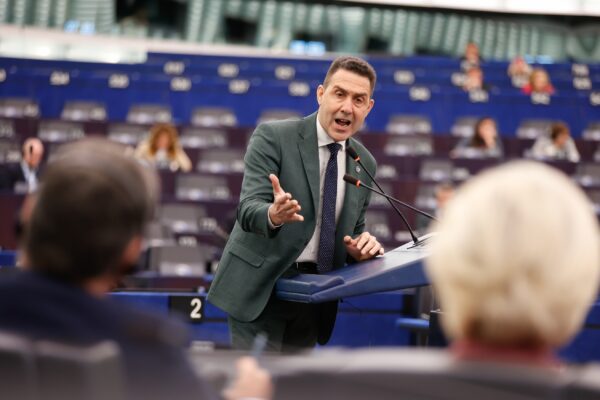
The voters see this, even if the politicians pretend not to. Ties to the Trump administration are now politically toxic in Europe. Meloni, whose roots are in the Italian far-right, is fending off a challenge from the even more rightwing National Future party, led by a fire-breathing, pro-Kremlin retired general, Roberto Vannacci.
Faced with that, standing up for Italy’s honour and dignity is a shrewd move for Meloni. Pro-Trump elements in the British and German far-right parties have the same problem. Trump-loving voters are far outnumbered by Trump-haters.
Other European leaders are seething too, fed up with Trump’s arrogance, unpredictability and conceitedness.
“I’m the boss,” he announced when he arrived (late) for the G7 summit. They are fed up with surprises, such as the new review of US military presence in Europe, announced by the talkative but underwhelming US defence chief, Pete Hegseth. They are fed up with the uncertainty around the Nato summit in Ankara next month.
They should say so publicly.
Emanuel Macron (France), Friedrich Merz (Germany), Pedro Sánchez (Spain), Konstantinos Mitsotakis (Greece), Rob Jetten (Netherlands), Donald Tusk (Poland), the leaders of the Nordic and Baltic countries, EU bigwigs, and whoever happens to be the British prime minister this week, should all find time in the coming days to make two key points.
One is that they cherish the alliance with the United States, which benefits both parties, not least in Europe’s rent-free provision of vital military bases to US forces.
Second, that amid decades of ups and downs, US foreign policy has always made an important and useful distinction between friends and foes. Any light sarcasm may be lost on this White House, but the impact of allies acting together will not be.
Trump is notoriously thin-skinned and loathes criticism. In that case, he should try not to prompt it with gratuitous insults. After all: geopolitics is an unsentimental business.