While most of us have experienced this year’s World Cup live on our televisions, via a morning web-search, or catching up on the highlights, the fans on the ground have experienced this competition in a very different way. This is not only to say the experience of watching sport live
 Ethan Conroy



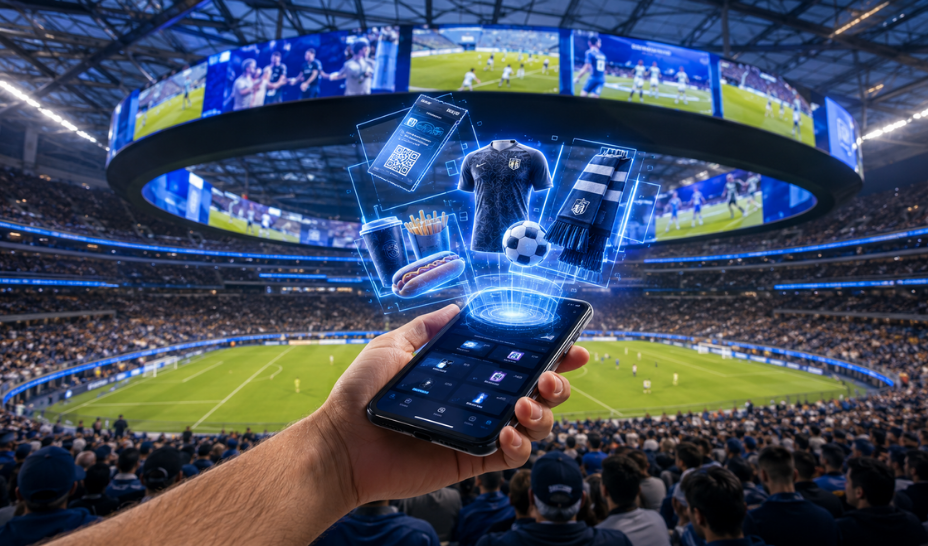
While most of us have experienced this year’s World Cup live on our televisions, via a morning web-search, or catching up on the highlights, the fans on the ground have experienced this competition in a very different way.
This is not only to say the experience of watching sport live is different than at home, which it is thanks to the added atmosphere and excitement, but it is also due to the technologies modern stadia have adopted to enhance the live experience – making it easier, seamless, and more enjoyable than before.
In this article, we look at examples of this tech and the European startups developing similar solutions closer to home.
High-speed connectivity
The foundation of the modern live sport experience. Without strong connectivity, fans cannot use mobile tickets, see instant replays, order food, share experience via social media, or use real-time venue services.
“Smart stadiums“, as they are known, are increasingly treated as connected environments where wireless infrastructure supports both fan engagement and venue operations.
Mercedes-Benz Stadium in Atlanta is one example of implementing this. The stadium says its technology ecosystem includes a “6G-ready Wi-Fi and cellular network, more than 5,000 miles of fibre, 2,000+ wireless access points and infrastructure designed to support simultaneous connectivity for 75,000 fans.”
*:first-child]:mt-0 [&_>*:last-child]:mb-0″ data-renderer=”lm” readability=”9.634703196347″>
Startups focused on this technology include Warsaw-based Microamp, who raised €6.5 million in June to develop resilient 5G mmWave and AI-RAN wireless infrastructure for private 5G and high-capacity venue connectivity.
AI-powered crowd management and digital twins
AI can help venues forecast crowd flows, optimise staffing, manage queues, improve security, and simulate stadium operations. Such is the case, for the 2026 FIFA World Cup Lenovo reportedly built digital twins of all 16 tournament stadiums to support security and logistics monitoring.
The AI-driven digital twins and real‑time analytics have been used to shift crowd management from reactive to proactive, enabling organisers monitor and predict crowd flows, identify bottlenecks, and coordinate security and services across all 16 stadiums being used for the tournament.
Startups working on related digital-twin and crowd‑analytics solutions include UK-based Dexory, which added €9.8 million to its Series C to deploy autonomous robots and an AI-powered digital‑twin platform that gives logistics operators real‑time operational visibility and is adjacent to stadium digital twins and venue‑flow optimisation.
Frictionless entry, payments and retail
Each of these redefine the fan experience by removing bottlenecks and reducing wait times across the venue. Technologies such as mobile ticketing, biometric access, cashless payments, self-service kiosks, app-based ordering, and checkout-free stores streamline every interaction.
Of course, these systems unlock new revenue potential for venues at the same time by increasing transaction speed, boosting per-capita spend, and generating richer data insights.
*:first-child]:mt-0 [&_>*:last-child]:mb-0″ data-renderer=”lm” readability=”15.29476584022″>
Lumen Field in Seattle, Washington, shows how frictionless entry, payments, and retail can work together in one venue. As per previous reports, the stadium has palm-based entry and payment at its a checkout-free concession stand plus and checkout-free retail in additional concession areas. In doing so, the stadium reduces lines and speeds up the fan experience.
Amsterdam-based Silverflow raised €37 million in a Series B to expand its cloud-native payment infrastructure, with a focus on in-store payments and broader card-network support. At a larger scale, Mews, also based in Amsterdam, raised €255 million in a Series D to grow its hospitality operating system, which spans property management, point-of-sale, revenue management, housekeeping, and payments.
Modern stadiums are becoming media platforms, not just physical venues. Augmented reality, second-screen experiences, interactive screens and immersive displays are making live events more participatory and sponsor-friendly.
Los Angeles’ SoFi Stadium is the clearest example for giant LED and immersive in-bowl media. The stadium holds a 70,000-square-foot, dual-sided, 360-degree “Infinity Screen” – the largest of its kind as reported by Samsung at its unveiling in 2022.
While such a sized screen is certainly more immersive than regular screens on display in a stadium, there are companies developing tech which may point to how this area may progress in the future.
This may be the case for AlphaLum, based in Lausanne, Switzerland, who raised €3.6 million in seed funding for holographic display optics and sensing technologies used in Augmented Reality (AR), Mixed Reality (MR) and spatial computing smart glasses.
Personalised fan platforms and data-driven loyalty
The fan experience increasingly starts before arrival and continues after the event through apps, ticketing, content, commerce, loyalty, streaming and personalised offers. In their report, PwC describes digital fan engagement platforms as the “front door” to fandom, connecting tickets, media and commerce.
*:first-child]:mt-0 [&_>*:last-child]:mb-0″ data-renderer=”lm” readability=”15″>
Levi’s Stadium in San Francisco is a strong example of stadium tech. Built by the San Francisco 49ers with PwC, it uses a mobile app for AI-assisted way-finding, digital ticketing, parking, payments, concessions, and personalised fan content.
Some companies operating in this space include Exhibitly, a Ghent-based startup that has raised €1.4 million in pre-seed funding and focuses on AI-driven event personalisation to optimise content, enhance sponsor visibility, and improve attendee journeys; and SOUS, based in Amsterdam, who while not sport-specific, supports customer loyalty and owned relationships through direct ordering, marketing automation, and customer engagement tools.