Over recent decades, presidents and prime ministers have become the leading actors on foreign policy. The more important foreign policy debates now happen in the European Council, where the high representative has a relatively weak role. Henry Kissinger’s famous question, whom to call when the US wishes to talk to
 Stefan Lehne



There’s been much chatter in the Brussels Bubble of late about possible tweaks – or bigger reforms still – to the European External Action Service, set up back in 2009 after the Lisbon Treaty.
The Lisbon Treaty reforms of EU foreign policy had two major structural problems:
First, by double-hatting the high representative (aka EU foreign affairs chief) and creating the EEAS, they turned three full time jobs (chair of the foreign ministers council, vice president of the EU Commission, head of a new diplomatic institution) into a single impossible one.
All three holders of this position proved unable to completely fill these diverse roles. The failure to provide for deputies made sure that appointment to this prestigious position comes with the guarantee of eventual disappointment.
Second, the Lisbon reforms replaced the rotating presidency in EU foreign policy and thus ensured greater continuity and coherence. But they established the EEAS as a “hybrid” semi-institution with weak institutional identity, heavily-dependent on the commission in terms of budget and procedures and with uncertain ownership from the Council.
The EEAS was thus unable to coordinate foreign and external economic policy effectively, and with few exceptions lacked sufficient member state support to assume a substantive lead in shaping foreign policy.
As long as the international environment remained calm, the EU could live with these flaws, but in recent years a number of developments put the system under strain.
The EEAS was created because at that time several states still held the view that the commission must be kept at a safe distance from security and defence issues.
Today, the Berlaymont is fully involved in these areas. It includes a commissioner for defence and manages a number of instruments designed to promote and coordinate EU rearmament.
Ursula von der Leyen understands the commission as a geopolitical actor. She personally has assumed an active foreign policy role. Under her, the commission has taken the lead in a number of other fields (sanctions, Mediterranean) that used to be in the purview of the EEAS.
Also, the high representative chairs the Foreign Affairs Council, but her ability to take initiatives and drive policy is severely constrained.
This is not due to a lack of personal qualities, but results from increasing divisions among member states in a more contested international environment.
Consequently, a lot of foreign policy coordination now happens in smaller groups outside the institutions.
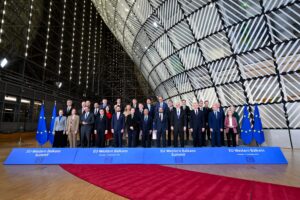
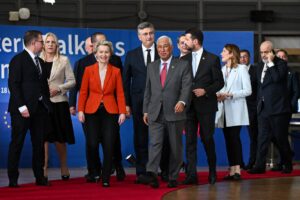
Also, over recent decades, presidents and prime ministers have become the leading actors on foreign policy. The more important foreign policy debates now happen in the European Council, where the high representative has a relatively weak role. Henry Kissinger’s famous question, whom to call when the US wishes to talk to Europe, now has a clear answer: the President of the European Commission.
Finally, in the fragmenting international order of today, the divisions between classical diplomacy and economic relations have largely disappeared.
At a time of the “weaponisation of everything” many EU policies, including trade, investment, competition, research and technology have to become both tougher and more flexible.
Merger?
The need to leverage the EU’s economic strength to protect its interests has never been more important. And this requires better integration between external economic relations and foreign policy.
The commission is best positioned to bring the various instruments together behind a coherent approach.
Merging the EEAS into the commission would clarify responsibilities, reduce duplication and save resources.
The involvement of diplomats from member states should be preserved. Special arrangements would be necessary for the EEAS departments on peace, security and defence, where the member states should maintain a strong supervisory role.
All this could be done without treaty reform through amendments to the EEAS decision of 2010. These require a unanimous decision on the basis of a proposal from the high representative after obtaining consent of the commission.
Reforming the multiple roles of the high representatives would be more difficult, as they are set out in the treaty.
However, if the EEAS becomes integrated in the commission, it would make sense for the high representative to focus more on her role as vice-president of the commission and work with other commissioners towards a more strategic approach in the EU’s external relations.
Regarding her functions as high representative, developing systematic teamwork with foreign ministers and foreign ministries of member states would make the job more manageable and impactful.
Obviously, reforms along these lines should not be seen as a panacea for the deficits of EU foreign policy.
There can be no institutional fixes for the lack of commitment by member states and for an ineffective decision-making process.
However, modernising institutional arrangements that are clearly not fit for purpose in the radically changed international environment of today, would amount to a significant step in the right direction.