The far-right veteran’s strongest opponent is betting she will struggle to win over center-right voters.
 Victor Goury-Laffont, Clea Caulcutt



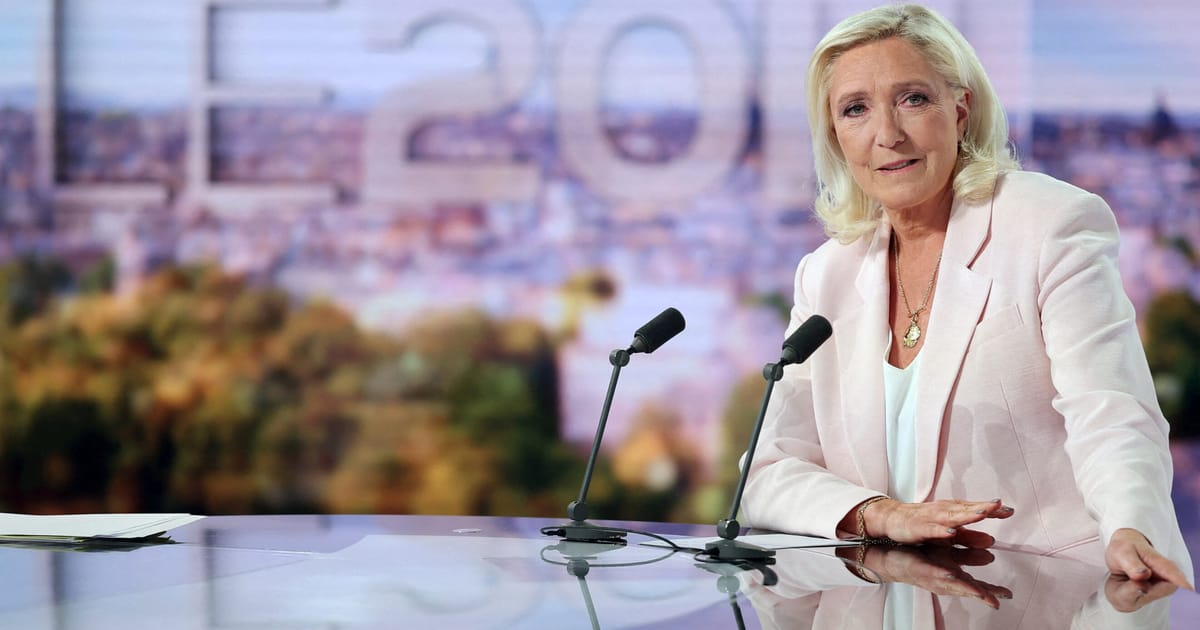
Comparatively, Bardella’s apparent ideological flexibility on matters of economic policy made him a threat to win over fiscally conservative voters from Philippe and other right-wing candidates.
A case in point is the two far-right leaders’ dueling positions on the contentious issue of retirement reform.
Le Pen officially supports lowering France’s minimum retirement age back to 62, reversing President Emmanuel Macron’s contentious 2023 reform, which set out a gradual increase to 64. Bardella, however, had opened the door to changing his party’s position over concerns about the state of France’s public finances, with debt projected to rise from 115.5 percent of economic output to 203 percent by 2050, according to the Organisation for Economic Co-operation and Development (OECD).
Now that Bardella is out of the race, Philippe’s party, Horizons, intends to hit Le Pen “on the inconsistency and absurdity of a highly statist platform that seeks to roll back pension reforms and make people believe they can work less,” said Valletoux.
Philippe, on the other hand, has floated the possibility of raising the retirement age even higher than Macron’s reform envisaged. While that measure is unlikely to be popular with the general public, it could appeal to the type of voters Bardella had been trying to win over.
“A right-wing voter who values free enterprise and a form of fiscal and budgetary prudence will be less inclined to vote for Marine Le Pen [than for Bardella]. Edouard Philippe may win them over,” said Gilles Boyer, Philippe’s co-campaign director.
Marion Solletty and Giorgio Leali contributed to this report.