Nowhere is that exposure felt more sharply than in Germany, the EU’s biggest manufacturer, producing more than a quarter of the block’s industrial output.
At InfraLeuna, a vast chemicals and plastics industrial park in central Germany, boss Christof Guenther has watched his site’s annual gas bill climb from €60m ($68m; £51m) before the war in Ukraine, to an expected €200m this year amid the Iran crisis.
American gas isn’t the answer, he says. “[Domestic] natural gas prices in the US are about 20 to 25% of the prices we are paying here.” After being turned into LPG and shipped across the Atlantic the price shoots up.
With natural gas accounting for 12% of German power generation, and with half of German homes fitted with gas boilers, German households are also being affected.
The average home now pays 31% more for its electricity than before the Ukraine war, according to Clean Energy Wire, a Berlin-based news outlet covering Germany’s energy transition. Gas prices for German households are also up over that period, over 74%, per the same source.
That is replicated across the European Union, where household electricity bills have risen 30% since 2021, according to official Eurostat figures.
Meanwhile, UK electricity prices are now around 38% higher than in mid-2021, while gas prices are at a 120% increase, according to data by regulator Ofgem.
 Image source, AFP via Getty Images
Jaller-Makarewicz says this is the new normal until the EU reduces its gas consumption.
However, a 2025 US-EU trade deal, committing Europe to $750bn of American energy over three years – including LNG, oil and nuclear fuel – locks the relationship in further.
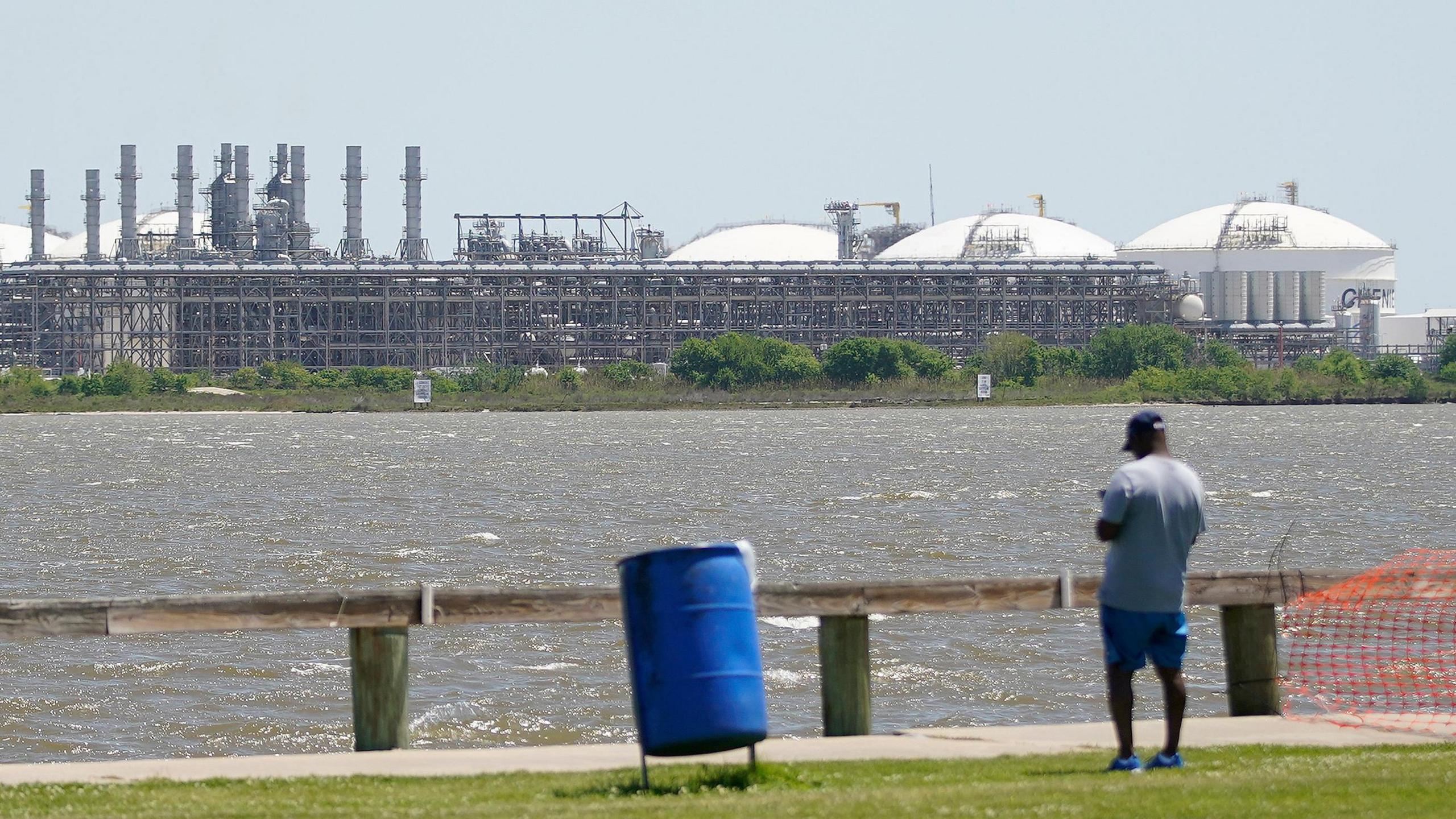
Back in Cameron, Fewell is less concerned with Europe’s anxieties than with what the boom means for a community finally going from survival to hope.
“If I had one dream,” he says, “it’s to bring our youth back to our parish.” His own children can look ahead to high-paying jobs without leaving home, a future he never thought possible while growing up there.
For a parish nearly emptied out 20 years ago, the LNG powering and heating Europe may be what allows it to thrive.
Read more global business stories





 admin
admin