
The traditional executive company car used to be defined by a beautifully simple set of rules, writes motoring journalist Tim Barnes-Clay. It required a German saloon, 3.0 litres of naturally aspirated displacement, finished in metallic paint, and a designated parking space close to the boardroom doors. It was a statement
 Tim Barnes-Clay



Friday 17 July 2026 11:07 am | Updated: Friday 17 July 2026 11:08 am
The traditional executive company car used to be defined by a beautifully simple set of rules, writes motoring journalist Tim Barnes-Clay.
It required a German saloon, 3.0 litres of naturally aspirated displacement, finished in metallic paint, and a designated parking space close to the boardroom doors.
It was a statement of seniority, paid for by the corporation, and gracefully yet gleefully accepted as a natural right of high office.
In recent years, though, especially in the current financial climate, this arrangement has become thoroughly old-fashioned.
Strict taxation on anything that emits carbon dioxide, along with sophisticated leasing structures, has entirely changed the Director of Finance’s calculations.
#mc_embed_signup { background: #fff; clear: left; font: 14px Helvetica, Arial,sans-serif; width: 100%; max-width: 600px; margin: 20px 0; } #mc-embedded-subscribe-form { margin: 20px 0 !important; } .newsletter-form-flex { display: flex; gap: 0; align-items: center; margin-top: -10px; } .newsletter-form-flex input[type=”email”] { flex: 1; padding: 2px 10px; border: 1px solid rgb(18, 22, 23) !important; border-radius: 12px 0 0 12px !important; } .newsletter-form-flex input[type=”submit”] { padding: 4px 10px !important; margin: 0 !important; background-color: rgb(18, 22, 23) !important; color: rgb(255, 255, 255) !important; border: 1px solid rgb(18, 22, 23) !important; border-radius: 0 12px 12px 0 !important; } .newsletter-banner-content { margin-bottom: 15px; } .newsletter-banner-content h2 { margin: 0 0 10px 0; font-size: 18px; font-weight: 600; } .newsletter-banner-content p { margin: 0 0 10px 0; line-height: 1.5; } .newsletter-banner-content ul, .newsletter-banner-content ol { margin: 0 0 10px 20px; } .newsletter-banner-content a { color: #0073aa; text-decoration: none; } .newsletter-banner-content a:hover { text-decoration: underline; } .newsletter-banner-content img { max-width: 100%; height: auto; margin: 10px 0; } #mc_embed_signup #mce-success-response { color: #0356a5; display: none; margin: 0 0 10px; width: 100%; } #mc_embed_signup div#mce-responses { float: left; top: -1.4em; padding: 0; overflow: hidden; width: 100%; margin: 0; clear: both; }
For the modern executive, choosing a company car is now more an exercise in asset management than one of prestige.
The Cost of the Conventional
HM Revenue and Customs has designed the Benefit in Kind (BiK) structure to ensure that high-emission luxury cars are unviable as corporate perks.
When a traditional combustion-engined car pushes past the 30% BiK band, the monthly cost deducted via PAYE can easily begin to rival a mortgage payment.
The business suffers, too, as employer National Insurance contributions add an extra 15% charge onto the value of the benefit.
Furthermore, the Expensive Car Supplement adds (currently) £440-a-year onto your road tax bill from years two to six inclusive if the car’s outright price is above a £40,000 threshold.
While this also applies to EVs, the threshold for zero-emission cars has recently been raised to £50,000, providing more headroom and an extra incentive for those choosing to ditch the combustion engine.
It also means that, with specifications chosen wisely, an electric executive car can bypass some of the additional overheads that plague a traditional luxury combustion-engined vehicle.
Create your Regit account Redefining Performance: Alpine A390 GT
For those who measure automotive calibre by a car’s sculpture and driving prowess rather than its functional utility, all this bad news can be hard to swallow.
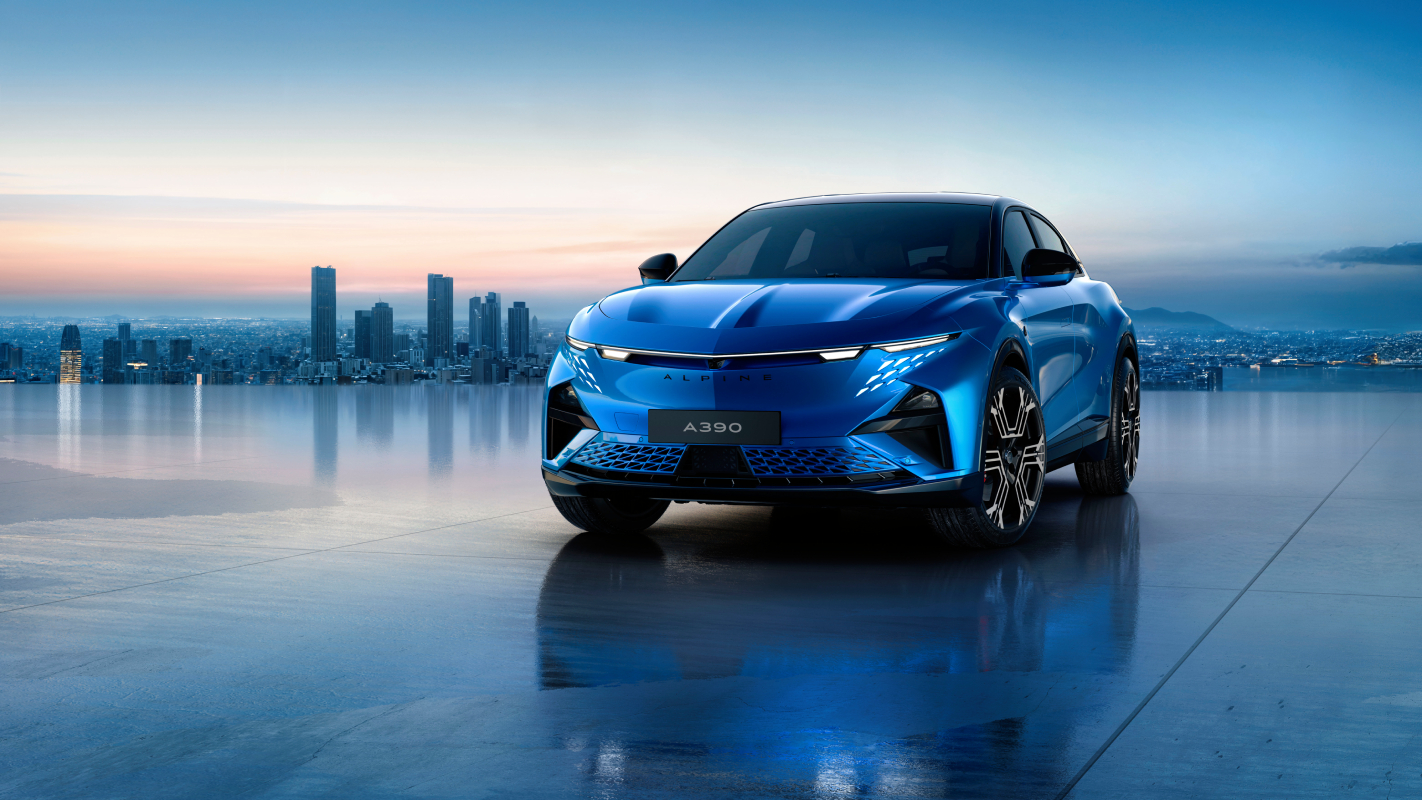
But the shift towards electrification doesn’t have to mean a sacrifice in character, as our case study, the Alpine A390 GT, proves.
Built in Alpine’s historic Dieppe facility, the five-seater fastback can bring you into the electric era with a pedigree of engineering ingenuity.
With a list price of £61,000, the A390 GT has three electric motors, one up front and two at the rear, to deliver a substantial 400PS and 0-62mph in 4.8 seconds, yet still offers an official range of 345 miles.
What’s even more impressive than raw numbers, though, is how all its poke is managed.
Its rear subframe is home to an active torque-vectoring system that continuously adjusts the torque sent to each rear wheel.
The result is that, on a demanding road, the car actively rotates into corners with aplomb, demonstrating remarkable finesse which belies its two-tonne kerb weight.
Its steering ratio quickens automatically with speed, meaning minimal input is required to guide the Alpine’s nose with precision.
Read more Halfords shares rev up as garage growth drives return to profit
The ride balances control and comfort, using passive monotube dampers and hydraulic bump stops to smooth out poor road surfaces. Yet, it achieves this without sacrificing your connection to the road.
Inside, the cabin evokes a cockpit-like experience, avoiding the generic minimalism that’s become the norm for some marques.
Supporting Sabelt bucket seats and two-tone Nappa leather are just some of the luxuries on offer.
The lack of engine note is compensated by a bespoke 13-speaker Devialet premium audio system, handling acoustics with the clarity of a concert hall.
Because it operates on pure electric power, the A390 nestles into a BiK bracket of just 4%, combining an exhilarating driving experience with astute tax efficiency.
The Support Act: Renault’s Hybrid Alternative
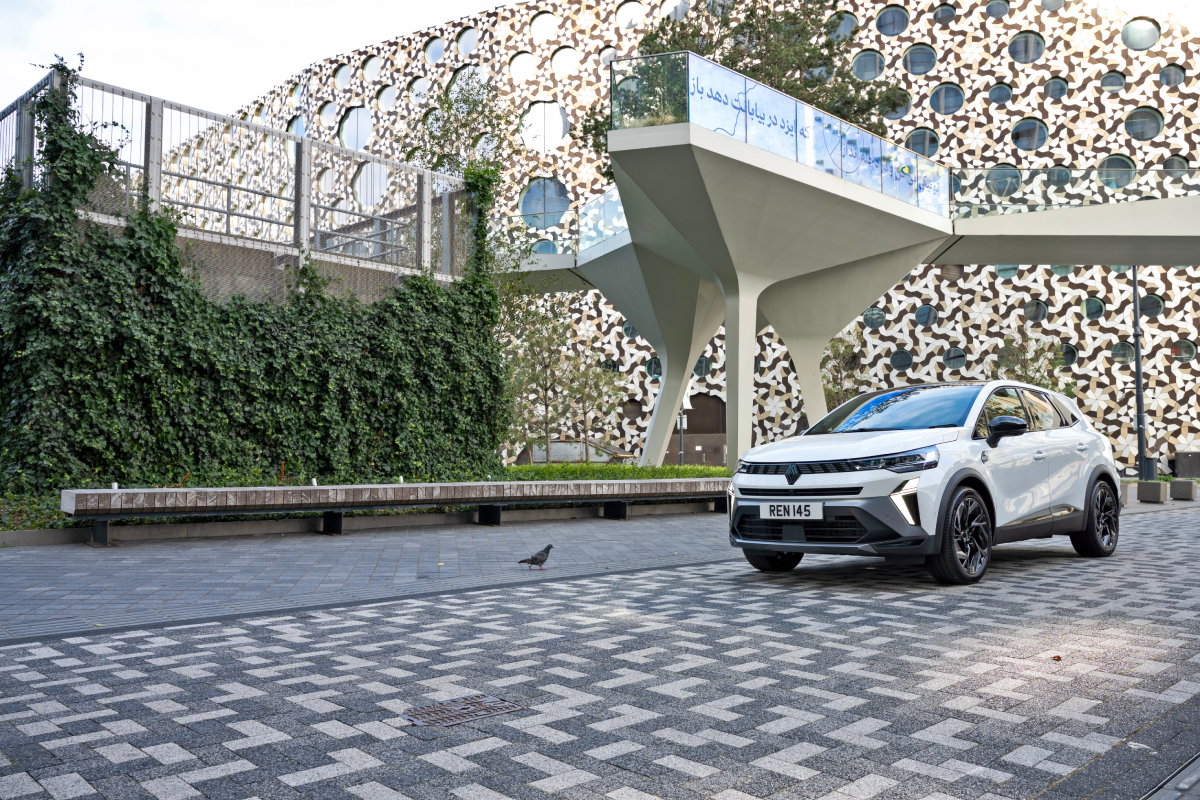 Credit: Newspress
Of course, the downside to EVs is charging times, which, unlike fuel stops, may have to be factored into a day’s planning.
In that regard, a corporate fleet often requires a different approach for higher-mileage assignments or in areas where the charging infrastructure is still lacking.
The Renault Symbioz E-Tech self-charging hybrid combines a 1.8-litre petrol engine with dual electric motors to produce 160PS.
It is a sensible, rational choice, combining handsome looks with practicality into a crossover SUV with quiet efficiency.
Although engineless driving isn’t its focus, electric motors mean the Symbioz can run with the engine off, relying on battery power to handle low-speed traffic and rush-hour queues, resulting in fuel economy figures of over 60mpg.
On motorway journeys, the excellent 10.4-inch portrait infotainment touchscreen provides plenty of entertainment to pass the time, running on a Google-derived operating system which remains one of the most intuitive on the market.
An added benefit is that Google Maps, which provides the SatNav, is native to the car.
While carbon emissions of 97g/km seem economical, its tax rating is nevertheless significantly higher than the Alpine’s, meaning it functions best as a capable operational instrument for the business rather than a tax-advantageous tool for the driver.
The Final Balance
The company car has evolved from a simple moniker of corporate status into a sophisticated financial instrument.
In the modern era, when configured around combustion engines, tax structures make it challenging to justify their use.
Compared with a private acquisition via an employee cash allowance, the numbers simply do not add up. However, this conclusion is entirely reversed when electric cars come into the equation.
A vehicle like the Alpine A390 allows an executive to enjoy the bespoke craftsmanship, advanced engineering and entertaining driving dynamics of an expensive sports car while paying a fraction of the tax associated with a traditional luxury petrol-engined car.
For the modern business and the discerning professional, a company car can still make perfect sense, provided you’re willing to let battery power take over the heavy lifting from petrol and diesel fuels.
As a result, it’s still perfectly possible to have a company car that carries significant prestige while remaining financially astute.
Create your Regit account Read more Halfords eyes garage growth after wheels fall off cycling boom
Similarly tagged content: Sections Categories People & Organisations Related Topics