Bulgaria’s threat to block the bloc’s 21st Russia sanctions package shows that the Union’s weakness was never Viktor Orbán alone. It is a rule under which one capital’s refusal binds the other 26 and owes them no reason.
 Blaga Thavard




For years, Brussels treated the obstruction of EU policy on Russia as a Hungarian problem. Viktor Orbán’s government repeatedly delayed sanctions and support for Ukraine, including a proposed listing of Russian Orthodox Patriarch Kirill.
Then Hungary changed government and lifted its long-standing objection. But the blockage did not vanish with the old government, it simply changed address.
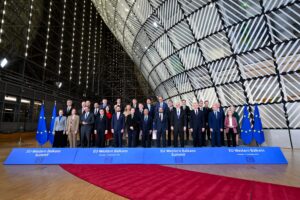
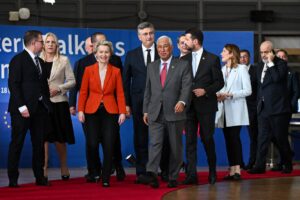
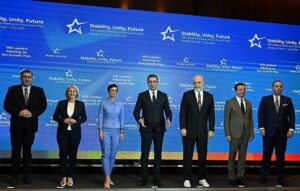
As EU leaders gathered in Brussels for their June summit, Bulgarian prime minister Rumen Radev said Sofia would veto the EU’s proposed 21st sanctions package against Russia.
His objections ranged from geopolitics to supply chains: adding Patriarch Kirill to the EU’s individual asset-freeze and travel-ban list, risks to Lukoil, which operates Bulgaria’s only refinery, and possible disruption to supplies of fertiliser and spare parts for the Sofia metro.
Each concern deserves scrutiny on its merits. But the larger issue is structural: under the EU’s unanimity rule, one capital can hold up measures targeting Russian banks, export-control evasion, the shadow fleet and third-country sanctions networks until its national objections are accommodated.
This matters beyond the personalities involved. The EU’s problem was never only Orbán. It is a system in which unanimity can turn one national objection into a continental veto.
A safeguard turned inside-out
EU sanctions on third countries begin with a common foreign and security policy decision under Article 29 TEU, which Article 31(1) requires to be adopted by unanimity. The economic measures that implement it are then adopted by qualified majority under Article 215 TFEU.
The first step is the gate; without it, the second cannot move.
Unanimity is defended as a protection of sovereignty. Used repeatedly as a blocking instrument, it inverts the safeguard it was meant to provide: one government acquires foreign-policy authority over the other 26.
That is not consensus in any meaningful sense. Consensus requires persuasion and accommodation. A veto converts a narrow national objection into leverage over an entire package.
Bulgaria’s objections are not all spurious.
Measures that touch its only refinery or essential infrastructure call for serious economic assessment. The listing of any individual, cleric or otherwise, must rest on sufficient evidence, comply with proportionality, and withstand review before the EU courts, which have annulled listings before.
Those requirements justify legal scrutiny and case-by-case derogations. They do not justify holding unrelated measures hostage to a single national objection.
Stop turning one objection into a veto on everything
The council’s first response should be practical: where legally feasible, separate personal listings from sectoral sanctions and country-specific derogations.
If Sofia objects to the listing of Patriarch Kirill, that dispute should not automatically hold up measures targeting Russia’s military-industrial base, shadow fleet or sanctions-evasion networks.
Omnibus packages allow any capital to turn its narrowest objection into leverage over the whole.
The second response is already in the Treaties. Article 31(1) TEU allows a government to make a formal declaration of constructive abstention. The abstaining state is not obliged to apply the CFSP decision, but it must accept that the decision commits the Union and refrain from any action likely to conflict with or impede its implementation.
The decision cannot be adopted only if the states making such declarations amount to at least one third of the member states and represent at least one third of the Union’s population.
The mechanism is rare, but it is not theoretical. Since Russia’s full-scale invasion, it has been used for Ukraine-related assistance measures under the European Peace Facility and for the establishment of EUMAM Ukraine.
Constructive abstention is no silver bullet. It is voluntary, and sanctions requiring economic implementation under Article 215 TFEU must still operate uniformly across the Union.
But it is an underused political escape hatch.
When a government objects to one measure without rejecting the Union’s broader policy, standing aside should become the default alternative to blocking the other 26.
That would not abolish unanimity. It would make clear that obstruction is a political choice, not a Treaty requirement.
A veto without reasons is power without accountability
No capital should be able to block the other 26 without putting its case, and its evidence, on the record.
Until the voting rules change, any government blocking a common foreign-policy decision should be expected to publish a precise statement of reasons.
Not a press-conference appeal to peace, sovereignty or the national interest, but a public memorandum identifying the measure it opposes, the concrete harm it predicts, the evidence behind that claim and the narrower alternative it would accept.
A veto exercised behind closed Council doors can impose costs on the entire Union while remaining domestically useful, and procedurally cheap, for the government wielding it. A duty to give reasons would not abolish unanimity. It would force the blocker to own the objection, the evidence and the consequences.
In the longer term, the European Council should use Article 31(3) TEU – the treaty’s built-in switch from unanimity to qualified-majority voting – for defined categories of non-military foreign-policy decisions, starting with restrictive measures.
The clause must itself be activated unanimously, and it cannot apply to decisions with military or defence implications: the Treaties’ most obvious catch-22. But a difficult reform is not an argument for permanent paralysis. The European Parliament has repeatedly backed wider use of qualified-majority voting for sanctions and greater reliance on constructive abstention.
When Hungary’s new government signalled that it was prepared to lift Budapest’s longstanding objection to sanctioning Patriarch Kirill, Brussels appeared to have one less veto to manage.
Bulgaria’s threatened blockade shows how illusory that relief was. The defect was never confined to Orbán. It is embedded in a rule that makes obstruction portable.
The veto moved from Budapest to Sofia and it will move again. Europe can keep changing the villain, or finally change the rule.