Recent answers from the European Commission to parliamentary questions we submitted confirm what journalists, humanitarian organisations and Palestinians themselves have documented for years
 Lynn Boylan MEP



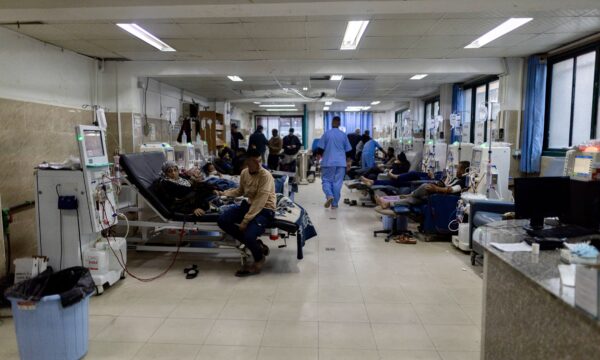
Across the occupied Palestinian territories, the European Union has spent decades funding the quiet architecture of ordinary life. Schools, hospitals, water networks, community centres, playgrounds and cultural institutions rarely attract headlines, nor should they.
Their purpose has never been symbolic. They exist because education, healthcare, public space and access to clean water are not luxuries to be postponed until peace arrives. They are the conditions that allow people to meet their basic needs while politics fails to catch up.
That investment reflects something Europe likes to say about itself.
That solidarity means more than emergency aid. That a viable two-state solution cannot exist without viable Palestinian communities, and that schools, hospitals, water networks and public spaces are not simply humanitarian projects but the foundations on which any future Palestinian state must eventually stand.
Looking at the EU-funded investments now turned into rubble, it is difficult not to wonder whether Europe still believes its own story.
The European Union has become remarkably consistent in financing the foundations of Palestinian life while displaying far less determination in holding accountable those who systematically dismantle those same foundations.
Recent answers from the European Commission to parliamentary questions we submitted confirm what journalists, humanitarian organisations and Palestinians themselves have documented for years.
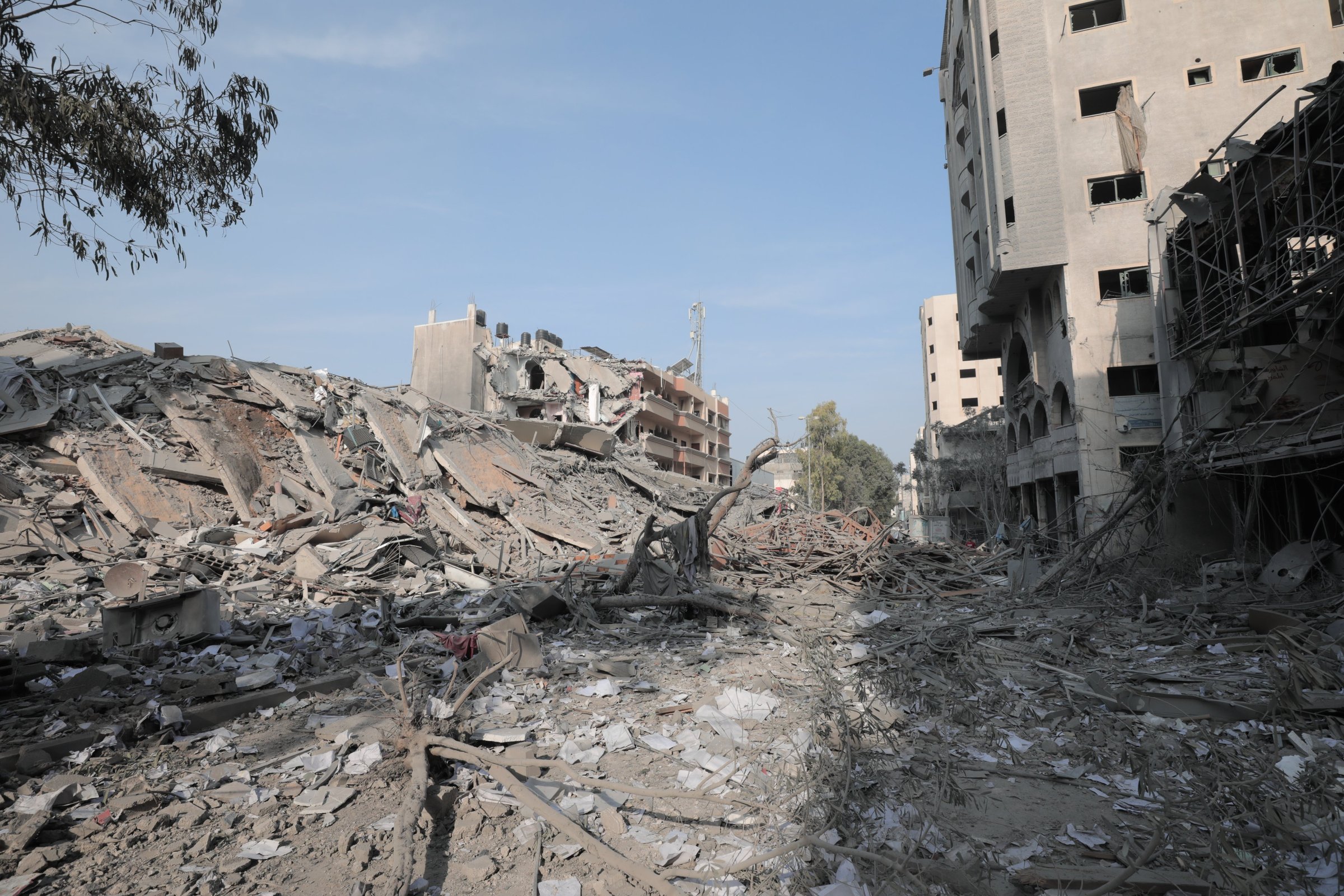
At least €150m worth of European-funded infrastructure has been destroyed in Gaza and the West Bank without being reimbursed.
Schools, community facilities, water infrastructure and development projects have been demolished, damaged or rendered unusable.
The figures are striking, but the numbers alone fail to capture what has disappeared. These projects were never simply investments recorded on a balance sheet. They were the places where children learned, patients received treatment, neighbours met, families collected water and communities held together under immense pressure.
A file to be ‘managed’
For too long, Palestine has been treated in Brussels as a file to be managed rather than a political reality demanding decisive political choices.
While destruction mounts up and death tolls rise, we negotiate wording on condemnations, and congratulate ourselves for preserving diplomatic dialogue with the aggressor.
Every few months we return to the same conversation. Another report. Another debate. Another discussion about humanitarian needs, reconstruction or aid. The buildings keep disappearing. Our vocabulary changes far less than the landscape does.
The debate about Gaza’s reconstruction is already underway.
According to the joint assessment by the European Union, the United Nations and the World Bank, rebuilding Gaza will require $71.4bn [€62.5bn] over the coming decade. Europe has both a moral responsibility and a strategic interest in helping Palestinians rebuild their lives.
But if our ambition is measured only by the size of future donor conferences or the billions we are prepared to mobilise, we will have learned very little from the catastrophe that has made reconstruction necessary in the first place.
Curiously, the conversation always seems to stop at the same point. We discuss who will finance reconstruction. We spend far less time discussing who should bear responsibility for making reconstruction necessary.
Solidarity. But where is accountability?
Palestinian civilians cannot be expected to wait for justice before reconstruction begins.
At the same time, European taxpayers are entitled to ask why solidarity has become almost entirely disconnected from accountability.
International law cannot function only as a language through which we describe destruction after it has occurred. It must also form the political choices that seek to prevent destruction in the first place.
Otherwise, reconstruction risks becoming less an act of recovery than a recurring feature of a conflict that the international community has learned to manage rather than resolve.
Surrounded by rubble, the “funded by the EU” plaques still remain. Until we finally find the courage to take a stance, we risk continuing to finance the next round of ruins.