

The EU has probably missed the boat in imposing trade measures against solar panels or electric vehicles (EVs) without China viewing this as a direct, offensive measure (and in turn, incurring harsh retaliation)
 Frances Li



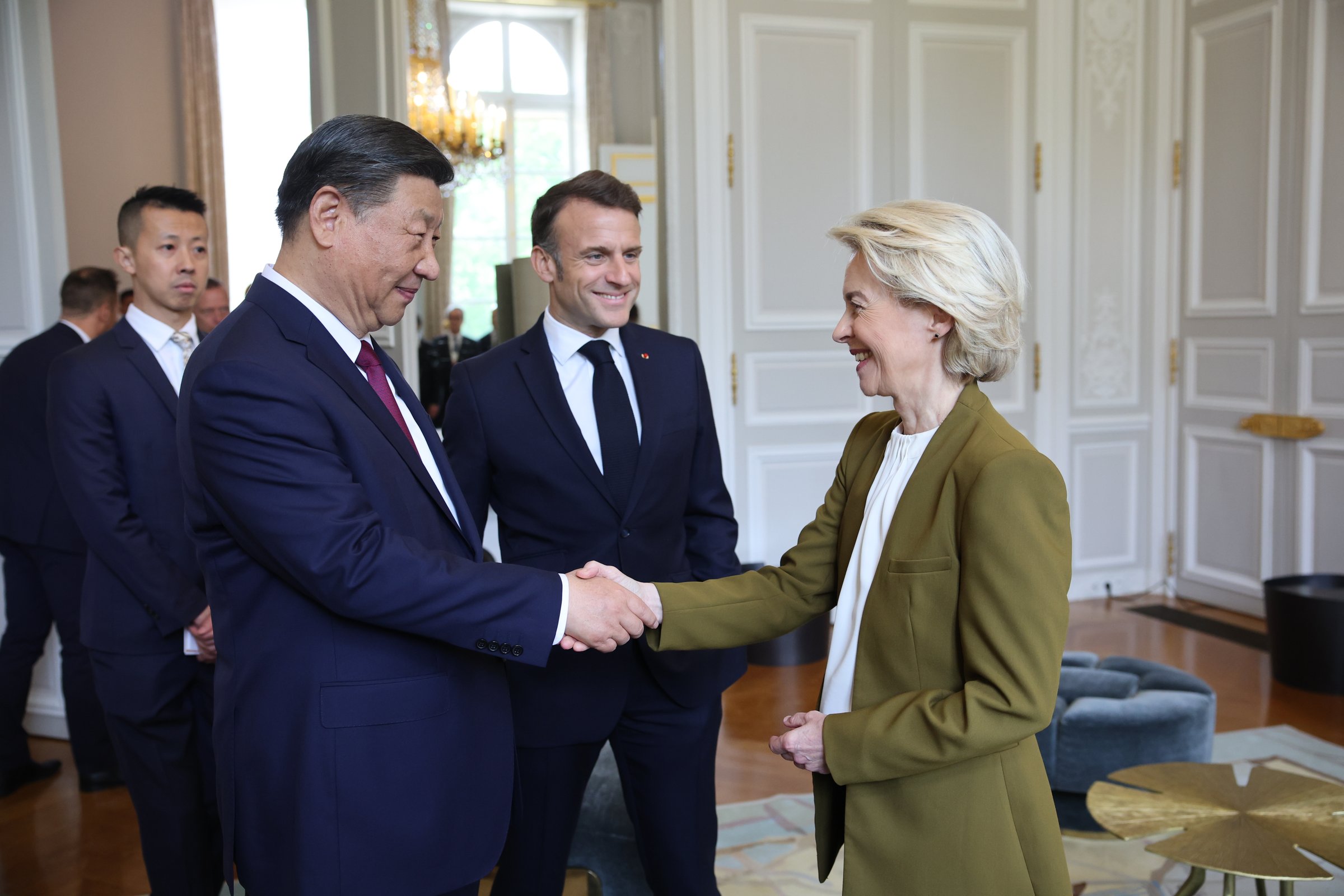
EU leaders are increasingly sounding the alarm over China’s dominance of green tech and its state-backed industrial model. As Brussels searches for ways to protect Europe’s industrial base, the temptation is to strike hard in response, through the use of aggressive trade measures and an expansion of the EU’s trade-defence and industrial-policy toolbox.
But an aggressive response risks provoking retaliation from the EU’s second-largest trading partner. That tension was evident at the June European Council summit, where leaders sounded alarm about “global macroeconomic imbalances” but stopped short of endorsing a more confrontational approach.
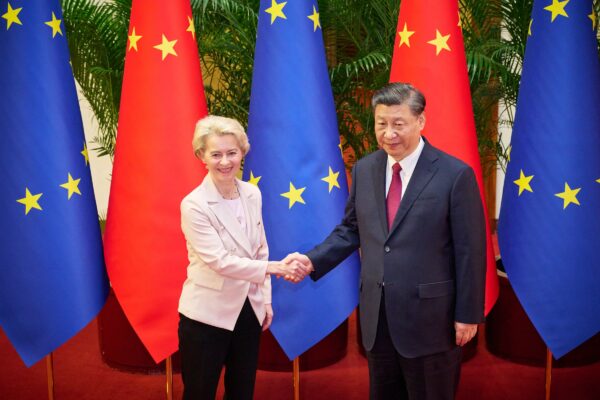
Pursuing a policy that Beijing perceives as offensive carries real risks, given that Europe’s dependence on China is a structural reality.
EY-Parthenon [Ernst & Young’s global strategy consulting arm] estimates that replacing the infrastructure, research, software, manufacturing capacity and supply chains on which the eurozone currently relies on China would cost around $9.1 trillion [€7.95 trillion] by 2050 – requiring annual investment equivalent to almost double the EU’s current annual budget.
Will and able to hit back
China has also shown that it is willing and able to retaliate.
It demonstrated “escalation dominance” in the wake of Donald Trump’s tariffs in 2025. By restricting exports of key rare earths, it disrupted global industrial supply chains (with European manufacturers caught in the crossfire) and forced Washington to de-escalate.
This upper hand against Europe also applies.
Although Europe has chokepoints of its own – such as ASML’s advanced semiconductor manufacturing equipment – those restrictions would take much longer to affect China than Chinese export controls would take to disrupt the supply of inputs into European industry.
A strategy centred on escalation therefore risks triggering a tit-for-tat trade war in which Europe is especially vulnerable.
Rather than asking how the EU can directly hit China, policymakers should therefore ask what kind of measures actually best serve Europe’s long-term interests.
Defence vs offense
Here, a distinction between ‘defensive’ and ‘offensive’ measures may be a useful framework. Measures aimed at reducing future dependencies and supporting industries where Europe remains competitive and where China is not yet dominant, are more likely to be viewed as defensive.
On the other hand, the EU has probably missed the boat in imposing trade measures against solar panels or electric vehicles (EVs) without China viewing this as a direct, offensive measure (and in turn, incurring harsh retaliation).
Indeed, China has retaliated against EU countries that backed EV tariffs, reportedly telling automakers to pause investment in those markets. As a result, countries such as Italy, which had been vying for Chinese automotive investment, have missed out on recent EV projects.
However, it’s not too late for the EU to take defensive measures and carve out strengths in other clean-tech goods.
European companies remain major players in the production of electrolysers, wind equipment, heat pumps and next-generation batteries. The EU should take a forward looking approach, through pre-emptive supply and demand-side action to support targeted sectors of the future–before it’s too late.
Early intervention would help firms achieve the scale needed to remain competitive before Chinese manufacturers establish dominant market positions.
Supporting demand for consumer goods like heat pumps would provide firms with reassurances that these technologies will continue to meet the needs of European consumers–and are worth investing in.
This approach has a strategic advantage: such measures can be framed as enhancing economic resilience, supporting decarbonisation and reducing future dependencies, rather than as attempts to exclude Chinese firms.
Such a defensive posture limits the risk of retaliation and helps set Europe up for achieving scale in strategic sectors of the future.
Critics of industrial policy may argue that the EU risks choosing the ‘wrong’ sectors or technologies.
However, the greater risk may be failing to act at all.
Europe should look to China’s own long-term approach. In the early 2000s, Beijing identified EVs as a strategic industry, sustaining support for the sector over two decades, helping to result in the Chinese EV dominance that we see today.
The ability to make a long-term commitment is of course easier under a one-party system than in a 27 member-state bloc, where competing spending priorities and shifting political coalitions often undermine policy continuity.
The EU has shown, time and again, that it is willing to delay or dilute policies when confronted with sustained pushback — as seen with the flexibility introduced into the 2035 internal combustion engine vehicle phase-out.
Yet such policy stability is essential if European firms are to invest in clean technologies and trust that future demand will materialise.
By prioritising defensive measures that build long-term resilience over offensive ones that invite retaliation from a particularly well armed opponent, the EU can strengthen its industrial base while avoiding a trade conflict it is ill-equipped to win.