

Since end-May, anti-government protests in Albania have evolved into the largest civil mobilisation since the fall of the dictatorial regime in the early 1990s. With traditional media largely silent, the digital space has become both a refuge for protest and a testing ground for digital authoritarianism.
 Megi Reci



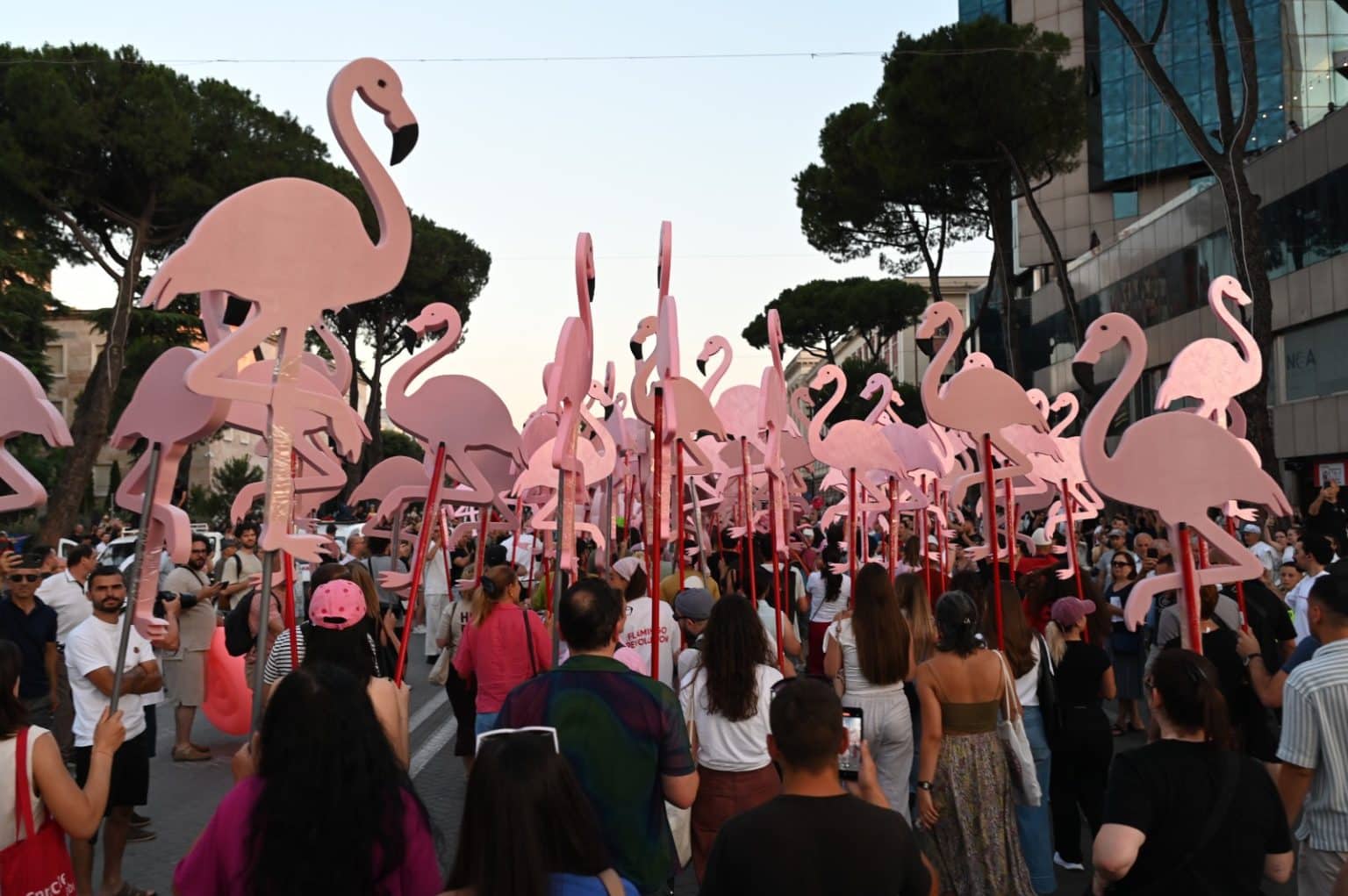
On May 30, protests broke out in Albania in response to a luxury development project in the Vjosa-Narta protected area, linked to investments backed by Donald Trump’s son-in-law, Jared Kushner, and a network of powerful local business interests and individuals with a history of legal troubles.
What began as an environmental protest grew into a movement known as the ‘Flamingo Revolution’, a reference to one of the many species of birds that inhabit the protected coastal area.
Alongside demands for environmental protection and the preservation of biodiversity, the movement has evolved into an expression of collective frustration with the status quo, calling for accountability, transparency, and political change.
Rejecting affiliation with the political forces that have dominated Albania’s political landscape for more than three decades, protesters have presented the movement as an independent civic initiative. For more than 50 days straight, they have called for the resignation of a prime minister and government they see as corrupt.