
Lab tests back claims that human faeces have polluted Gostivar’s drinking water, causing a major health crisis – with more than 3,000 locals falling ill so far.
 Sinisa Jakov Marusic



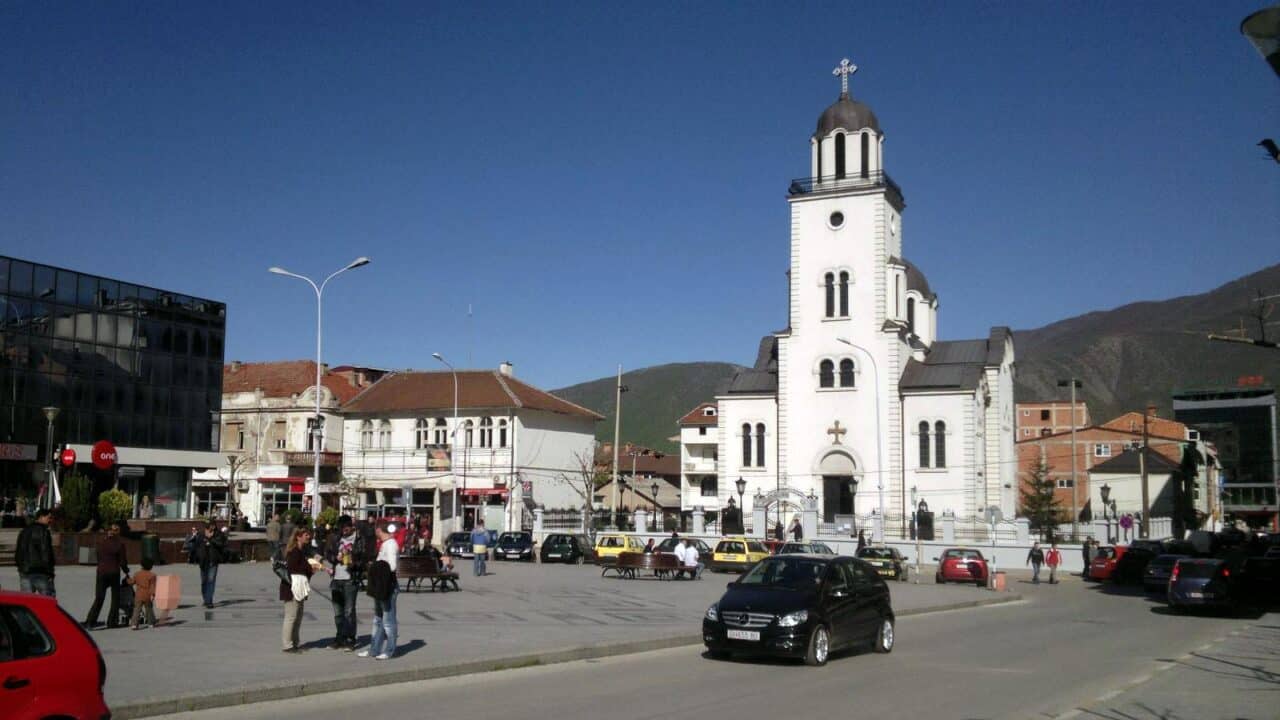
The centre of Gostivar, North Macedonia. Photo: Fazlijah/Wikimedia Commons.
Lab tests have confirmed the presence of faecal contamination in the drinking water supplied to the western North Macedonian town of Gostivar, local prosecutors announced on Tuesday.
The findings, disclosed by the Gostivar Basic Prosecutor’s Office, appear to prove that the town’s water supply is linked to an epidemic of gastrointestinal illness that has overwhelmed local health services since last week.
On Monday, police detained the head of the local public water utility, Artana Asani, and two other managers over the outbreak that has made more than 3,000 people sick so far.
The Gostivar Prosecutor’s Office said three officials are suspected of committing “serious crimes against the environment and nature through the pollution of drinking water.
“The suspects, acting together in their official capacities … made the drinking water in the overflow chamber of the system supplying Gostivar municipality and several surrounding villages unusable by introducing a harmful substance into it,” the Prosecution said.
The probe suspects the water supply became contaminated when the water company, in a presumed attempt to increase the water supply last month, connected additional pumps to the existing system that drew in water from an unhealthy surface-level source.
According to the prosecution, laboratory tests conducted by the Institute of Public Health detected faecal contamination in the water supply, including extremely high concentrations of coliform bacteria and the presence of Escherichia coli (E. coli), indicating contamination with human or animal faecal matter and rendering the water unsafe to drink.
Before his arrest, water utility head Asani last week insisted the outbreak of illness in the town was not caused by water but food poisoning. But authorities pinpointed drinking water as the most likely culprit, given the sheer scale of the outbreak.
The outbreak has sent more than 3,000 people to hospitals and clinics with symptoms including severe stomach pain, diarrhoea, vomiting and nausea, making it one of the largest recorded waterborne health incidents in North Macedonia in decades.
The Health Ministry has warned that the flow of new patients is not subsiding yet and is running at about 200 to 300 new patients per day.
Meanwhile, tap water in the town of roughly 80,000 people, some 65 kilometres west of the capital, Skopje, is unusable, and the municipal and state authorities have sent trucks with bottled water for residents’ use.
The Health Ministry on Monday said some of the contaminants found in the system are not easy to deal with, so the ban on drinking tap water will likely stay in place for some time.
The incident has triggered widespread public anger, with residents questioning how contamination on this scale could have gone undetected until thousands of people had already become ill.
Gostivar Mayor Valbon Limani on Monday denied any responsibility for the crisis himself, saying he had no role in the water company.
“I do not feel any moral responsibility because the public utility company Komunalec is a separate legal entity that manages and operates the water supply system. Otherwise, the citizens who know me are aware that, had the situation been different, I would certainly have been the first to resign,” Limani said.