Kosovo prosecutors allege suspects used coercion and fraud to steal money, and then relied on Telegram and cryptocurrencies to finance Islamic State terrorism and evade detection.
 Adelina Ahmeti



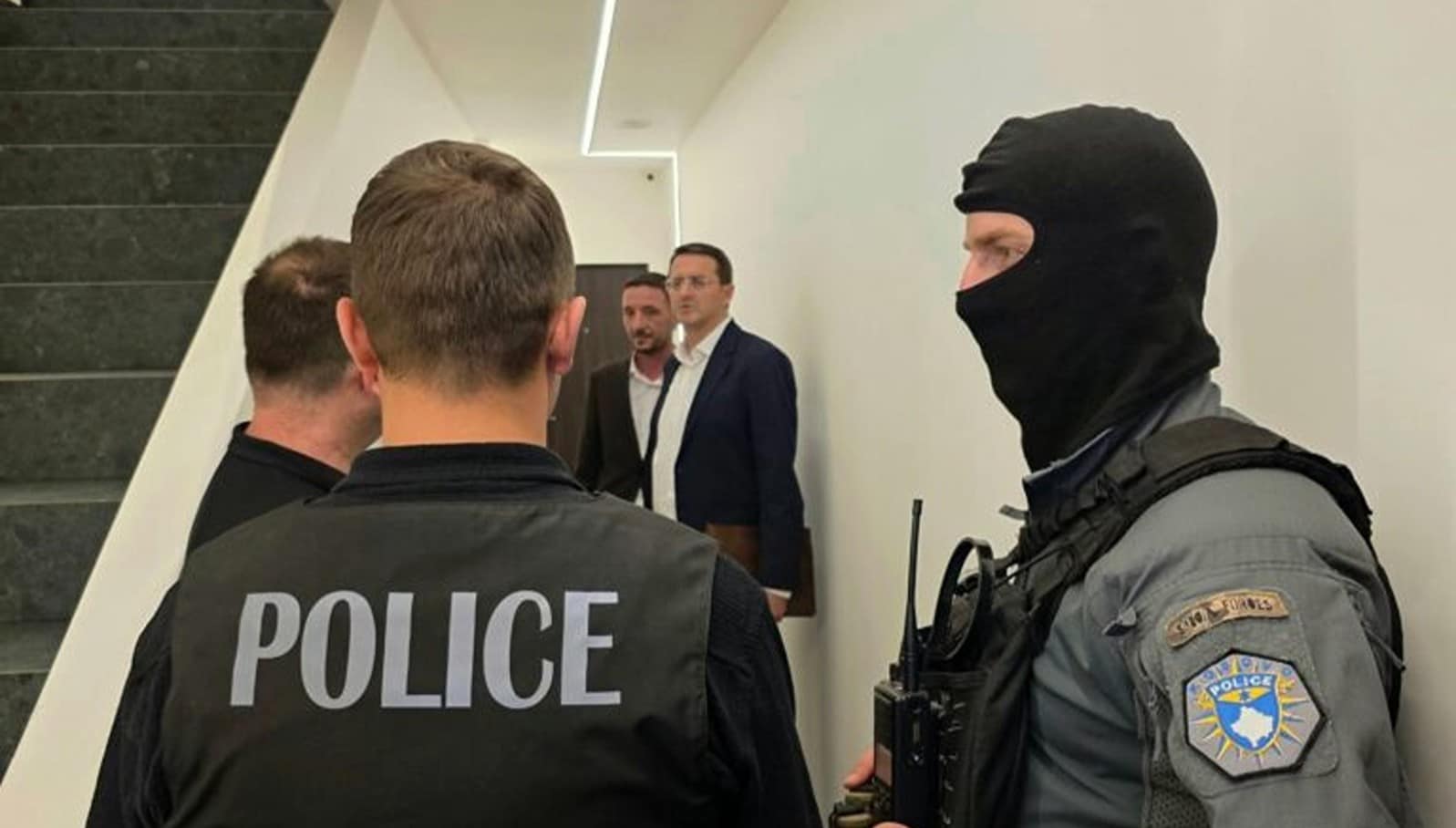
Security experts assess that terrorist groups are increasingly using digital technologies to conceal financial traces. By converting money into cryptocurrencies, funds can be transferred more easily to individuals or organisations linked to terrorism.
For this reason, investigations involving crypto assets are no longer treated only as financial crime cases, but also as issues that directly affect national security.
Reshat Maliqi, a lawyer who is the former director of the Kosovo Police, told BIRN that Islamic State activity has evolved into a kind of hybrid warfare. “It is very difficult to obtain information. These are covert forms of financing, recruitment, and training, and these methods are much more dangerous,” he said.
Former Chief Inspector of the Kosovo Intelligence Agency Burim Ramadani told BIRN that the initial recruitment method is “the ideology of violent extremism, where some individuals consciously choose to engage”.
But when it comes to financing via cryptocurrencies, many people around the world were deceived into participation “without knowing that their actions were being used to spread hostile narratives and hatred,” Ramadani said.
In Kosovo, the Law on Crypto Assets has been in force since 2024. The Central Bank of Kosovo also adopted the first regulatory framework for providing crypto asset exchange services in September of last year.
Maliqi highlighted the importance of advancing investigations into cryptocurrencies, particularly, he said, “where they are, where they are being placed. In some operations, a large number of cryptocurrencies have been found stored even in empty houses in Kosovo.”
Ramadani also emphasised that “Kosovo urgently needs major investments in cybersecurity, but unfortunately, the Cybersecurity Agency is still not fully functional, even though the law was approved in 2023. The risk in the north of Kosovo from the far right is absolutely linked to the Russian platform for destabilising the Balkans, which uses the same methods under the false belief that they are untraceable.”
Sokol Shasivari, the director of the Department for Supervision of Markets, Financial Institutions, Payment Institutions and Electronic Money at the Central Bank of Kosovo, told BIRN that “the legal framework is very clear on who can be an owner of crypto asset service operators”.
According to Shasivari, the Cybersecurity Agency currently does not have information on how much money enters or leaves Kosovo through cryptocurrencies.
“According to the Law on Crypto Assets and other regulations that we are in the process of drafting, the Central Bank has a licensing and supervisory role, meaning it also has the authority to revoke licenses. Within it, there is also a division against money laundering and terrorism financing, but the competent authority is the Financial Intelligence Unit,” Shasivari said.
According to Ramadani, advanced methods of financing terrorism via cryptocurrency mainly started around 2019 “with a strong push from the Hamas network”.
“[Hamas] managed to convince people that this is a secure and untraceable way of financing terrorism, spreading hatred and promoting hostile narratives against Western states,” he said.
However, he added, “the reality is the opposite – there is no perfect crime and nothing is untraceable; it just takes time.”