One of the leading figures in the UK motor industry who tried to turn British Leyland around and later became managing director of Peugeot Talbot in CoventryOne of the heroes of the British motor industry in the late 20th century, Sir Geoffrey Whalen, who has died aged 90, was bloodied
 Martin Adeney



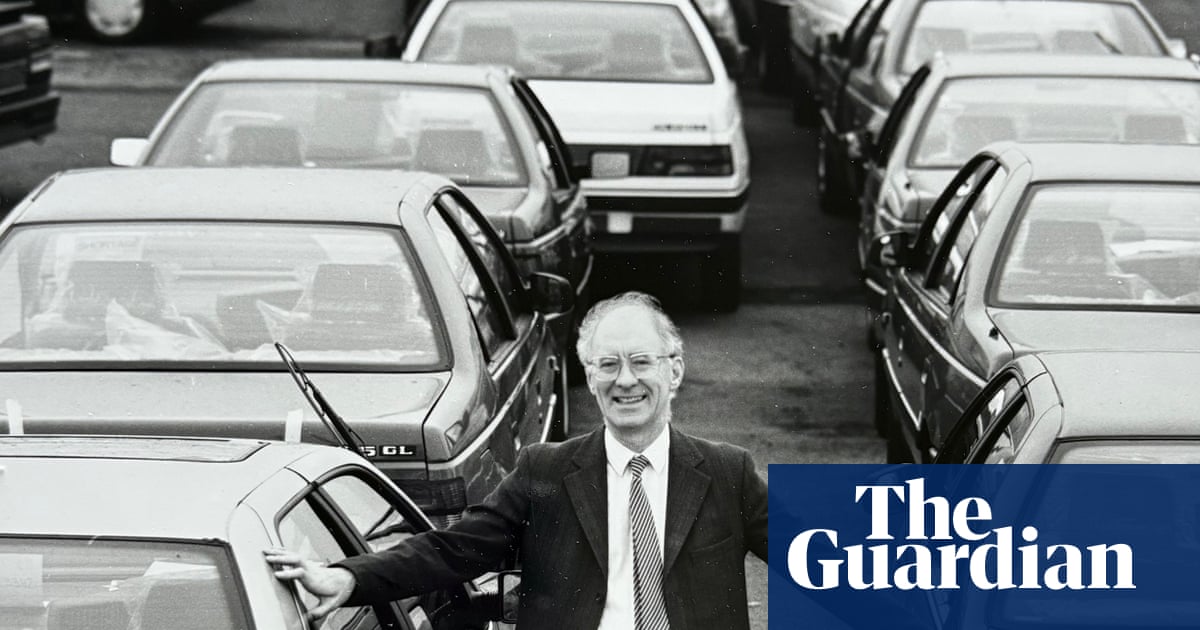
One of the heroes of the British motor industry in the late 20th century, Sir Geoffrey Whalen, who has died aged 90, was bloodied in the interminable, but ultimately futile, battle to make British Leyland succeed, yet his achievement was to keep mass-market car manufacturing alive in Coventry for an extra 20 years from the time he became managing director of Peugeot UK in 1984.
Having started out in industrial relations for the National Coal Board in Scotland, Whalen was 30 before he moved to be divisional personnel manager for AC Delco, the components arm of General Motors in Dunstable, Bedfordshire.
He was struck by the contrast between what he saw as the disciplined professionalism of miners’ union leaders such as Mick McGahey, with whom he had negotiated, and the anarchy and poor quality of union bargaining in the similarly totally unionised motor industry – due, in his view, to the availability of alternative employment.
In 1970, he was recruited to help rescue the UK-owned industry. Two years earlier, the ailing British Motor Corporation (BMC) had been merged with Leyland, in a move encouraged by the government, but in spite of new investment the merger was in trouble in the face of competition from Ford and the reviving European motor industry. Whalen’s job was to bring in a coherent payments structure at the new £50m works at Cowley, Oxford. The company’s fortunes hung on production of a new mass-market car, the Marina.
He arrived to find an average of two and a half stoppages a day. A piecework system gone mad encompassed 80 different rates of pay just for inspectors, no sick pay, minimal pensions, and little compensation when workers were frequently laid off. Whalen blamed a legacy of management autocracy, which had encouraged shop steward irresponsibility.
His task was to bring in a more settled system, “daywork” or payment by the hour, plus better fringe benefits and the promise of stability. It was a long struggle, but Whalen’s patent honesty and dogged determination paid off; the Marina was launched on schedule. By 1975, Cowley was the best performing plant, if not stoppage-free, and Whalen became personnel director of Leyland cars.
There, too, he inherited confusion; pay arrangements in some plants were such that production workers received more than skilled workers. Efforts to secure a more rational system seemed to succeed when a ballot in November 1977 accepted company-wide bargaining. But the company was brought to its knees by the 1978 strike of skilled toolmakers over differentials and the government, already the major shareholder after rescuing the company with investment of over £1.4bn, drafted in a new boss, Michael Edwardes, an opponent of centralisation, to attempt another turn-round. Whalen chose to leave. “I had been under terrific pressure for nearly eight years. I wasn’t psychologically attuned to dismantling all I had been trying to achieve”.
He convalesced as personnel director for Rank Hovis McDougall’s bakeries, but in 1980 his old boss at BMC, George Turnbull, invited him to become personnel director of the Talbot, soon Peugeot Talbot, Motor Company in Coventry, where he was now managing director. Peugeot had bought the company from Chrysler. It was previously the Rootes Group, with the Humber and Hillman models. Survival was in doubt, but Turnbull’s firm stand in a three-month strike was followed by a concerted attempt to improve industrial relations and get managers to communicate better.
Whalen was in his element. A year later he became assistant managing director and when Turnbull retired in 1984, managing director, for 11 years, perhaps the only chief executive of a major company at the time to have come from a career in personnel.
His achievement was to keep manufacturing going at Ryton, a factory originally built for the 1930s rearmament programme, persuading an initially sceptical French management to invest and introduce the Peugeot 309 when the old Chrysler Talbot models became out of date. Extra shifts and jobs came with the new cars and manufacturing continued until 2006.
In part it was done by securing increases in productivity and profits to back his insistence that British carworkers could compete. The crack was that in the first few Peugeot years they lost £400m; in the next few, they made £400m.
But success was also crucially dependent on the particularly good relationships he built with the management in Paris, acknowledged by his appointment as a Chevalier of the Légion d’honneur in 1990, in advance of his 1995 British knighthood. He had been appointed CBE in 1989.
Whalen’s talents stemmed from his interest in and respect for people of all sorts. Behind his self-effacing, slightly bookish, bespectacled front, colleagues found an unusual ability to devolve responsibility and encourage decision-making. His idiosyncratic manner, with trademark red socks and suede shoes, seemed to help good personal relations, whether with the shopfloor, union leaders or captains of industry. Unusually, he was elected president of the Society of Motor Manufacturers twice.
Midlander of the Year in 1988 and Midlands Businessman of the Year in 1992, he was a governor and deputy chairman of Coventry University from 1989 to 1995. Non-executive directorships included chairmanship of the Coventry Building Society from 1999 where he successfully resisted demutualisation. He led the local Training and Enterprise Council and as chairman of the Motor Industry Benevolent Fund raised the money for a residential home.
His beginnings were far from the Midlands. Brought up in East Ham, east London, he was the son of Mabel (nee Rushbrook), a bakery worker, and Henry, a dockworker who was chairman of his trade union branch. After leaving East Ham grammar school, and national service in the RAF, Whalen took a history degree at Magdalen College, Oxford, after which he opted to join the National Coal Board.
In 1961 he married Charlotte Waud, a school teacher. She survives him, along with two sons and three daughters.