

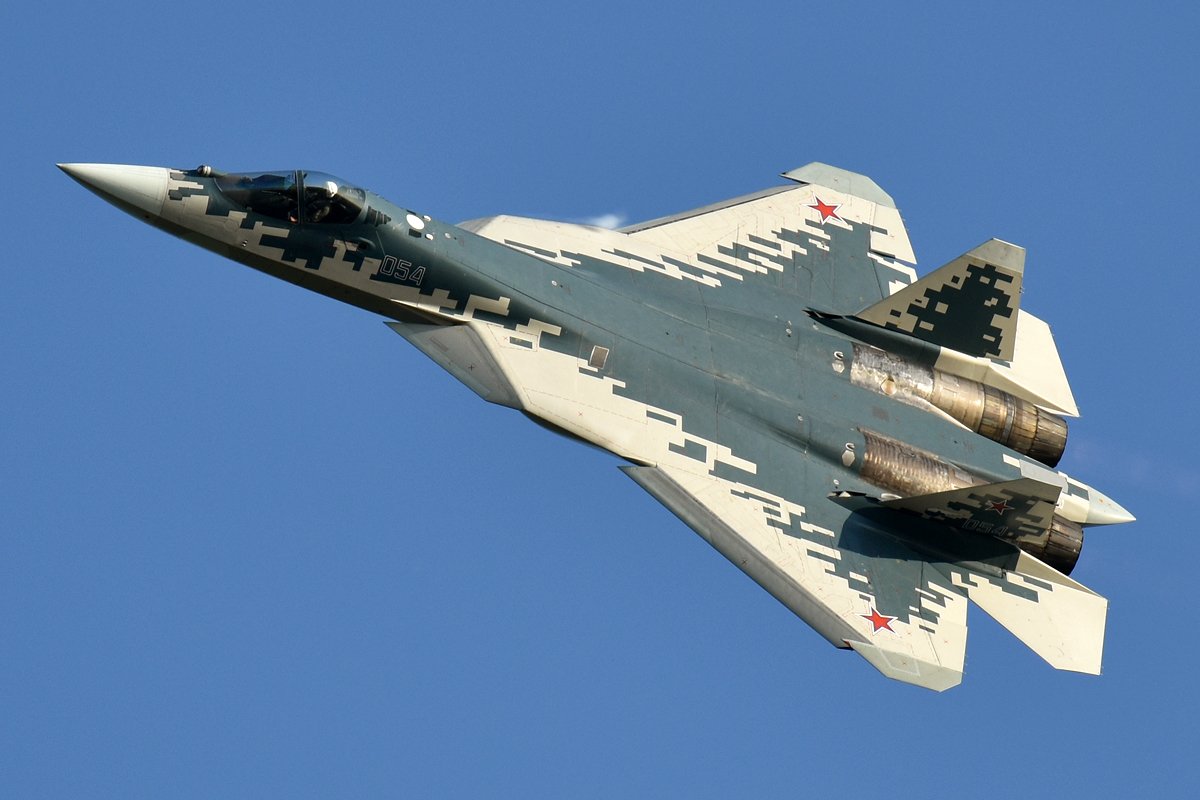
If Ukraine really hijacked Russian air defences to kill a Su-57 over Moscow while blunting a major push toward Dobropillia, it would mark a sharp escalation in the technological duel shaping the next phase of the war.
 Tomáš Vasilko



Every day, the Ukraine Battlefield update newsletter offers a clear look at how the war is unfolding on the ground. Subscribe for free here to get the full text delivered to your inbox.
Russia’s most advanced Su-57 fighter jet has crashed. A Ukrainian independent group claims that Russian forces downed it themselves, aided by Ukrainian hackers. Russia launched one of its largest mechanised assaults of the past year, but even tanks equipped with counter-drone systems did not help it succeed. The Dobropillia direction is becoming one of the main axes, where Russia wants to advance. Attacks on Wildberries continue, with people in St Petersburg also watching the warehouses burn. Videos of the day: Drones race each other during the attack on Wildberries; an unsuccessful Russian attack on a ground drone.
Ukraine may have carried out a unique operation that apparently resulted in the destruction of Russia’s most advanced Su-57 fighter jet. As the Defence Express website wrote, it could be the first case of a combat aircraft being downed with the aid of a cyberattack.
On Thursday (23 July) around noon, an aircraft crashed near the town of Zvenigorod in Moscow region. Russia’s defence ministry confirmed this, without specifying the aircraft type.
However, Russian media reported that it was a rare Su-57 — the most advanced fighter in Russia’s air force, described as a fifth-generation aircraft and recently hailed by Putin as “the best in the world”.
Photographs emerged from the area showing the aircraft on fire, although the details were unclear.
A Russian Su-57 5th generation fighter crashed outside of Moscow this morning on a training flight. Some Russian sources report a friendly fire incident. pic.twitter.com/wQYQRdt6aU
— OSINTtechnical (@Osinttechnical) July 23, 2026
Russia’s defence ministry said that the preliminary cause of the crash was a technical malfunction. It said the aircraft had been on a training flight without ammunition, crashed in an uninhabited area, and that the pilot had ejected and was not in a life-threatening condition. These are the official claims of the Russian side.
However, claims quickly emerged from some Russian bloggers that the aircraft may in fact have crashed as a result of actions by Bars Moscow, a Russian air-defence group. The group was formed by reservists — and therefore relatively inexperienced soldiers — and is intended to defend the capital against the growing number of Ukrainian attacks, particularly by drones.
The international independent volunteer group Inform Napalm made the same claim. It is not an official Ukrainian group, but it cooperates with the Ukrainian armed forces.
It also claimed that the aircraft was downed by a Bars Moscow Russian air-defence unit, but that Ukrainians had “forced” it to do so.
How did this happen, according to the group?
A few days earlier, it published a video that had reached it showing this Russian group training in the use of Lys-2 drones. Among other things, the footage showed the software used by the group.
InformNapalm claims a Ukrainian HUMINT-CYBINT operation manipulated Russia’s BARS Moscow air defenses into shooting down a Su-57 in Moscow region. The group said it intercepted training streams, analyzed the system’s software, hardware, combat procedures, and vulnerabilities,… pic.twitter.com/2J2LpxcJCM
— NOELREPORTS 🇪🇺 🇺🇦 (@NOELreports) July 23, 2026
It analysed the information and sent a document to the relevant branches of the Ukrainian military.
“The document systematised data on personnel training, the software and hardware complex, combat-operation algorithms, and identified vulnerabilities in the Bars Moscow system,” Inform Napalm wrote.
According to the group, this enabled Ukrainians to find a way to “influence the operations of one Bars Moscow crew and use a system created by Russians against the Russians themselves”.
“Russian air defence worked. This time, however, it worked in Ukraine’s favour,” the group said. The Ukrainian military and intelligence services have not yet commented on the Su-57 crash.
It is unclear exactly how Ukrainians could have “influenced” Russian air defences into hitting one of their own aircraft. Inform Napalm referred only to a “comprehensive cognitive influence and cyber intervention”.
The Defence Express website wrote that the unit is equipped with interceptor drones, machine guns and man-portable air-defence systems (MANPADS). All these means, however, require visual contact with the target, meaning the soldier could have seen that it was a Russian aircraft.
If the possibility that Russian soldiers deliberately downed their own aircraft is excluded, the website said there are two possible explanations. The first is that it was downed by a Citadel automatic cannon, capable of independently detecting and shooting down targets. It is unclear, however, whether the unit had this system at its disposal. Ukrainians could theoretically have hacked it.
The second possibility is that they gained access to the system and changed the aircraft’s identification on radar screens to that of a hostile target. The soldiers then shot it down, believing it to be, for example, a Ukrainian missile. These are only hypotheses, however.
The aircraft was flying at a low altitude because the incident occurred shortly after take-off from the nearby Kubinka airfield. Defence Express believes it may have been a two-seat Su-57D variant, which made its first test flight only in May.
The Oryx website reports that Russia has so far visually confirmed the loss of only one Su-57 aircraft — a damaged aircraft in 2024. Ukraine has claimed in the past to have hit several such aircraft. Russian sources have also acknowledged some cases, but visual evidence is lacking.
Russia’s air force had only four Su-57s at the start of the full-scale invasion. Their number is currently estimated at 40 to 50.
Russia has deployed these fighters only cautiously at the front. This year, however, reports emerged that it has been using them more frequently. They reportedly approach within 200 km of the front and launch Kh-59 and Kh-69 cruise missiles at Ukrainian targets.
Russia also frequently displays these fighters at air shows in an effort to sell them abroad. So far, only Algeria has bought them, but Asian countries including India, Indonesia and Malaysia have also shown interest.
Russia launched one of the largest — if not the largest — mechanised assaults on Ukrainian positions in nearly a year. Such attacks have almost disappeared, as it is now very difficult to bring heavy equipment to the front lines. Drones can see virtually everything and can easily strike large vehicles.
Nevertheless, Russia attempted this again. It happened this week near the village of Maiak, on the Dobropillia axis north of Pokrovsk.
A Ukrainian soldier using the name Officer wrote that he had not seen a similar assault in almost a year. The Ukrainian Phoenix unit, which stopped the attack, said it had not seen anything similar for a very long time. It then published a video of the assault.
Масштабний танковий прорив на Донеччині зупинено. Бійці прикордонного загону «Фенікс» відбили ворожу атаку, знищивши 9 танків, 2 бронемашини, 3 установки «Град» та ліквідувавши кілька десятків окупантів. Уся знищена бронетехніка догорає серед полів і посадок регіону.… pic.twitter.com/duSiSfiraP
— Сергій Нещадим △ 🇺🇦 (@nevedimka123) July 24, 2026
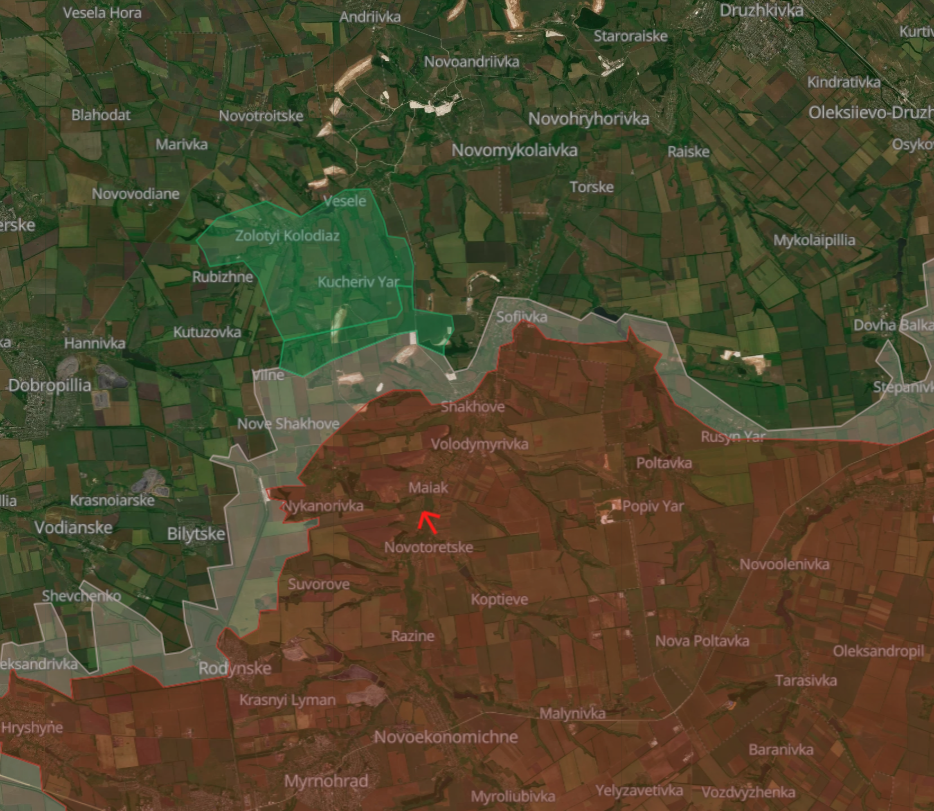
The map shows that the assault was stopped while still in territory controlled by Russia, around five km before the start of the grey zone, according to the DeepState UA map.
According to Phoenix, Russia deployed dozens of armoured vehicles. Tanks made up a large proportion of them, with some describing it specifically as a tank assault.
The outcome was as could be expected. Officer wrote that 80 percent of the vehicles were destroyed. Ukraine’s general staff reported that Ukrainian forces destroyed or damaged 28 tanks in total that day.
The Phoenix border unit said that it alone had destroyed nine tanks, two armoured vehicles and three Grad multiple rocket launchers.
For comparison, according to Oryx, Russia suffered visually confirmed losses of only five tanks in May and 18 in April. This shows that the assault was indeed exceptional.
The question is why Russia resorted to this and what it hoped to achieve. Some bloggers also made the interesting observation that Russia appears to have deployed T-72B3A tanks here. Some even claim this is the first known confirmation of their deployment at the front.
The first known appearance of the Russian T-72B3A main battle tank equipped with the Arena-M active protection system (APS) on the frontlines in Ukraine.
The Arena-M APS was designed to protect Russian armored vehicles from ATGMs, RPGs and FPV drones. In this case, the system… pic.twitter.com/OOO42iAwGx
— Status-6 (War & Military News) (@Archer83Able) July 23, 2026
This tank is notable for its Arena-M active protection system. It is intended to protect it from anti-tank missiles and FPV drones. It works roughly as follows: a radar on the tank detects an incoming missile or drone and fires fragmentation counter-munitions, which explode several metres from the tank and should destroy the incoming projectile.
In practice, however, the system clearly did not work as Russia had hoped.
The footage again confirms that armoured vehicles are currently facing great difficulties on the battlefield. They do not even manage to get close to the grey zone before enemy defences stop them with drones.
Under these conditions, they have become very expensive armoured taxis.
“A major problem for everyone in Ukraine is that large-scale mechanised assaults are always detected, and engagements begin deep in the rear while the units are still advancing towards the front. This can take as long as 30 minutes, and in many cases much longer,” OSINT analyst Woofers wrote.
Moreover, even if the attacking side somehow managed to stop the drones, it would still face mines, artillery and anti-tank missiles from the defenders.
“Tanks and infantry fighting vehicles are not yet obsolete, but if you deploy them in situations where it makes no sense and do not equip them with autonomous counter-drone systems capable of physically neutralising drones, it is essentially like target practice,” Czech analyst Jakub Janovský wrote.
According to US analysts around Michael Kofman from the War on the Rocks website, mechanised assaults are not outdated, but can work only under certain conditions.
“Success today depends more than ever on creating or exploiting brief windows of opportunity. When such opportunities arise, mechanised forces remain the only force capable of providing speed, striking power and seizing territory on a large scale. (…) Mechanised forces will prevail only if they move immediately, employ deception tactics and coordinate firepower at lightning speed. In the next war, the advantage will belong to armies that act within seconds, not those that spend weeks planning,” they wrote earlier this year.
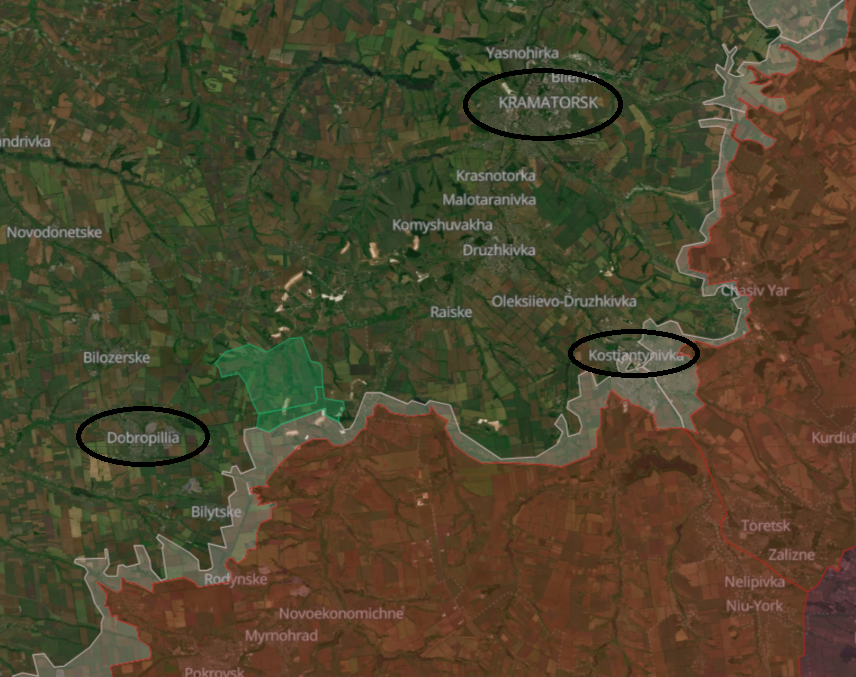
The choice of location for the assault near Dobropillia was apparently not accidental. Several Ukrainian military analysts wrote that Russia has begun to focus more on this axis and wants to move closer to the town of Dobropillia.
Ukrainian blogger Petrenko wrote that the enemy was increasing pressure in the Dobropillia area.
“The grey zone has expanded around the villages of Myrne, Ivanivka and Vesele, as well as the Shakhtar holiday settlement. Russian forces are trying to advance along a broad front and establish a bridgehead for a further offensive towards Dobropillia,” he said on Thursday.
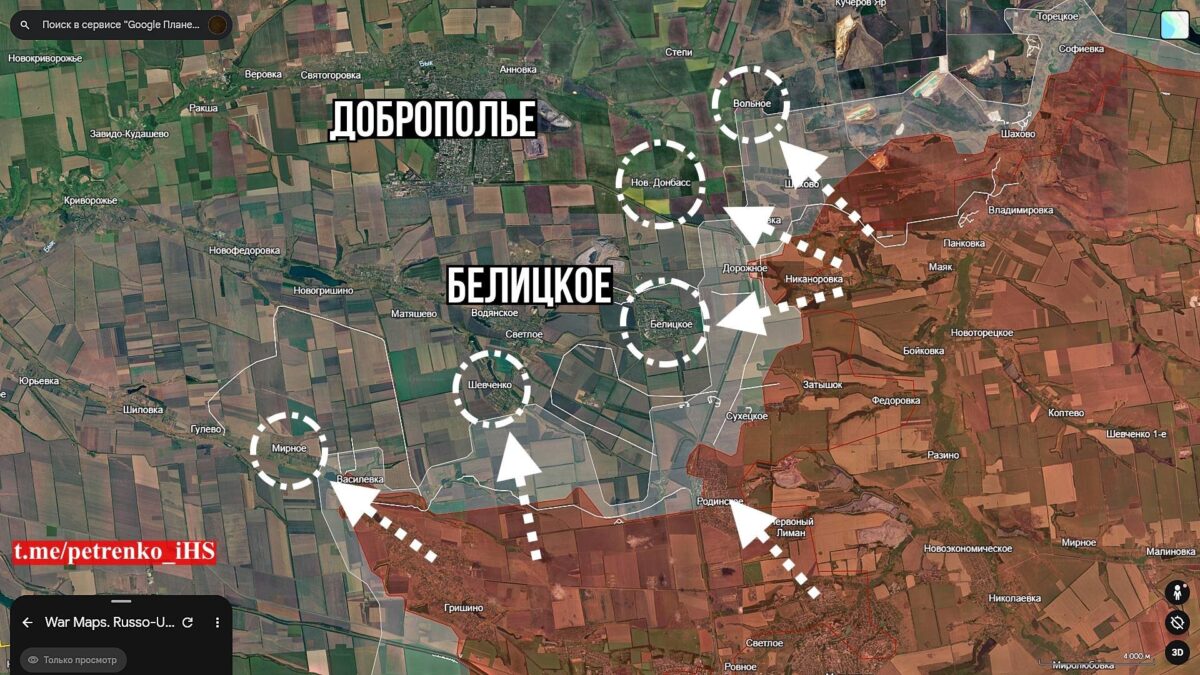
Military analyst Kostyantyn Mashovets wrote that Russia was “actively preparing to significantly and extensively intensify its efforts in this direction in the near future”.
“A rapid breakthrough towards Dobropillia and its swift capture would (…) significantly increase the chances of a breakthrough towards Kramatorsk from the south — or rather from the south-west,” he added.
Map of the wider area. Source: DeepState UA
Ukraine is continuing its strike campaign against warehouses belonging to Wildberries, Russia’s largest online retailer. It attacked two warehouses in and around St Petersburg with drones. According to this video, at least three drones struck one of the warehouses.
At least one of the warehouses was completely engulfed in flames.
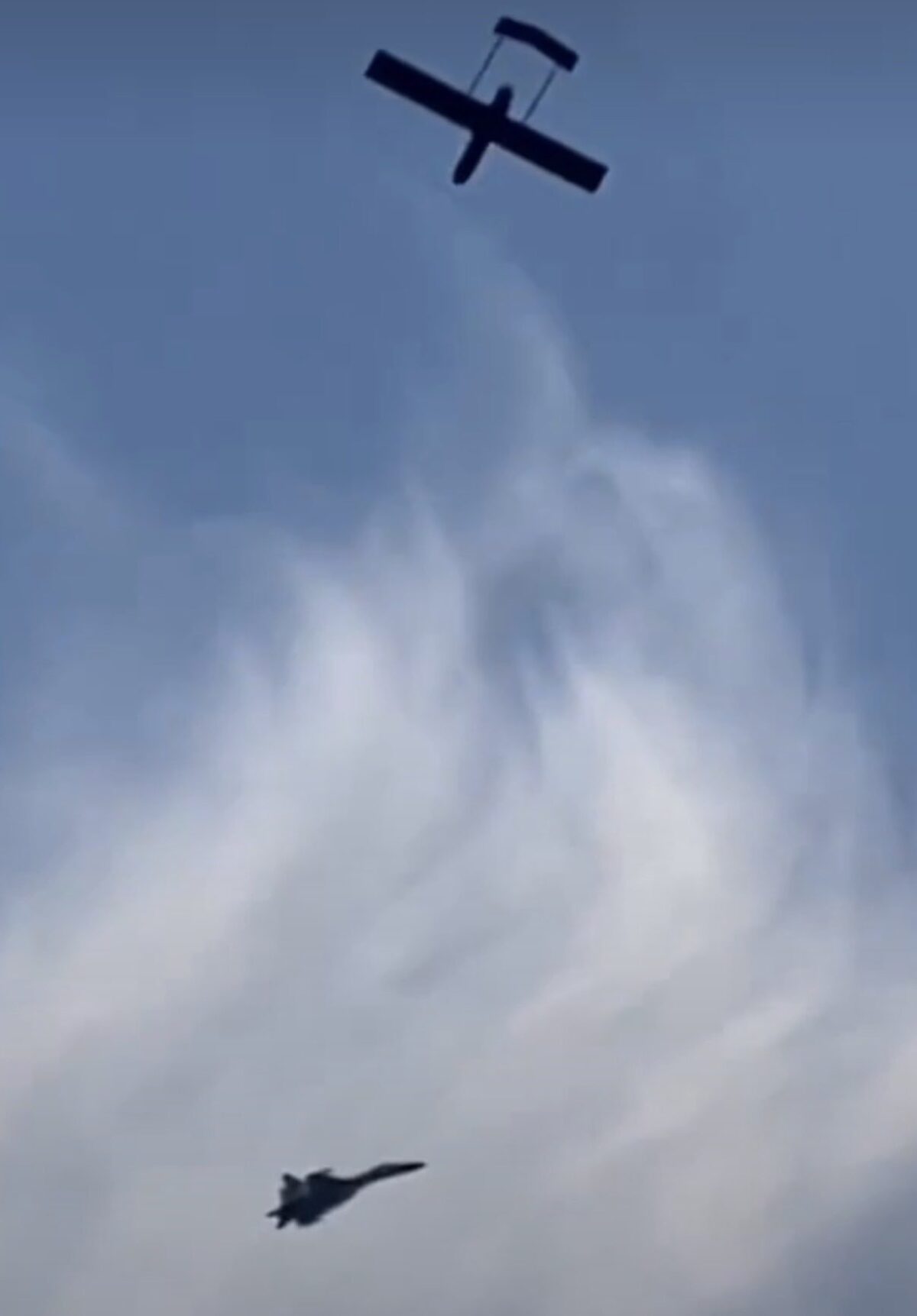
The videos showed that Russian air defences were unable to stop them all. One video even shows a Russian fighter flying past a drone, yet the FP-1 drone still strikes the warehouse.
Watching russian air defense fail day after day. videos of fighter jets desperately flying around trying to shoot down drones with drones in the foreground crashing into warehouses one after another. We’re watching in real time the myth of Russian greatness crash down. pic.twitter.com/39ChkR383I
— Andrew Perpetua (@AndrewPerpetua) July 24, 2026
In addition, they struck a Wildberries warehouse in Simferopol, in Crimea.
📦 Wildberries’ rough night continues
The video shows the moment a strike hit a Wildberries sorting center in occupied Simferopol.
The company confirmed that the facility was evacuated “in accordance with safety requirements.”
This was the third Wildberries logistics hub… pic.twitter.com/qn1rxWAh44
— NEXTA (@nexta_tv) July 24, 2026
Overall, Ukrainians had been attacking Wildberries warehouses for a fourth day since Saturday. They struck at least eight warehouses, some of which burned down completely. They argue that Wildberries also sells military-related goods, such as vests and drones, while Russia attacks similar logistics warehouses in Ukraine.
The attacks may also have a psychological effect. Ukraine has again reminded residents of St Petersburg that the war does not concern Ukraine alone.
The first known appearance of the Russian T-72B3A main battle tank equipped with the Arena-M active protection system (APS) on the frontlines in Ukraine.
The Arena-M APS was designed to protect Russian armored vehicles from ATGMs, RPGs and FPV drones. In this case, the system… pic.twitter.com/OOO42iAwGx
— Status-6 (War & Military News) (@Archer83Able) July 23, 2026
Videos of the day
Ukrainian drones race each other during the attack on Wildberries warehouses in St Petersburg.
Ще дуже красиві кадри. Пара українських дронів наввипередки летить бомбити Пітєр.
Гарно! pic.twitter.com/6hh87US4bl
— Serhii Sternenko (@sternenko) July 24, 2026
A Russian FPV drone hit a Ukrainian ground robot but, for some reason, did not explode. The robot then drove away.
What are the losses
No change on Friday.
By Monday morning, Russia had visually confirmed losses of 23,888 pieces of heavy equipment (23,837 on Friday). Of these, 18,866 (18,815) were destroyed by Ukraine, 993 (993) were damaged, 1,199 (1,199) were abandoned by their crews and 2,830 (2,830) were captured by the Ukrainian military. This includes 4,430 (4,427) tanks, of which 3,332 (3,329) were destroyed in combat. Ukraine lost 11,781 (11,690) pieces of equipment, of which 9,205 (9,123) were destroyed, 694 (689) were damaged, 689 (687) were abandoned and 1,193 (1,191) were captured. This includes 1,450 (1,443) tanks, of which 1,111 (1,104) were destroyed in combat.
Note: Neither side regularly reports its own fatalities or destroyed equipment. Ukraine publishes daily figures on Russian casualties and destroyed equipment, which cannot be independently verified. This overview uses data from the Oryx project, which has compiled a list of equipment losses documented exclusively through photographs since the start of the war.