
With refinery output crashing to 20-year lows, tens of millions of Russians now face soaring fuel and food prices, rolling shortages and a budget hole the Kremlin can no longer hide.
 Mirek Tóda



Every day, the Ukraine Battlefield update newsletter offers a clear look at how the war is unfolding on the ground. Subscribe for free here to get the full text delivered to your inbox.
A fuel crisis unlike anything Russia has ever experienced: drone attacks have pushed the country back 21 years. A black swan for Putin’s regime? Economist Milov predicted that Russia would have to import petrol like other states. Nine countries plus Ukraine have formed an antiballistic coalition: they want to produce a cheaper answer to scarce Patriots as soon as possible. Map of the day: two villages near Sloviansk were supposed to be fully under Russian control, but Ukrainians are still holding them. Videos of the day: destruction of military logistics in Crimea and new simulators for F-16 pilots
A fuel crisis unlike anything Russia has ever experienced. “I have no illusions or worries about the long-term future of Russia. Russia is today a gas station masquerading as a country,” the famous American Republican senator John McCain said in 2014.
He was referring to the economy of an autocratic regime built on selling oil and gas without reforms and technological progress. It is the summer of 2026 and Ukrainian analysts are comparing Russia to an empty canister.
An effective drone campaign against key Russian refineries and oil depots has caused a fuel crisis in the world’s largest country, stretching from Crimea to Omsk and affecting at least 50 million people (35 percent of the population), according to estimates by the FT from a few days ago.
The latest attack on Tuesday morning hit the Gazprom Neftekhim refinery in the city of Salavat in the Republic of Bashkortostan, which is located roughly 1,300 km from the frontline.
After a series of explosions, a fire broke out at one of the largest petrochemical plants in Russia. In 2024 it processed 7.2m tonnes of oil, which represented roughly 2.7 percent of total oil refining capacity. According to the Moscow Times, in addition to petrol and diesel it produces a whole range of oil products from kerosene to ammonia and urea.
A fire also broke out at the Afipsky refinery in Krasnodar Krai.
Two days earlier, the process of converting hydrocarbons into fuels at Rosneft’s Syzran refinery had completely stopped. Again, this was not a random attack; according to Reuters and The Insider, the Ukrainians managed to hit the primary processing unit AVT.5, with a daily capacity of 7,100 tonnes. The repair was estimated to last until the end of the month.
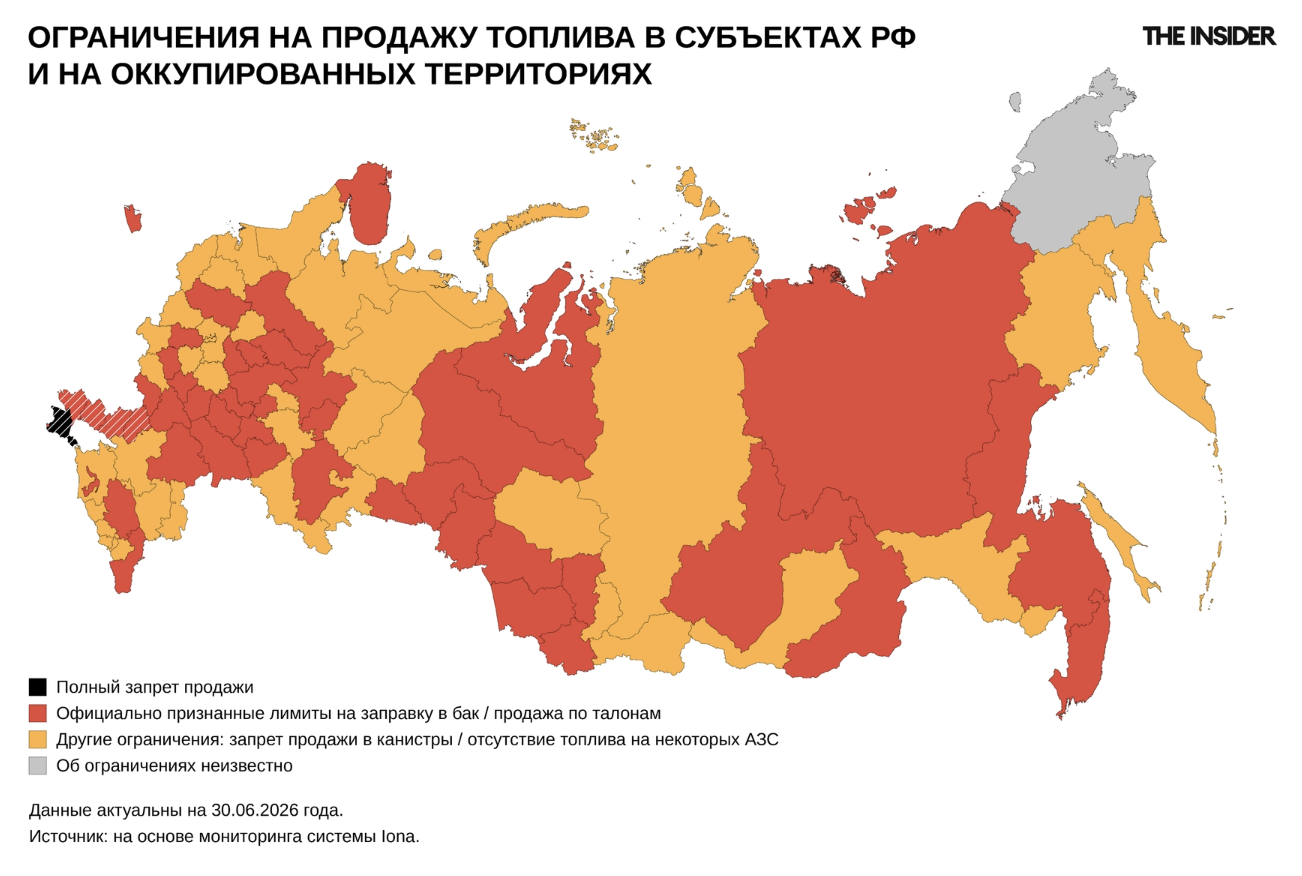
According to the agency, the series of attacks caused a petrol shortage of up to 45,000 tonnes a day, and by the end of June sales restrictions applied to petrol stations in as many as 88 out of 89 regions under Russian control. Only Chukotka in the Far East was spared. However, the situation has been deteriorating rapidly every day, and the outlook is catastrophic, as we explain below.
The steep decline has, according to a Bloomberg chart, pushed refinery output back 21 years.
According to EA Analytics data, Russia processed an average of 3.91m barrels a day over the past month, the lowest level since March 2005. Compared with last year, this is a drop of 1.4m barrels a day.
“A wave of Ukrainian attacks has pushed Russian refining runs to the lowest in more than 21 years, deepening a domestic fuel crunch and further squeezing the global market.
Crude-processing rates have averaged 3.91 million barrels a day so far this month, the lowest level since… pic.twitter.com/RJY2UDrR4D
— Rob Lee (@RALee85) July 13, 2026
A black swan for Putin’s regime? The consequences are enormous and, as the Polish think tank OSW wrote, the Russian government is powerless in the face of this fuel crisis. Let us summarise the most important manifestations of the crisis:
Crimea has become an isolated island without fuel, where some areas have been without electricity for 12 days; at risk are not only farmers’ margins but, for example, also seasonal road repair works: wholesale diesel prices for road transport companies have risen by 75.8 percent and prices for bitumen, which is used in asphalt production, by 45.5 percent; because of shortages, diesel exports have been restricted and petrol imports increased; the sale of much lower-quality fuel, which damages modern engines, has been introduced; opinion polls have recorded the lowest level of support for Putin in the past five years.
“Nothing is working, nothing is flying, nothing is being produced,” the Russian economist Vladimir Milov summed up for The Insider. He compared Ukrainian drones to a black swan, that is, an unexpected effect with far-reaching consequences.
According to Polish experts, Russia is going through the most serious fuel crisis since the creation of the Russian Federation, after the Ukrainian armed forces hit at least once every major oil refinery in the European part of the Russian Federation and, at the beginning of July, for the first time also the largest refinery in Omsk in Siberia, 2,500 km from the frontline.
There is no precedent for anything like this in Russian history.
“If Ukraine maintains the current frequency of its attacks, the situation will probably get even worse, as continued attacks will prevent repair works from being completed, while fuel stocks will continue to decline,” OSW wrote. It noted that, compared with last summer, drones have been effectively striking secondary refining units, the repair of which is particularly difficult because Western components are unavailable.
According to Milov, however, the situation will deteriorate significantly. He predicted, for example, that there would be no petrol at all. “We have to prepare for this and it will be a long-term situation. Basically, it cannot be fixed. Russia’s current outlook is essentially very simple: to become an importer of petrol. Like most countries in the world,” he said in a podcast for The Insider website.
Russians have even started, according to Yandex, to search for an answer to the question: how to make your own petrol?
Milov pointed out that roughly 70 percent of freight transport in Russia goes by road, which will, of course, also be reflected in food prices.
The proverbial black swan does not concern only individuals who spend hours queuing at petrol stations. The Kremlin is even more troubled by the budget deficit. As the former energy minister said, in the first five months of this year it exceeded six trillion roubles, and that was before the state coffers felt the pressure of Ukraine’s drone campaign.
According to the Russian service of the BBC, the main risk for the Russian economy is also a budgetary problem: as of 26 June, the deficit was almost 8 trillion roubles, compared with the planned 5 trillion.
The situation has not been helped by the fact that oil prices began to fall after a not-quite-working truce between the US and Iran. Instead of GDP growth of 1.3 percent, state economists now have to live with 0.1 percent and a huge, growing hole in the budget.
As is customary in the Russian propaganda system, the new economic reality has generated a new economic language. As the Russian website The Bell quoted state propaganda, fuel prices are not “rising”, they are merely “changing”.
The antiballistic coalition and Ukrainian Patriots. During the summit of the coalition of the willing in Paris, another initiative to support Ukraine was launched, aimed at providing the country with effective air defence.
How important this is was demonstrated by yet another Russian attack in the night to Tuesday with drones and ballistic missiles on Kyiv. Among other things, they hit a boarding school. This time, however, the attacks fortunately caused no casualties, as five out of eight ballistic missiles were intercepted.
According to the latest UN data, Russian attacks (some of them with ballistic missiles) killed at least 265 civilians and injured 1,816 in Ukraine in June, the highest monthly toll since the first months after Moscow launched its full-scale invasion in February 2022.
Ballistics, as Ukrainian president Volodymyr Zelensky also said, is currently the only serious card the Kremlin has in its hand, and in recent weeks it has cost dozens of lives, as Ukrainians have lacked the critically important weapons needed to repel these attacks.
The Ukrainian president said that in order to survive the next expected harsh winter, they would need one hundred Patriot missiles a month, that is, 300 missiles for the winter.
The aim of the antiballistic coalition (besides Ukraine it includes France, Britain, Germany, Italy, Norway, Denmark, Sweden, the Netherlands and Spain) is to launch the Freya antiballistic missile programme. According to Zelensky, in the future they could also become part of Europe’s defence, and the first ones could be ready as early as this year.
The project is based on Ukrainian FP-7.x missiles. According to the Ukrainian website Defense Express, the goal is that they could at least compensate for the shortage of PAC-2 GEM-T munitions for the Patriot system. These are the most effective against Russian ballistic missiles, but they take a long time to produce, are expensive, and after the US-Israeli war against Iran far fewer are available.
The company Fire Point is behind Freya, which has a similar design to missiles of the Russian S-300 and S-400 systems.
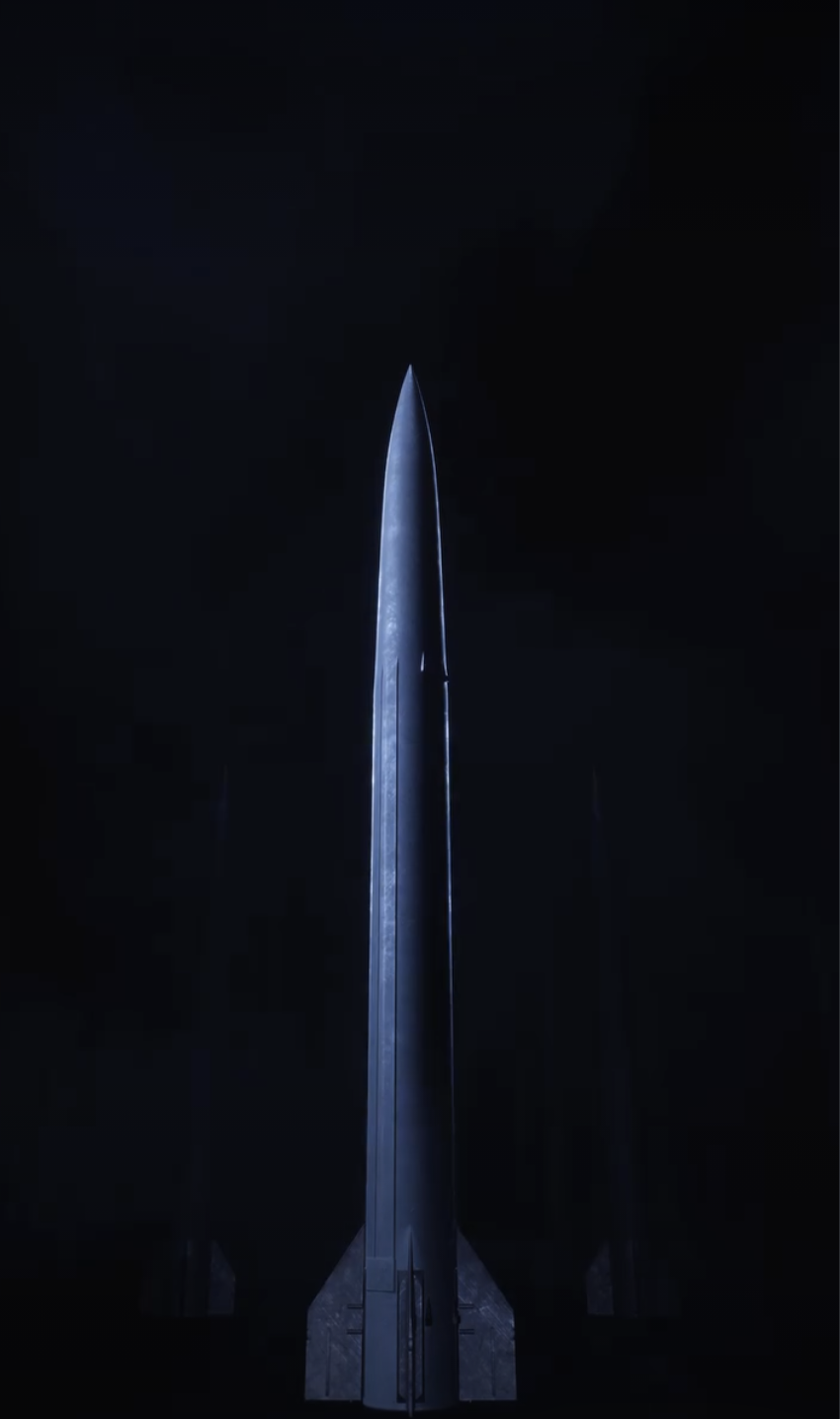 FREYJA — PAN-EUROPEAN ANTI-BALLISTIC SHIELD OWNED TOGETHER
According to Defense Express, the main difference compared with Russian systems is that it will use an infrared guidance seeker from the German company Diehl. Many defence companies are also planning to cooperate on its development, including: FP, Thales, HENSOLDT, Saab, Kongsberg Defence & Aerospace, Weibel, Leonardo, MBDA, Eurosam, Safran, and Destinus.
According to NV, it is expected that the system will be integrated with other air-defence elements in line with the Nato Link-16 standard.
Map of the day
They were supposed to be fully occupied after Russian flag-raising operations, but as the Ukrainian blogger Oleg Petrenko wrote, fighting is still going on in the Kramatorsk-Sloviansk sector in the areas of Malynivka and Rai-Oleksandrivka. According to him, attacks on the central parts of both villages show that Ukrainian units are still holding their positions there.
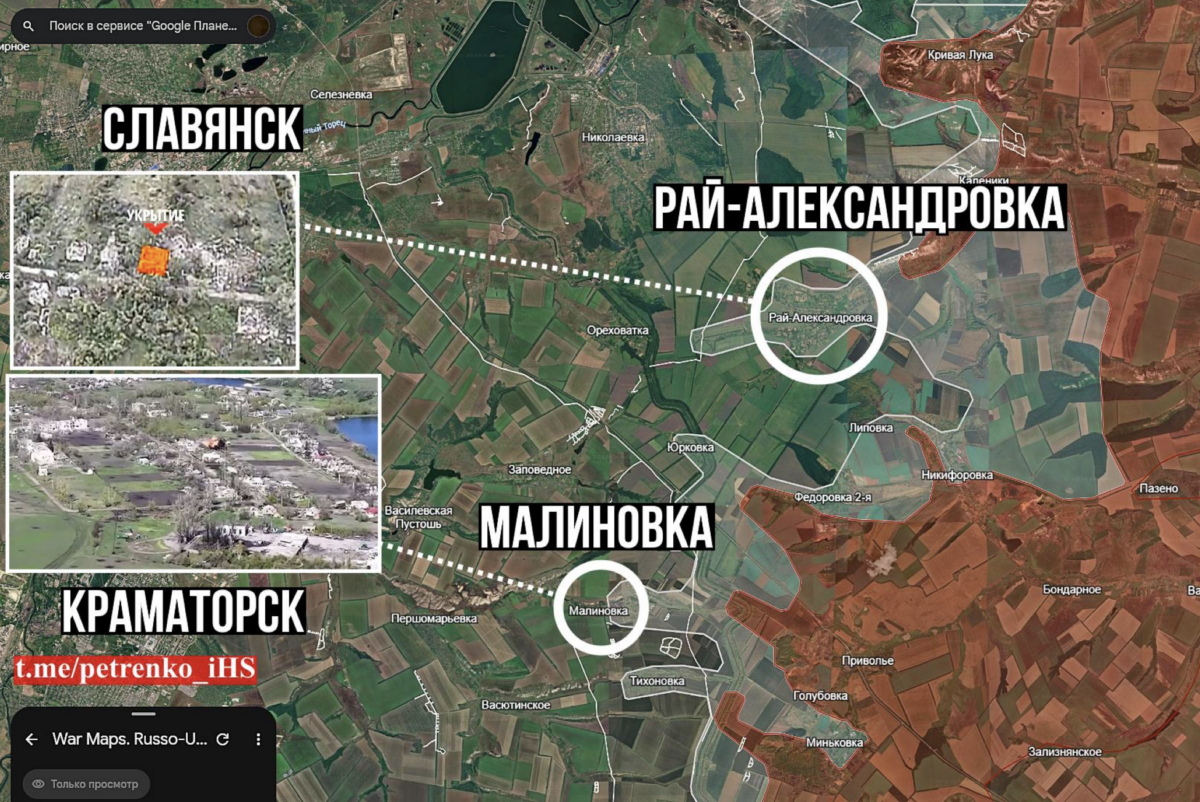 Map: Petrenko+
Videos of the day
The command of unmanned systems of the Armed Forces of Ukraine is continuing its attacks on military logistics in Crimea, where drones hit a launch unit of an S-400 surface-to-air missile system that had been spotted near Kerch.
[embedded content]
They also hit a Pantsir-S1 surface-to-air missile and gun system near the settlement of Osovyn.
Brovdi told the Russians that they did not want to attack the Kerch (Crimea) bridge. “There is no fuel in Crimea! And I want to tell you that there will not be any … We are blocking access routes, not escape routes. We will not touch the Crimea bridge. Let them flee across it. Let those millions flee across that bridge to their Russia. And let them go somewhere far beyond the Urals – to live in peace,” he said.
They are focusing on disrupting the logistics routes that supply Russian units on the occupied peninsula.
According to him, for the first time in history Ukraine is creating conditions for the de facto isolation of the peninsula without a ground operation. “We are creating conditions that make it impossible for them to stay there without it costing the life of a single Ukrainian soldier. We are doing it entirely remotely,” the Ukrainian website NV quoted his words.
New simulators for F-16 pilots. Last week we wrote about the trap in which F-16 pilots caught the Russian enemy flying a heavy Su-35 fighter. To carry out such operations, high-quality training is essential, and this is what a new batch of mobile simulators for complex combat scenarios is meant to provide.
[embedded content]
The simulators are tailor-made for Ukrainian needs. Defence minister Mykhailo Fedorov thanked partners from the so-called Air Force Capability Coalition (the Netherlands, Czechia and Austria) for their support.
What are the losses
On Tuesday unchanged.
Russia has demonstrably lost 23,837 pieces of heavy equipment (on Tuesday (7 July) 23,806). Of these, 18,815 (18,785) pieces were destroyed by Ukrainians, 993 (992) were damaged, 1,199 (1,199) were abandoned by their crews and 2,830 (2,830) were captured by the Ukrainian army. This includes 4,427 (4,424) tanks, of which 3,329 (3,327) were destroyed in combat. Ukraine has lost 11,690 (11,683) pieces of equipment, of which 9,123 (9,068) were destroyed, 689 (687) damaged, 687 (683) abandoned and 1,191 (1,191) captured. This includes 1,443 (1,440) tanks, of which 1,104 (1,101) were destroyed in combat.
Note: Neither side regularly reports on its dead or on destroyed equipment. Ukraine publishes daily figures for Russian casualties and destroyed equipment, which cannot be independently verified. In this overview we use data from the Oryx project, which since the beginning of the war has compiled a list of equipment losses documented exclusively by photographs.