

By treating Starlink as a “space blockade” that must be broken, Moscow and Beijing are turning the Ukraine war into a test case for who will control the orbital infrastructure behind future global conflicts.
 Mirek Tóda



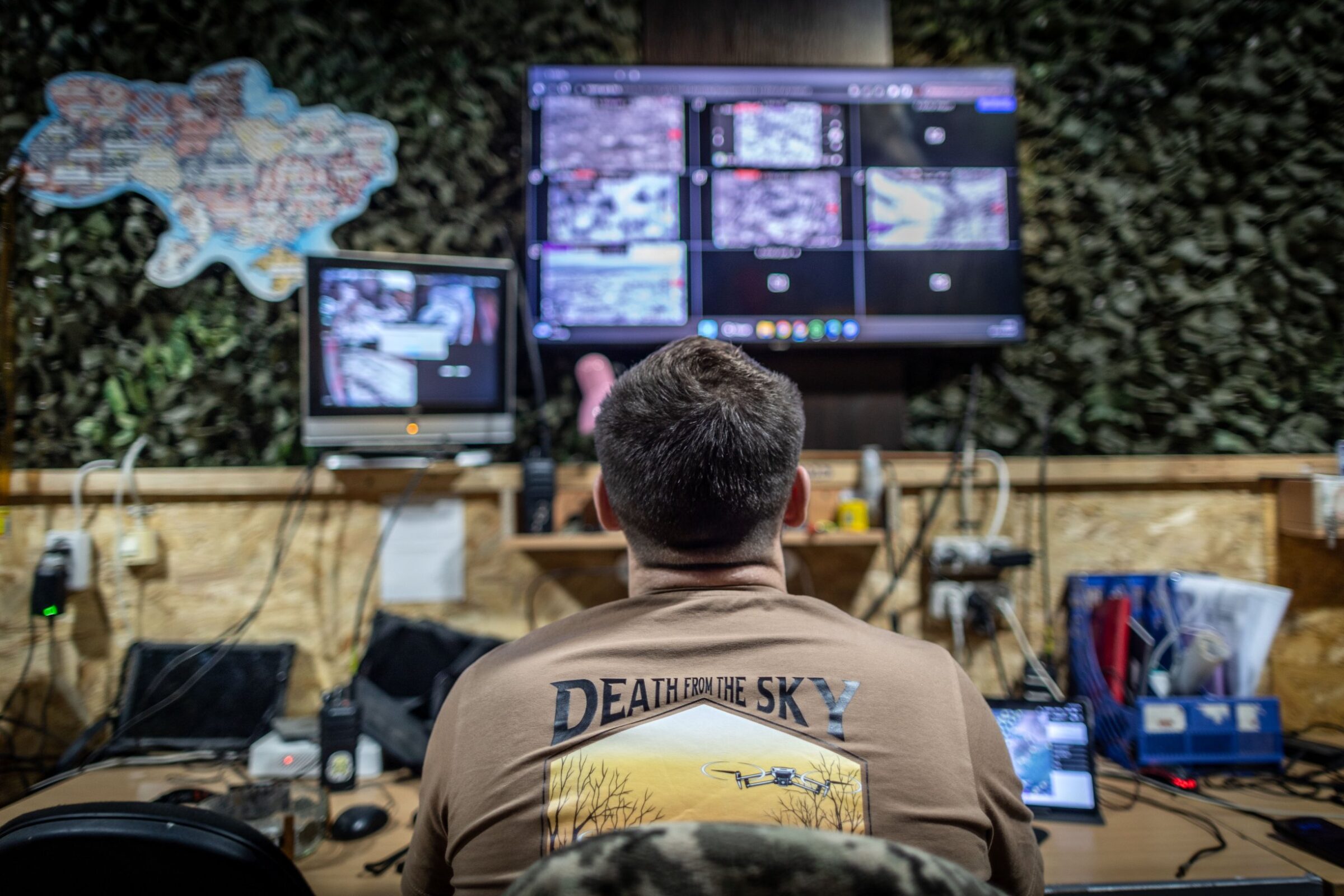
Every day, the Ukraine Battlefield update newsletter offers a clear look at how the war is unfolding on the ground. Subscribe for free here to get the full text delivered to your inbox.
Deny Russians access to Starlink.
It was no coincidence that outgoing Ukrainian defence minister Mykhailo Fedorov listed this first among the many measures he had pushed through. As he wrote, it had drastically reduced Russia’s ability to wage an effective drone war.
Developments on the battlefield, where we have noted this several times, also bear this out.
The fact that we are not currently witnessing major Russian successes is therefore also to his credit. The young defence minister, just 35 years old, is leaving office because of a controversial government reshuffle by Ukrainian president Volodymyr Zelensky.
How a talented minister thwarted the Russian offensive. It was he who initiated the measures that ultimately led to Starlink being blocked for Russian units operating in Ukraine, turning the tide in Ukraine’s favour. In cooperation with SpaceX, he introduced a so-called whitelist, with all Starlink terminals blocked by default and those in Russian hands deactivated.
Fedorov then thanked SpaceX boss Elon Musk, describing him as a genuine supporter of freedom and a friend of the Ukrainian people.
The Russians suddenly found themselves unable to communicate. “All command over the units collapsed. Offensive operations were halted in many areas,” Serhii Beskrestnov, an adviser to the minister, wrote at the time. This was one example of Ukraine’s asymmetric actions against Russia, after which it was able to seize the strategic initiative.
As Reuters recalled, Fedorov, then digitalisation minister, had pushed in 2022 for the military to use Musk’s RS-30M satellite terminals for communications.
 Ukrainian soldiers were not significantly affected by the outage during the cyberattack on Kyivstar. They use Starlink. Source: Tomáš Benedikovič, Denník N.
Since then, we have seen the small terminals in use with a small reconnaissance unit in Chasiv Yar and during major blackouts at the newsroom of the Ukrainian website NV. They have become a key tool for survival during Russia’s total war.
China and Russia have a joint plan to destroy Starlink. However, this episode was far from the end of the struggle for control over it. As the Russian website The Insider found in its investigation, conducted in cooperation with Der Spiegel and Le Monde, both sides engaged in a joint campaign against the Starlink satellite system during secret talks between Russia and China.
According to The Insider, this included not only legal and diplomatic measures, but also means of destroying satellites. According to presentations obtained by the investigators, both sides signed up to cooperation on space weapons, satellite destruction and integrated air-defence systems.
It also emerged that China had proposed that its Russian partners actively combat Starlink satellites. This was discussed by “engineers from China’s most important space and defence institutions” at a secret meeting in the southern Chinese city of Guangzhou.
They discussed Starlink’s difficult-to-access military network infrastructure, which complicates attacks on satellite communications because it has no central transmission hub.
They also addressed a fundamental problem in any potential attack on the system. Jamming one ground station or destroying a single node would not significantly reduce the network’s performance, which Chinese researchers described as a threat. In their view, Starlink had effectively created a “space blockade” by “firmly occupying low-Earth-orbit regions and key bands of the electromagnetic spectrum in a way that excludes competition”.
According to The Insider, they thus justified their own campaign against Starlink as self-defence rather than aggression. This gave rise to the case for the first phase of destroying the system: joint legal and diplomatic pressure based on the alleged risk of satellite collisions. The aim is to create an international coalition that would push for regulatory restrictions on SpaceX.
In the next phase, the two countries would seek to occupy frequency bands and orbital slots that Starlink would need for its expansion. The Chinese then proposed a joint architecture for electromagnetic jamming that would reduce the system’s effectiveness.
In the final, third phase, the campaign against Starlink would escalate to cyberattacks and the physical destruction of satellites using low-cost methods.
The documents obtained and the account of meetings between Chinese and Russian delegations show, according to Le Monde, that China and Russia do not merely maintain a “strategic” partnership that “poses no threat to any third country”. Their military cooperation runs much deeper.
This is what future warfare will look like. According to Yevhen Pronin, a Ukrainian expert on drones and international law, the investigation’s main finding is not only that Russia and China are seeking ways to counter Starlink, but also that they regard next-generation satellite constellations as one of the key factors in modern warfare.
However, he stressed that the materials from the talks and the development concepts do not yet confirm that Russia or China have acquired the capability to neutralise the system completely. “Rather, it shows how significant a military advantage Starlink has become since the outbreak of the full-scale war in Ukraine,” Pronin told Denník N.
In his view, the practical significance of this contest is that space is definitively becoming a separate theatre of military confrontation.
“Where aircraft, ships or ground infrastructure were previously the main targets, satellite networks providing communications, navigation, drone control and the transfer of intelligence are now becoming increasingly important. This is precisely why we can expect further development of means to combat satellite systems not only by Russia and China, but also by the United States and its allies,” the Ukrainian expert explained.
In his view, the character of future wars will increasingly be determined not only by the number of tanks or aircraft, but also by states’ ability to control space infrastructure, satellite communications and data-transmission systems. “Ukraine has become the first large-scale example of just how decisive such a technological advantage can be,” he added.
Alongside efforts to limit Starlink, Russia is seeking to develop its own version of “star link” (from the English name Starlink), which Pronin considers a logical step from the perspective of military strategy.
“The Kremlin has already seen how critical dependence on satellite internet is, as well as how dangerous it is to rely on technologies controlled by another state or a private company. This is precisely why it is actively pursuing its own low-Earth-orbit satellite projects,” he explained. At this stage of development, however, Russia still lags significantly behind Starlink — both in the number of satellites and in the scale of its infrastructure, speed of deployment and operational experience.
“Russia will therefore find it exceptionally difficult to create a fully fledged equivalent of Starlink in the short term. A much more realistic scenario is deeper cooperation with China, which has considerably greater manufacturing and space capabilities,” Pronin said.
Russia’s response to Ukrainian attacks reveals a crisis in its military. The Russian defence conglomerate Rostec announced the creation of a new defence system called Spiderweb.
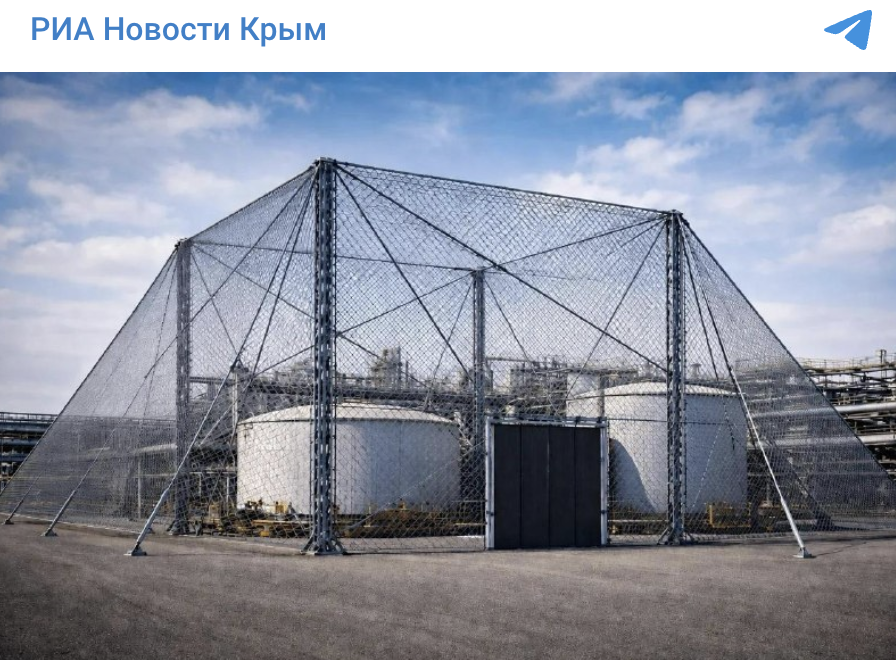
They intend to use it to protect refineries, oil depots and other strategic targets from regular Ukrainian drone attacks. However, as the US-based Institute for the Study of War wrote, it is not a sophisticated system at all, but an ordinary metal structure.
Rostec claims that its defence system can withstand the direct kinetic impact of a drone weighing up to 200 kg and flying at a speed of 250 km/h. It is primarily intended to protect oil depots, fuel terminals and electricity substations.
According to ISW analysts, this points to a serious crisis in Russian air defence. On Wednesday, we wrote that it was also evident in ammunition shortages, forcing Russia to redeploy some missiles from the Arctic region.
The Crimean branch of the Russian news agency RIA Novosti published a photograph in which the system looks like a large reinforced cage.
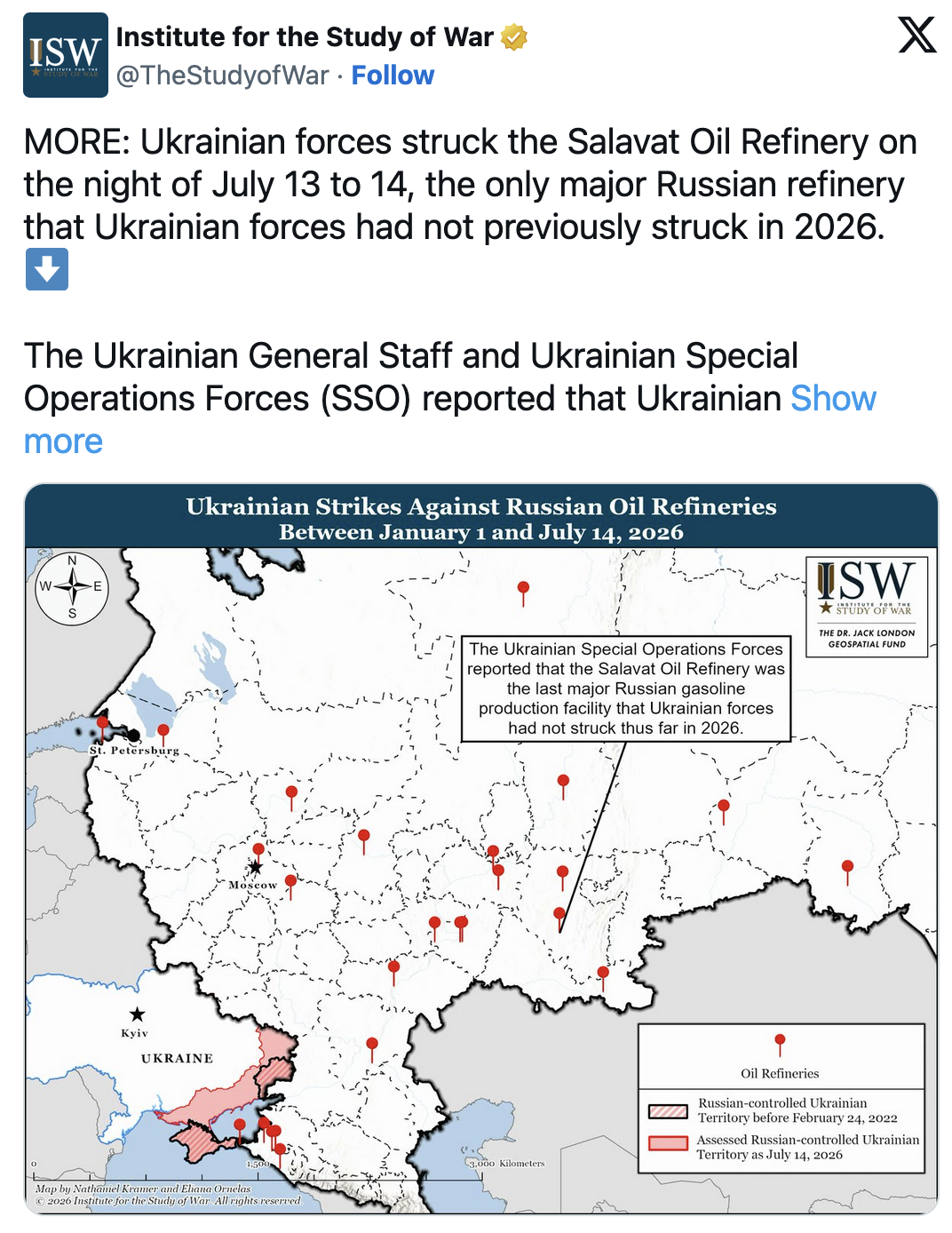
We should recall that oil refining volumes in the Russian Federation have fallen to their level of 20 years ago — to 3.8m barrels per day — as a result of Ukrainian attacks.
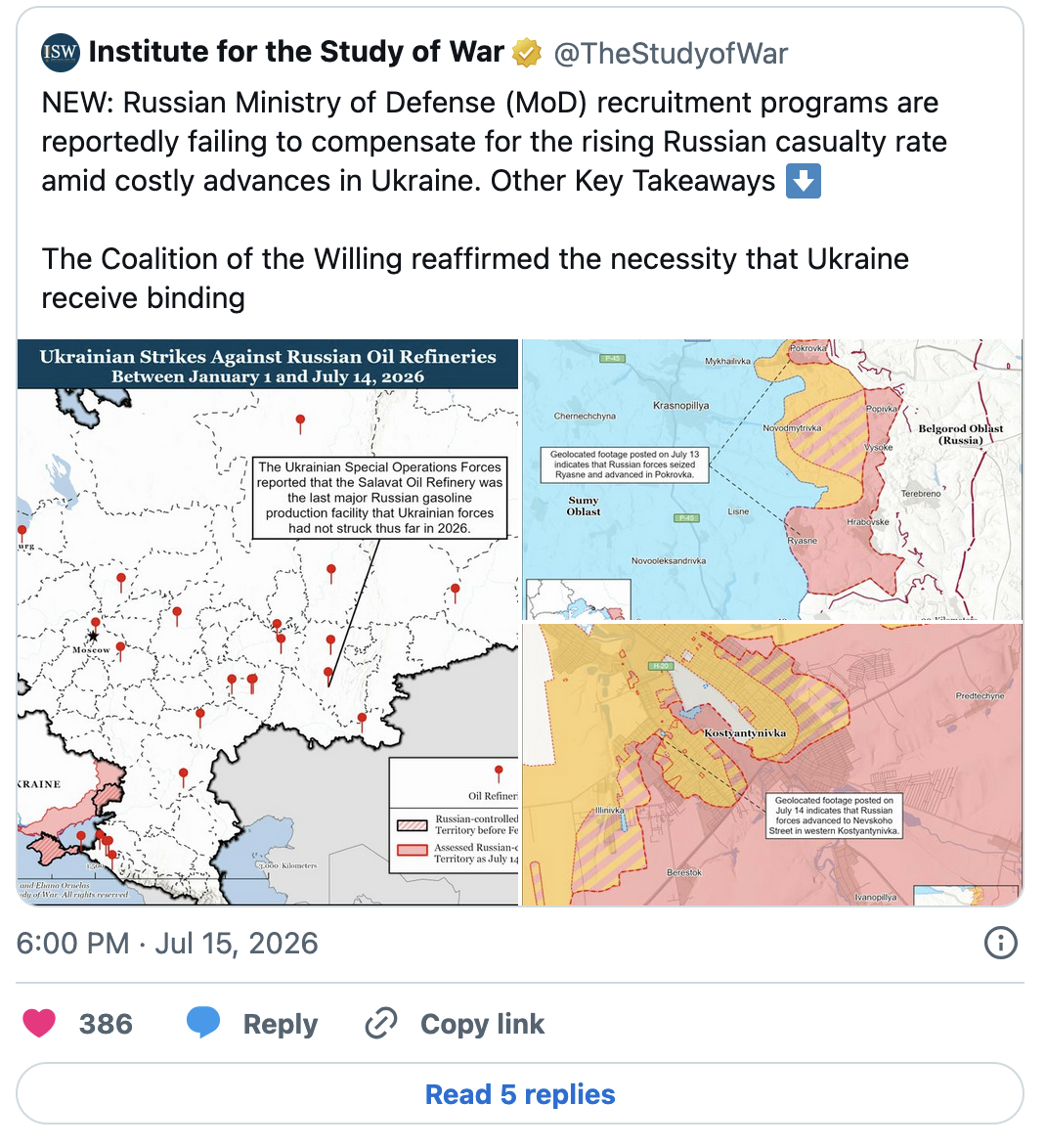
The choice of name for the protective cages is also noteworthy. It is identical to that of a Ukrainian operation last year that humiliated the Kremlin and triggered serious security concerns there, as was already apparent during the 9 May celebrations on Red Square.
In the summer of 2025, Ukraine’s security service succeeded in destroying several Russian strategic bombers at multiple airfields during Operation Spiderweb, using drone strikes carried out directly on the territory of the Russian Federation.
Map of the day
How Ukraine blinded Russia. French blogger Clément Molin counted 200 Ukrainian attacks on Russian air-defence and radar systems since the beginning of this year.
Since the start of the year, Ukraine 🇺🇦 hit 200 Russian 🇷🇺air-defense and radar systems
On this map, you can see where those systems have been targeted, more than half have been geolocated and the other half is mapped according to @414magyarbirds video. Around half of the… https://t.co/qVxBB1uBbh pic.twitter.com/Hg5adYjOy2
— Clément Molin (@clement_molin) July 15, 2026
Videos of the day
Burning Russian vessels. Ukrainian unmanned units have attacked around 136 vessels from Russia’s shadow fleet in recent weeks. They are turning the Sea of Azov and the Black Sea into “Russia’s Hormuz”. A sailor apparently filmed one of them in this video. Ukraine, however, also faces problems in the area. As Reuters reports, Russian attacks have cost it around a third of its grain-export capacity from Black Sea ports.
Ukraine’s SBU security service released footage of an attack by naval drones on the Russian tankers Louise 1 and Banda.
What are the losses
No change on Thursday.
Russia has demonstrably lost 23,837 pieces of heavy equipment (23,806 on Tuesday, 7 July). Of these, Ukrainians destroyed 18,815 (18,785), 993 (992) were damaged, crews abandoned 1,199 (1,199), and the Ukrainian army captured 2,830 (2,830). This includes 4,427 (4,424) tanks, of which 3,329 (3,327) were destroyed in combat.
Ukraine has lost 11,690 (11,683) pieces of equipment, of which 9,123 (9,068) were destroyed, 689 (687) damaged, 687 (683) abandoned and 1,191 (1,191) captured. This includes 1,443 (1,440) tanks, of which 1,104 (1,101) were destroyed in combat.
Note: Neither side regularly reports its fatalities or destroyed equipment. Ukraine publishes daily figures for Russian casualties and destroyed equipment, which cannot be independently verified. This overview uses data from the Oryx project, which has compiled a list of equipment losses documented exclusively by photographs since the start of the war.