

New World Wide Fund for Nature report says strict legal protections are failing to reverse the decline of the famous caviar-producing fish in the Lower Danube region covering Bulgaria, Romania and Ukraine.
 Marian Chiriac



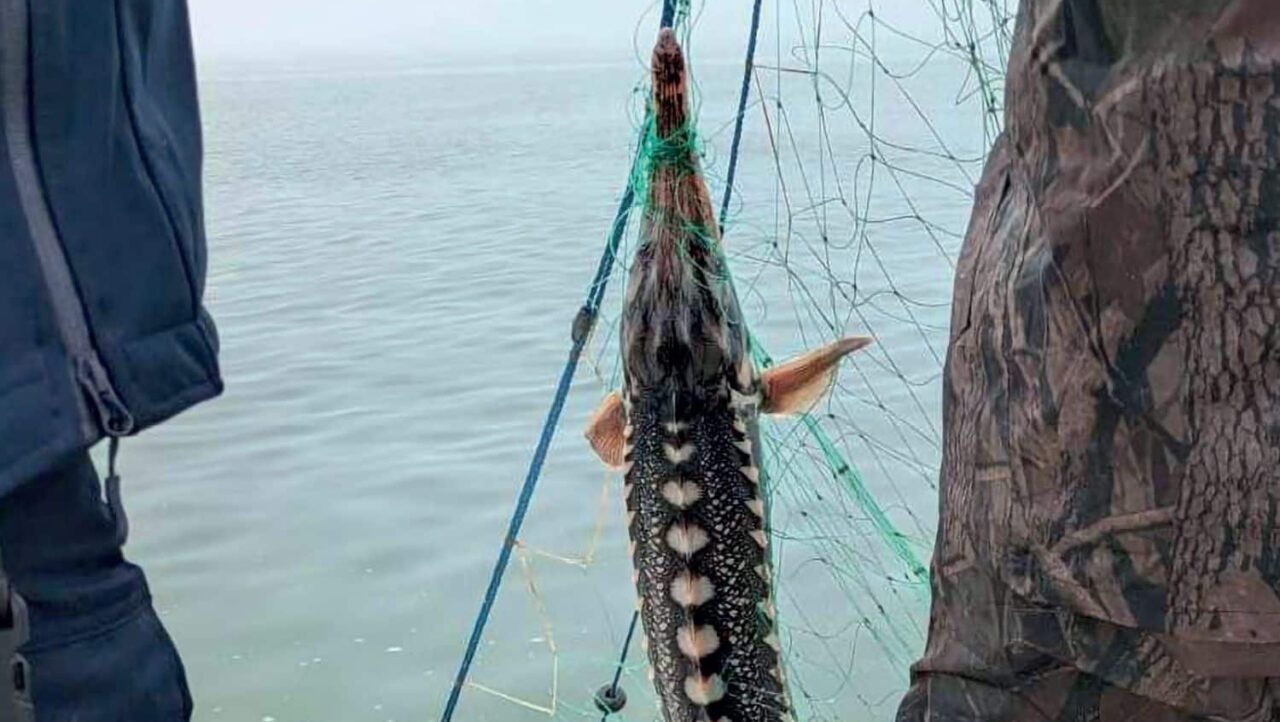
A new report released by the World Wide Fund for Nature, WWF, on Tuesday shows that illegal poaching of sturgeon remains widespread in the Lower Danube region despite efforts to curb the trade.
The report, which provides the most comprehensive assessment to date of poaching and the illegal sturgeon trade in the region, found that at least 3,366 sturgeon were affected by documented wildlife crime in the Lower Danube region between 2016 and 2025.
It said that authorities also seized at least 263 kilograms of illegal caviar, around 6.5 tonnes of sturgeon meat and whole fish, as well as large quantities of prohibited fishing gear.
However, WWF stresses that these figures represent only the minimum number of verified cases. The real scale of wildlife crime is likely to be significantly higher, as many incidents go undetected, unrecorded or unreported.
Experts say that while the legal framework for protecting sturgeon is largely in place across the region, effective enforcement remains a major challenge.
“Poaching persists because wild sturgeons and their products, particularly caviar, can have a high commercial value, while the risk of detection and deterrent punishment may remain relatively low,” Beate Striebel, WWF’s Sturgeon Initiative Lead, told BIRN.
Striebel said the persistence of poaching also has a cultural dimension. For decades, sturgeon fishing was an important source of income for communities along the Danube, making illegal fishing difficult to eradicate despite legal bans.
“Over many decades, sturgeon fishing formed part of traditional fisheries and income sources in local communities,” she said.
Enforcement agencies also face operational challenges. Illegal fishing often takes place at night or in remote areas, while banned fishing gear can remain submerged and difficult to detect.
“Authorities also face limitations in staff, equipment, specialist knowledge and other resources such as fuel or boats,” Striebel added.
The report warns that the conservation status of Danube sturgeon remains critical. Of the six native sturgeon species that once inhabited the river, two have already disappeared from the region.
Of the four remaining species, beluga, Russian sturgeon and stellate sturgeon are classified as Critically Endangered, while the sterlet is listed as Endangered.
Conservationists say reversing the decline will require restoring river habitats, strengthening protection and enforcement, reinforcing wild populations through conservation stocking, and improving cross-border cooperation between law enforcement agencies.
But even these measures will have only limited impact unless the underlying drivers of poaching and illegal trade are effectively addressed.
“These long-term investments will only succeed if the remaining wild sturgeons are effectively protected from wildlife crime and given the opportunity to reach maturity and reproduce,” Striebel said.