

deltaVision, a Munich-based manufacturer of fluidic systems for launchers, satellites, lunar landers and orbital servicing vehicles, has raised €10.2 million in its first funding round to expand production to keep pace with growing demand. The company secured this funding from both private industrial family offices and venture capital investors. KT
 Rahul Raj



deltaVision, a Munich-based manufacturer of fluidic systems for launchers, satellites, lunar landers and orbital servicing vehicles, has raised €10.2 million in its first funding round to expand production to keep pace with growing demand.
The company secured this funding from both private industrial family offices and venture capital investors. KT Ventures and Valemount Capital led the round, both doubling down on their commitment after an earlier convertible loan. Futury Capital also participated in this round, with significant involvement from other private investors via a newly created investment vehicle. deltaVision highlighted that it deliberately selected family offices and VCs with strong industrial and commercial backgrounds.
Alex Plebuch, CEO and co-founder of deltaVision, said, “We are fully committed to delivering products on an industrial scale. It is exactly what the market demands. We envision an open and interoperable in-orbit-services ecosystem rather than the winner-takes-all approach. An interoperable ecosystem will dramatically increase the overall market size and hence benefit every single stakeholder. deltaVision is building the technology to connect spacecraft in orbit and execute propellant and fluid transfer.”
Founded in 2022 by Plebuch, Dr. Denis Kiefel, and Matthias Günther, deltaVision has been profitable since inception and has had space heritage since 2025. The company delivers fluidic systems and interoperable orbital systems for a dynamic and sustainable space economy. From propulsion systems and orbital refuelling to active cooling, the company provides the cardiovascular system for spacecraft, comprising valves, pumps and pressure regulators. Its products control every type of fluid, propellant and pressurant.
According to the company, the demand for these components now outpaces the traditional supply chain, resulting in long lead times. It notes that this issue is well documented and is putting strain on space programmes worldwide.
deltaVision claims that it is closing this gap with scalable product designs and a manufacturing flow that is designed for reliability, scalability and lead times as short as weeks.
The company serves over 60 customers worldwide, including startups, leading industry primes, and space agencies across four continents. It is also involved in the European flagship project “Argonaut”, a large lunar lander. In this project, deltaVision works with the European Space Agency (ESA) as the end customer. For each Argonaut mission, deltaVision supplies around 50 individual products, including closed-loop pressure-regulation subsystems.
In the newly established French subsidiary, deltaVision SASU, located in the Nouvelle-Aquitaine region, the company plans to expand R&D and production of sensing and intelligence products for fluidic systems.
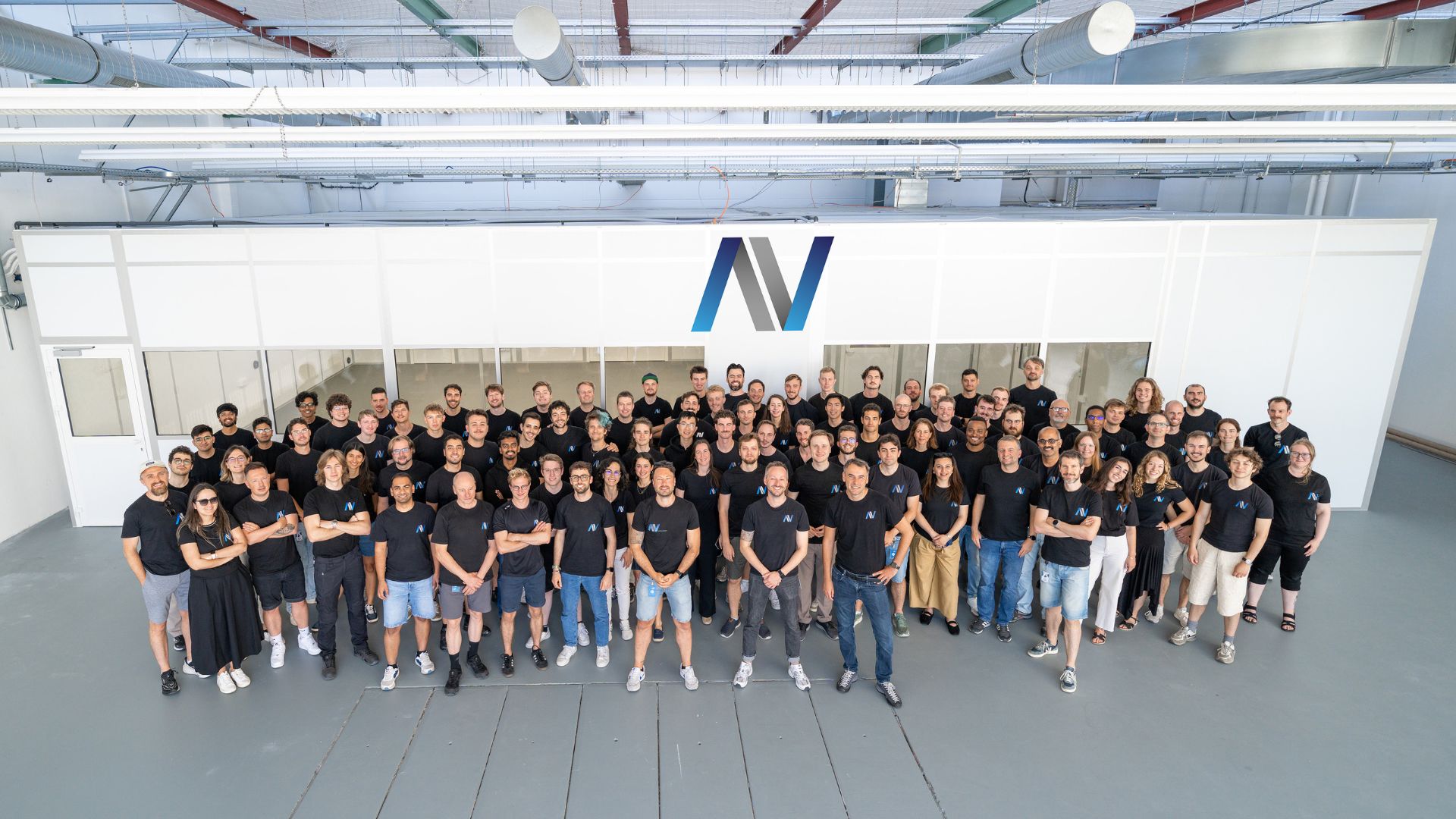
The company currently employs 125 staff and produces in a former Siemens plant in central Munich. With this fresh capital, it aims to expand production of valves and further propulsion components to 5,000 units per year to keep pace with rising demand.
Beyond the capacity increase, deltaVision also aims to accelerate its roadmap towards a modular, interoperable technology stack for orbital refuelling. It is building the component and subsystem foundation of a refuelling ecosystem: from fluidic couplers and utility interfaces that make satellites serviceable to integrated refuelling modules that allow for propellant storage and transfer in orbit. An additional immediate goal for the company is to expand valve production capacity in the United States.