As tensions grew in Yugoslavia, Serbia used the crimes committed by the fascist Ustasha forces of World War Two to whip up fear and hatred of Croats, preparing the public for war.
 Milica Stojanovic



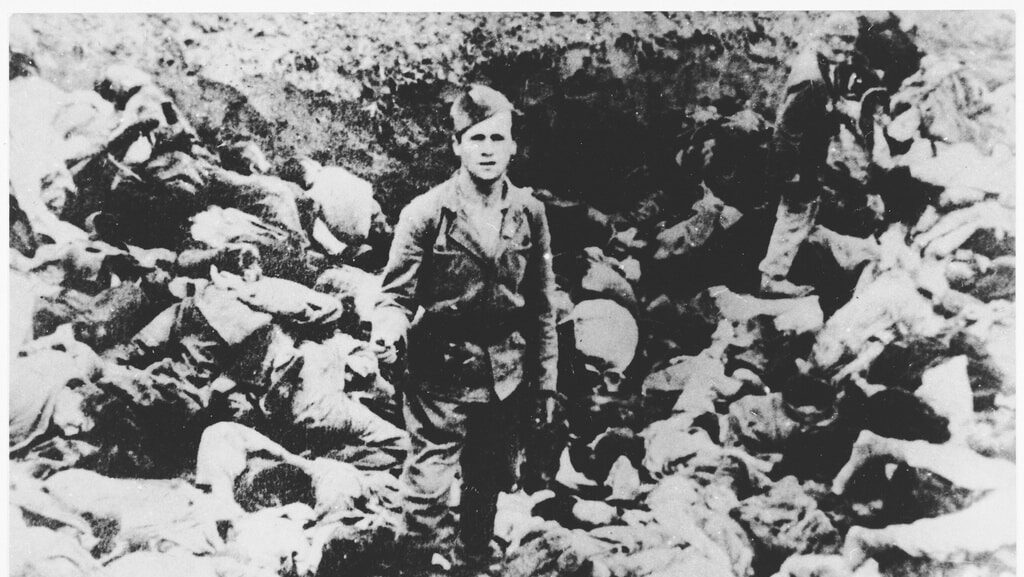
With the end of WWII and the creation of socialist Yugoslavia, Serbs and Croats were once again part of the same state.
The official mantra was ‘Brotherhood and Unity’, but the bloodletting of WWII was the elephant in the room.
Memorialisation focused, on one hand, on bringing the perpetrators to justice and, on the other, extolling the virtues and bravery of the victorious Partisans under Josip Broz Tito.
Goldstein, who, with his father, co-authored the 2015 biography Tito, said the Yugoslav leader rarely visited the sites of WWII atrocities.
Tito loved to travel, but always for “the opening of a factory, a road, a commercial facility or to commemorate famous battles and conferences”, Goldstein told BIRN. “But not places of mass crimes.”
There was a shift, however, that began in the 1970s as part of a broader, European trend that had begun placing victims and survivors at the centre of remembrance, from American and Western European considerations of the Holocaust to the public reckoning with US crimes in Vietnam.
As early as the mid-1960s, Yugoslav politician and former Partisan fighter Vladimir Dedijer joined the likes of Jean-Paul Sartre and Simone de Beauvoir as a member of the Russell Tribunal, created by the British philosopher Bertrand Russell to probe the US involvement in Vietnam.
“He was actually the first who, as a type of historiographical innovation, brought [to Yugoslavia] these very important topics such as genocide, mass suffering of civilians,” said Manojlovic Pintar says.
“I think we have to keep that in mind because very often when we analyse phenomena in the area of the former Yugoslavia, we close in on Serbian-Croatian relations, Serbian-Albanian relations, Serbian-Bosniak relations, and then we lose sight of the fact that these were part of wider global trends that, unfortunately, with the strengthening of nationalism, were perverted here.”
The case of Prebilovci and similar Ustasha crimes are important, she said, “for understanding how much we misread certain attempts to talk about the past in the 1980s”.
Preparing the public for war