Almost all major Asian stock markets fall, with Samsung Electronics shares sliding for a second dayVirgin Media has been fined £28m by the UK telecoms watchdog for repeatedly preventing customers from cancelling their contracts over a near-three-year period.Ofcom discovered that Virgin Media “likely mishandled” millions of phone calls between January
 Julia Kollewe



Virgin Media has been fined £28m by the UK telecoms watchdog for repeatedly preventing customers from cancelling their contracts over a near-three-year period.
Ofcom discovered that Virgin Media “likely mishandled” millions of phone calls between January 2022 and September 2024, with deliberate call-dropping tactics, unnecessary call transfers and putting customers on hold for “no reason”.
The watchdog launched an investigation into the company after it received almost 2,000 complaints from Virgin Media broadband, landline and pay-TV customers who struggled to cancel their contracts.
The £28m fine, which was reduced by 30% as Virgin Media admitted to its failing and agreed to settle the case, is Ofcom’s biggest ever under its consumer protection rules.
The regulator’s investigation found that millions of calls made by customers between January 2022 and September 2024 were likely mishandled by call agents “in order to delay or prevent customers from cancelling and switching to a competitor”. Customers can save hundreds of pounds by switching to a new deal.
It also uncovered evidence of “deliberate mishandling of calls by retention team agents”, with a commission scheme that “effectively encouraged” and financially rewarded agents for “behaving in this way”.
Good morning, and welcome to our rolling coverage of business, the financial markets and the world economy.
Oil prices have risen by more than 3% after fresh strikes from the US and Iran tested a fragile truce.
Brent crude climbed $2.49 to $76.65 a barrel, up 3.4%.
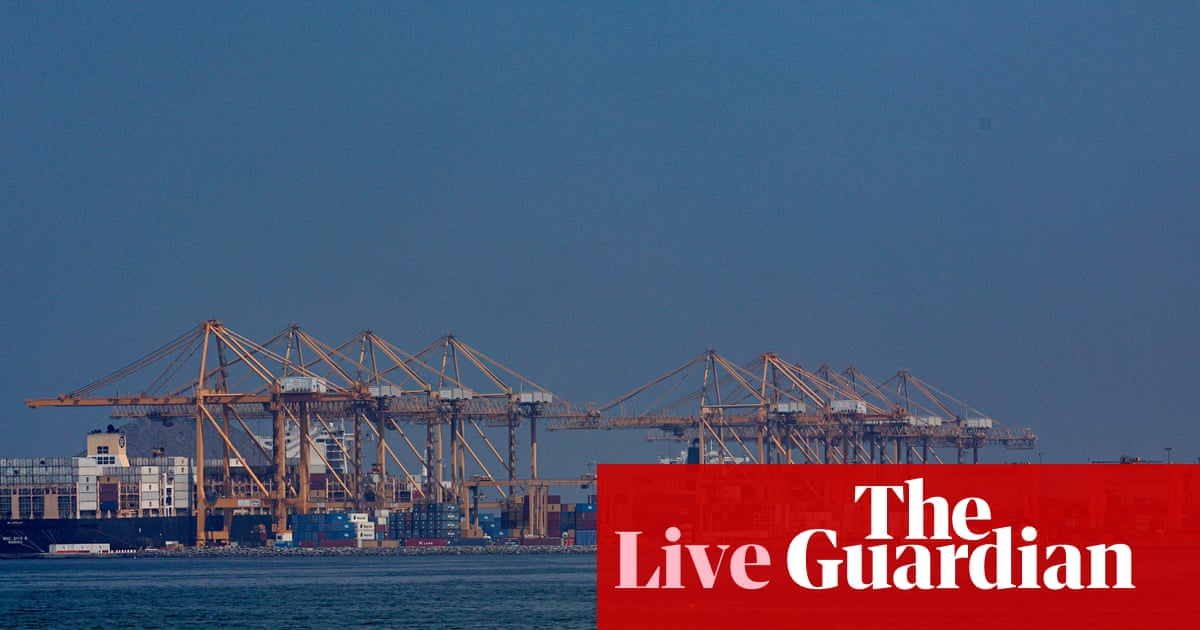
The US military carried out a new wave of strikes against Iran on Tuesday and revoked a licence allowing Tehran to sell oil after three tankers were hit by projectiles in the strait of Hormuz, putting more pressure on the ceasefire agreed weeks ago to negotiate a permanent deal to end the war.
NATO secretary general Mark Rutte said the US strikes were “absolutely necessary,” talking to reporters before a summit of NATO leaders in Ankara.
At least four oil and gas tankers have turned back after trying to transit the strait, a key shipping passage, according to ship-tracking data.
However, at least two crude oil tankers managed to leave the strait, each carrying 2m barrels of oil.
Asian stock markets fell in volatile trading, with Samsung Electronics shares sliding for a second day, despite the company reporting better-than-expected profits. Samsung slumped 6.8%.
The Nikkei in Tokyo fell 1.6% while the Kospi index in Seoul tumbled nearly 5%. Hong Kong’s Hang Seng bucked the trend, rising 3%.
Sara Perring, head of APAC cash equity sales at JPMorgan, told Reuters
Short-term profit taking on long-term winners, particularly the AI theme, appears to be a global dynamic… we sh ould expect elevvated volatility and continued foreign sellingin orea equities in the near term.
The Kospi index had rallied 192% over the last 12 months, and has now fallen about 20% from its peak, noted Jefferies analyst Mohit Kumar.
The market action shows the crowded nature of the semiconductor bet but also that the sector would need to keep delivering on solid earnings to maintain the sharp rally of recent months.
The Agenda