Oil price falls to three-month low and markets rally after US-Iran peace deal – business live
Rolling coverage of the latest economic and financial newsOil prices tumble amid hopes strait of Hormuz will soon reopenEuropean stock markets are on track to jump when trading begins, in just over 20 minutes.Germany’s DAX share index is up 1.65% in the futures market, Reuters reports, with the UK’s FTSE
Graeme Wearden
June 15, 2026
0 Comments
Good morning, and welcome to our rolling coverage of business, the financial markets, and the world economy.
The peace deal agreed between Iran and the US is sending a wave of relief through the markets today.
Oil has tumbled 4%, and markets across the Asia-Pacific region have jumped, as investors anticipate the reopening of the strait of Hormuz.
Although it is unclear exactly what has been agreed – with the final text of their memorandum of understanding unpublished – Donald Trump’s claim that “oil will flow on both ends again for the region, and the world” is pushing down energy prices – a relief for busineses, consumers, politicians and central bankers alike.
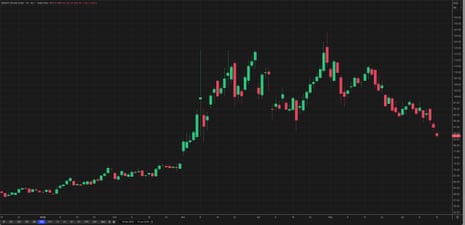
Brent crude has fallen as low as $83.04, its lowest since 10 March, after the prime minister of Pakistan announced the US and Iran will sign a memorandum of understanding in Switzerland on Friday.
That still leaves Brent above its pre-war price of $72.48 a barrel, though.
Trump has indicated that the opening of the strait is contingent upon the signing of the peace deal, scheduled for Friday.
Iran’s Mehr state news, though, reported that the agreed memorandum of understanding calls for the reopening of the strait within 30 days under “Iranian arrangements” – an indication that Tehran hasn’t surrendered its control of the waterway.
ChrisWeston of IG points out that there are still obstacles to overcome:
The probable reopening of the Strait of Hormuz later this week would represent a significant positive development. Markets had increasingly questioned how long inventory draws could offset supply disruptions and whether physical dislocations would begin weighing more heavily on risk assets. The focus now shifts towards understanding what normalisation of logistics could realistically look like, and how quickly shipping volumes can return to pre-conflict levels of 120 to 140 commercial vessels transiting eastbound and westbound each day.
There are still obstacles to overcome. Mines may need to be cleared, and there may be structural damage to refineries and export facilities around the region that will take time to repair and come back to pre-conflict capacity.
The agenda
The US-Iran agreement is well-timed for the Bank of England, which is due to set UK interest rates on Thursday.
If the strait of Hormuz does reopen, and oil flows return towards pre-war levels, there will be less inflationary pressure – and thus less need for interest rate rises.
The EuropeanCentralBank raised its interest rates last week, but this week is the turn of the BoE, the US FederalReserve and the BankofJapan.
Kathleen Brooks, research director at XTB, says:
Over the past month, the price of oil is down by more than a fifth, and the Brent crude price is now back at levels from early March. This is good news for inflation, which should start tumbling monthly from June, and it could ease concerns about price pressures as we lead up to some major central bank action this week. The decline in the oil price also raises questions about whether the ECB was too hasty in raising rates last week.
European stock markets are on track to jump when trading begins, in just over 20 minutes.
Germany’s DAX share index is up 1.65% in the futures market, Reuters reports, with the UK’s FTSE100 0.75% higher.
The US dollar is weakening, as investors shift into riskier currencies.
The pound is its highest in over a week, at $1.3438.
There are strong gains across Asia-Pacific markets today, as investors welcome the deal between the US and Iran.
Japan’s Nikkei share index has leapt by 5%, as has South Korea’s KOSPI, while China’s CSI300 index is 1.9% higher.
Jim Reid, market strategist at DeutscheBank, says:
Whilst the deal is very good news for markets it looks like tough conversations will have occur in the 60-day window to ensure the peace is sustainable. As an example, the Senate needs to approve any extensive sanction relief for Iran.
For now the can kicking exercise has been very well received by markets even after a strong US close on Friday where hopes were raised of a weekend signing
Good morning, and welcome to our rolling coverage of business, the financial markets, and the world economy.
The peace deal agreed between Iran and the US is sending a wave of relief through the markets today.
Oil has tumbled 4%, and markets across the Asia-Pacific region have jumped, as investors anticipate the reopening of the strait of Hormuz.
Although it is unclear exactly what has been agreed – with the final text of their memorandum of understanding unpublished – Donald Trump’s claim that “oil will flow on both ends again for the region, and the world” is pushing down energy prices – a relief for busineses, consumers, politicians and central bankers alike.
Brent crude has fallen as low as $83.04, its lowest since 10 March, after the prime minister of Pakistan announced the US and Iran will sign a memorandum of understanding in Switzerland on Friday.
That still leaves Brent above its pre-war price of $72.48 a barrel, though.
Trump has indicated that the opening of the strait is contingent upon the signing of the peace deal, scheduled for Friday.
Iran’s Mehr state news, though, reported that the agreed memorandum of understanding calls for the reopening of the strait within 30 days under “Iranian arrangements” – an indication that Tehran hasn’t surrendered its control of the waterway.
ChrisWeston of IG points out that there are still obstacles to overcome:
The probable reopening of the Strait of Hormuz later this week would represent a significant positive development. Markets had increasingly questioned how long inventory draws could offset supply disruptions and whether physical dislocations would begin weighing more heavily on risk assets. The focus now shifts towards understanding what normalisation of logistics could realistically look like, and how quickly shipping volumes can return to pre-conflict levels of 120 to 140 commercial vessels transiting eastbound and westbound each day.
There are still obstacles to overcome. Mines may need to be cleared, and there may be structural damage to refineries and export facilities around the region that will take time to repair and come back to pre-conflict capacity.




 Graeme Wearden