


Europe could have used the meeting to show the U.S. how it will take the lead — instead it just agreed to buy a bunch of stuff.
 Ivo Daalder



And they are right. Ankara, in many ways, was a lost opportunity.
The grandly named “Ankara Summit Declaration” is a one-page, six-paragraph boilerplate statement that isn’t worth the paper it was written on. And while reports from inside the three-hour leaders’ meeting suggested Trump was genial and even praised allies for increasing their defense spending, he unleashed a fusillade of invectives against those very same countries as soon as the cameras were on.
He scolded Britain, France, Germany and Belgium for not helping during the war in Iran. He called Spaniards “hopeless, bad people,” ordering an immediate halt to all trade with the country. And he once again said Greenland should be part of the U.S., claiming it was “very important” for America, “but it is not important for Denmark.”
It’s little wonder many NATO leaders now believe making these gatherings an annual ritual was a mistake, and that the alliance needs to go back to convening its summits only occasionally.
This was the norm not so long ago. It was under former NATO Secretary-General Jens Stoltenberg that summits first became an annual affair. As a former Norwegian prime minister, he believed the organization’s work required convening his peers on a regular basis. His successor, Mark Rutte, shared that belief. Until now.
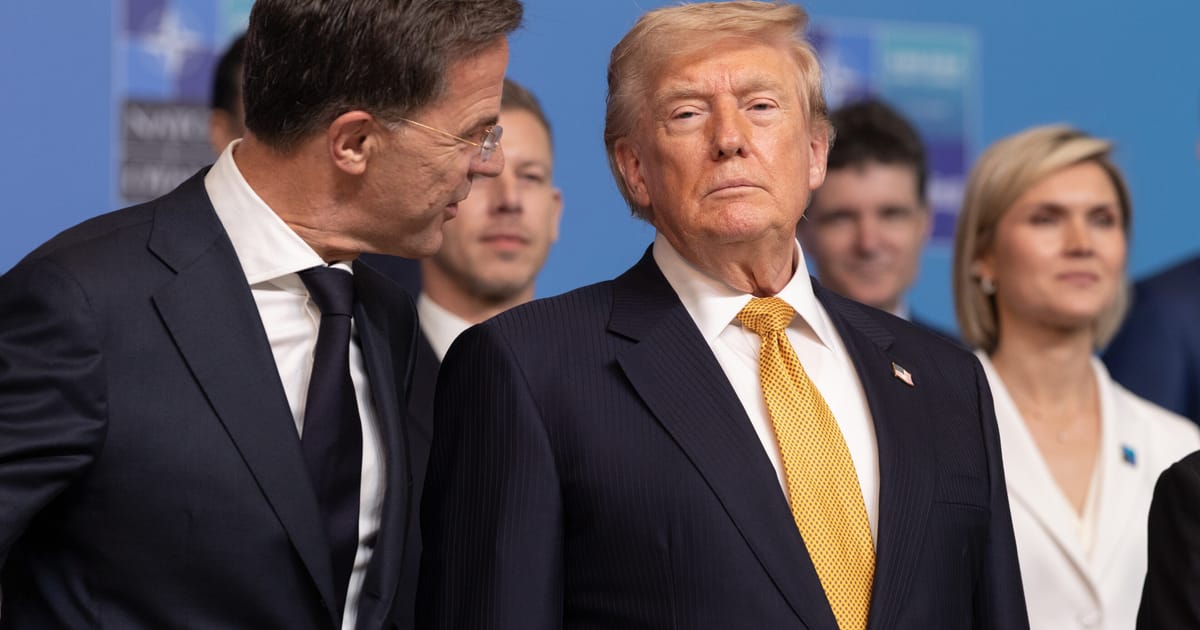
The former Dutch prime minister bent over backward to make sure Ankara would go smoothly. He defended Trump’s decision to go to war in Iran, against the views of nearly all other NATO countries. He twice traveled to Washington to convince Trump of NATO’s value. When Trump said he was “strongly considering pulling out of NATO,” miffed by Europe’s refusal to join the Iran conflict, Rutte again flew to Washington, pointing out the centrality of European bases and airspace to the war effort.