Sport heroes used to retire at the top but now the likes of Messi, Ronaldo, Serena and Djokovic have other ideas, writes Matt Readman. Sport is nothing if not storytelling. And every athlete wants the perfect ending to their own story. The crowning moment. The final wave to the crowd.
 Matt Readman



Thursday 25 June 2026 3:30 pm | Updated: Wednesday 24 June 2026 4:32 pm
Sport heroes used to retire at the top but now the likes of Messi, Ronaldo, Serena and Djokovic have other ideas, writes Matt Readman.
Sport is nothing if not storytelling. And every athlete wants the perfect ending to their own story. The crowning moment. The final wave to the crowd. Departing with dignity on your terms, not forced into it by injury or decline. Forever remembered as you were and undefeated by time.
This narrative is so engrained that many athletes may even have pulled the trigger too early. I wonder if Pete Sampras – who effectively retired at 31 having won the 2002 US Open – looks at Novak Djokovic in his 40th year and questions whether it was him or expectation that made that final call.
They say time waits for no man, but it’s not just Djokovic who is stubbornly rewriting the rules. This summer, Sir James Anderson will be lacing up his bowling boots in the County Championship at the age of 43, while Serena Williams will be back on the courts of Wimbledon at 44.
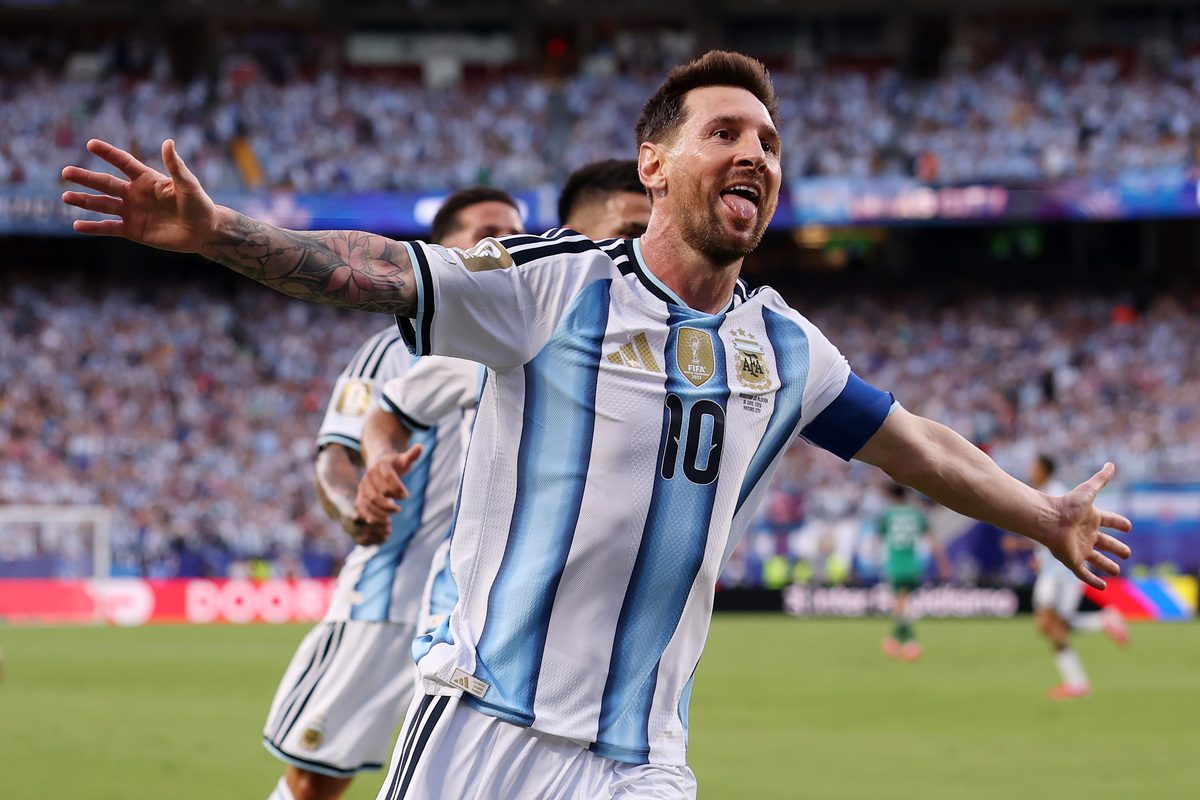
Lionel Messi continues to torture defences at this World Cup , aged 39, alongside his old nemesis Cristiano Ronaldo, two years his senior – the same age as Lewis Hamilton who will be racing in his 20th British Grand Prix at Silverstone, probably watched on by Formula 1 fan Lebron James as he ponders his 24th NBA season in the autumn.
#mc_embed_signup { background: #fff; clear: left; font: 14px Helvetica, Arial,sans-serif; width: 100%; max-width: 600px; margin: 20px 0; } #mc-embedded-subscribe-form { margin: 20px 0 !important; } .newsletter-form-flex { display: flex; gap: 0; align-items: center; margin-top: -10px; } .newsletter-form-flex input[type=”email”] { flex: 1; padding: 2px 10px; border: 1px solid rgb(18, 22, 23) !important; border-radius: 12px 0 0 12px !important; } .newsletter-form-flex input[type=”submit”] { padding: 4px 10px !important; margin: 0 !important; background-color: rgb(18, 22, 23) !important; color: rgb(255, 255, 255) !important; border: 1px solid rgb(18, 22, 23) !important; border-radius: 0 12px 12px 0 !important; } .newsletter-banner-content { margin-bottom: 15px; } .newsletter-banner-content h2 { margin: 0 0 10px 0; font-size: 18px; font-weight: 600; } .newsletter-banner-content p { margin: 0 0 10px 0; line-height: 1.5; } .newsletter-banner-content ul, .newsletter-banner-content ol { margin: 0 0 10px 20px; } .newsletter-banner-content a { color: #0073aa; text-decoration: none; } .newsletter-banner-content a:hover { text-decoration: underline; } .newsletter-banner-content img { max-width: 100%; height: auto; margin: 10px 0; } #mc_embed_signup #mce-success-response { color: #0356a5; display: none; margin: 0 0 10px; width: 100%; } #mc_embed_signup div#mce-responses { float: left; top: -1.4em; padding: 0; overflow: hidden; width: 100%; margin: 0; clear: both; }
What is going on? It’s not just that 40 is very much the new 30. It feels as though sport has entered a different relationship with ageing altogether. The question is no longer: when should athletes retire? The question is: why should they?
Athletes playing longer – because they enjoy it
This is, of course, partly technological. Modern athletes have access to levels of nutrition, recovery, medical support and sports science unimaginable even a generation ago.
Justin Rose – playing some of the best golf of his career at 45 – is lovingly made fun of by some of his more junior colleagues for his custom-built trailer. Rose travels to every tournament with his own cold plunge bath, infrared sauna and red-light therapy bed literally in tow.
It’s not just the physical toll that modern athletes manage better, but also the mental burden. Psychologists and team support have improved. It is also now accepted for athletes like Simone Biles, Naomi Osaka and Ben Stokes to take extended breaks to protect their minds as well as their bodies.
In contrast Bjorn Borg chose to step away from tennis at just 26; physically at the peak of his powers with 11 Grand Slam titles but mentally burnt out. Roger Federer had 12 titles at the same age but played for another decade and a half.
The professionalisation of sport is also a factor. Ironically, the more money you earn, the harder it is to leave. In semi-professional eras, athletes knew they would have to get a job following their sporting career. Now modern athletes know that this is it and they want to squeeze every last cent from it.
Read more Mayor Khan hails London as ‘undisputed global capital for women’s sport’ amid £50m boost
But there is another reason athletes remain. Not because they need to. Not because they have something left to prove. But because they still enjoy the work itself.
Trend mirrors rising retirement ages in society
This is a subtle but profound shift. The modern athlete increasingly resembles the musician who continues touring into their seventies, the academic who never quite retires, the entrepreneur who starts another company. Work is identity. It is purpose. It is community. It is a source of meaning.
In this sense, sport – as it often does – is reflecting a wider societal change. For much of the 20th century, life was organised into neat compartments. Education. Employment. Retirement. You learned, you worked, you rested. It’s a model that made sense when life expectancy was lower and when many forms of work were physically exhausting.
That is changing. Governments are gradually raising retirement ages across Europe. Yes, partly out of necessity – and it would be naive to not recognise that, for many, retirement isn’t an option in the first place – but also our attitude to age is changing.
We are currently spending $80bn trying to ward off the effects of age, a number that is forecast to increase to $129bn by 2034. Seventy increasingly resembles 60, which feels like 50, and so on.
Many people now see retirement age as a transformation not a destination. Some reduce hours. Some change careers. Some continue indefinitely.
The ageing athlete is entwined with this societal shift. Watching the likes of Williams returning without anything to prove inspires us that we can do more for longer.
But the effect goes both ways. Athletes now have the confidence to play for longer as those norms and expectations change. We now want to see our heroes for that encore, even if they are a little past their prime.
And so the grand final act has been replaced by something quieter and perhaps more revealing: a generation of athletes simply carrying on. Not because they are chasing immortality.
But because they have discovered that the perfect ending is no longer the point.
Matt Readman is chief strategy officer at sports creative agency Dark Horses.
Read more City AM Football Power List 2026: Who really runs the world’s most popular sport?
Similarly tagged content: Sections Categories People & Organisations