Across Europe, established right-wing parties are finding themselves challenged by actors positioned further to their right. In Italy, the rise of Roberto Vannacci’s movement serves as an examples. The danger is not only the rise of more radical actors, but the gradual redefinition of what is considered politically acceptable.
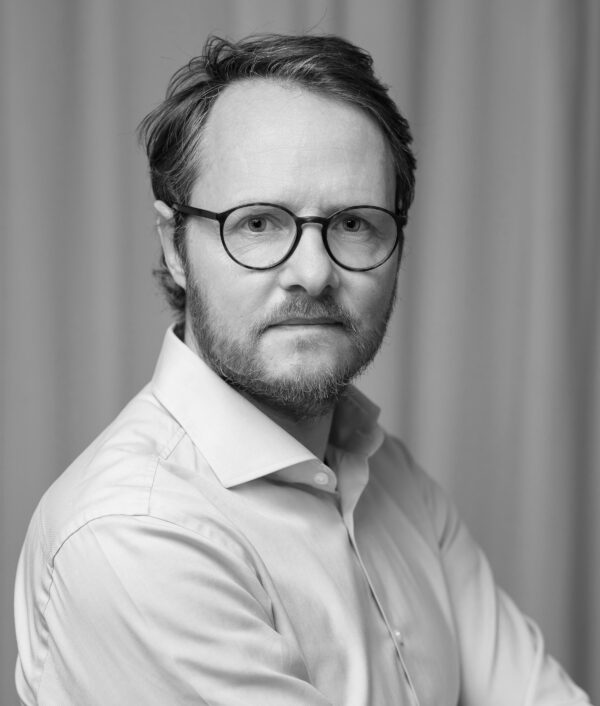
 Gaia Mastrosanti



It has become painfully clear that a new political force has emerged on Italy’s right-wing landscape.
In a country governed by a right-wing coalition led by prime minister Giorgia Meloni, Italian MEP Roberto Vannacci has succeeded in carving out a distinct political space for himself, one that is openly critical of its potential allies and increasingly capable of attracting voters from within the governing majority, particularly from the League, the party to which Vannaci once belonged.
This development, however, does not concern Italy alone. Across Europe, established right-wing parties are finding themselves challenged by actors positioned still further to their right.
The United Kingdom offers a recent example. Reform UK, led by Nigel Farage, has come under growing pressure from Rupert Lowe’s Restore Britain, and has moved toward explicit appeals to white grievance.
Similarly, in Germany, the Alternative für Deutschland (AfD) has expanded its electoral appeal while helping to mainstream concepts such as remigration, a term that originally referred to the return of migrants, but has increasingly become associated with proposals for mass deportations and the removal of individuals with migrant backgrounds.
These cases point to a broader refrain in European politics: for many conservative and right-wing parties, the principal challenge no longer comes from the centre or the left, but from political actors seeking to redefine the boundaries of what is considered acceptable within the right itself.
Vannacci’s new party and its base
Italy is now experiencing a similar dynamic. A former army general and League party MEP Roberto Vannacci founded Futuro Nazionale [National Future] in February 2026.
This new party draws much of its organisational strength from Il Mondo al Contrario[The World Upside Down], the nationwide network of committees and associations built around Vannacci’s bestselling book and subsequent political activism.
 (Source: Facebook’s Futuro Nazionale)
The party has raised roughly €316,000 in its first four months, including more than €80,000 from Il Mondo al Contrario and €30,000 from fuel distributor CPP Compagnia Petrolifera Piemontese, headed by entrepreneur Stefano Maurizio Finzi.
Vannacci has also become one of the most visible proponents of remigration in Italy and presents his movement as the country’s “true” or “pure” right.
Polling currently places Futuro Nazionale between 4 and 6 per cent nationally, a level of support that could make it a significant actor within the broader right-wing camp.
Nationalism, identity, and mainstream conservatism
Futuro Nazionale promotes a platform centred on nationalism, sovereignty, traditional values, border control, opposition to immigration, criticism of “gender ideology” and “woke” culture, and the defence of what it describes as a threatened Italian identity.
The party argues that mainstream conservative forces, including both the Lega and Fratelli d’Italia, have compromised too readily with political and cultural trends they claim to oppose.
Vannacci rejects the fascist label; however, the ideological and symbolic affinities are difficult to overlook, such as the party’s emphasis on national rebirth, collective identity and organic conceptions of the nation echoes themes historically associated with the European far right.
Moreover, Futuro Nazionale refers to its supporters as futuristi [futurists], a term that inevitably evokes Italian Futurism, the avant-garde movement that developed a close relationship with Fascism during the interwar period. Vannacci has also invoked the concept of cameratismo [comradeship] as a guiding principle for party-building, a term deeply embedded in the political vocabulary of Italian Fascism.
At the same time, the post-fascist roots of Fratelli d’Italia [Brother of Italy], Giorgia Meloni’s party, are well documented: the party continues to use the fiamma tricolore [tricolor flame], a symbol inherited from the Italian Social Movement (MSI), the principal successor to Mussolini’s Fascist Party, while ideological continuities with elements of the post-war neo-fascist tradition have often been identified by scholars and commentators.
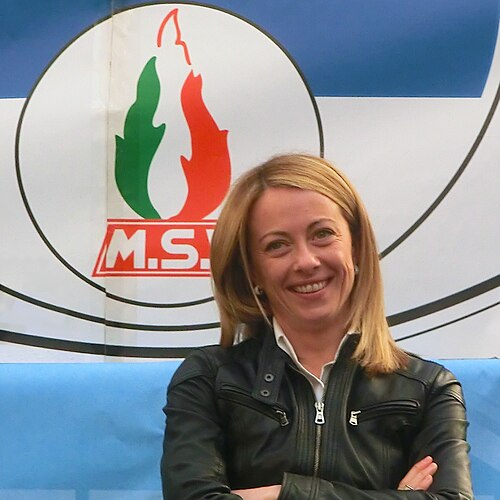 Italian PM Georgia Meloni in 2014 (Source: Wikimedia)
The difference is that Meloni has successfully combined these historical references with a highly disciplined communication strategy, allowing her to reassure moderate voters while retaining support from the nationalist right.
Vannacci, by contrast, dispenses with much of this ambiguity. Rather than moderating the language of the radical right for broader electoral appeal, he openly embraces themes such as remigration, national rebirth and cultural decline, presenting himself as the representative of a “true” right allegedly betrayed by both the Lega and Fratelli d’Italia.
Politics of grievance
However, what is perhaps most troubling is not simply the rise of figures such as Roberto Vannacci, but the broader politics of grievance that increasingly characterise public debate across Europe.
Recent events illustrate how quickly isolated tragedies can be transformed into symbols serving wider political narratives. In the United Kingdom, the murder of Henry Nowak was rapidly seized upon by parts of the populist right as evidence of alleged “anti-white racism” and societal decline.
In Italy, the horrific murder of four migrant agricultural workers in Calabria has similarly entered a political landscape already saturated with tensions surrounding migration, security and national identity.
Thus, individual tragedies become proof of broader narratives; complex social realities are reduced to questions of identity, belonging, and cultural conflict.
As a result, public anger is increasingly channelled towards migrants, minorities or other vulnerable groups, while deeper questions concerning inequality, labour exploitation, economic insecurity and social exclusion remain largely unaddressed.
The success of movements such as Futuro Nazionale suggests that this politics of resentment is no longer confined to the margins.
The growing normalisation of concepts such as remigration demonstrates how ideas once considered extreme can gradually enter mainstream political discourse.
The danger is not only the rise of more radical actors, but the gradual redefinition of what is considered politically acceptable.
In this sense, the real issue lies in the increasing tendency to interpret social and economic problems through the language of identity and exclusion rather than through the structures that produce them.