Amid a boom in literary-inspired travel, a book-themed hotel has opened in Kensington. Anna Moloney checks in…
 Anna Moloney



Tuesday 07 July 2026 5:54 am | Updated: Monday 06 July 2026 6:11 pm
Amid a boom in literary travel, a book-themed hotel has opened in Kensington. Anna Moloney checks in…
The comeback of the century – it’s books! From Booktok to romantasy, Gen Z are gaga about reading, so much so it’s even shaping the offline world. Case in point: literary travel – that is trips either inspired by particular books or authors, or indeed holidays literally centred around a good place to read – is booming, with ‘bookbound’ travel even named as one of Skyscanner’s key 2026 travel trends. Which made The Kensington Hideaway, a new “literary-inspired” hotel in bougie West London, an enticing proposition.
Unfortunately, upon checking in, it soon became clear The Kensington Hideaway is a perfectly nice hotel with a bad marketing gimmick.
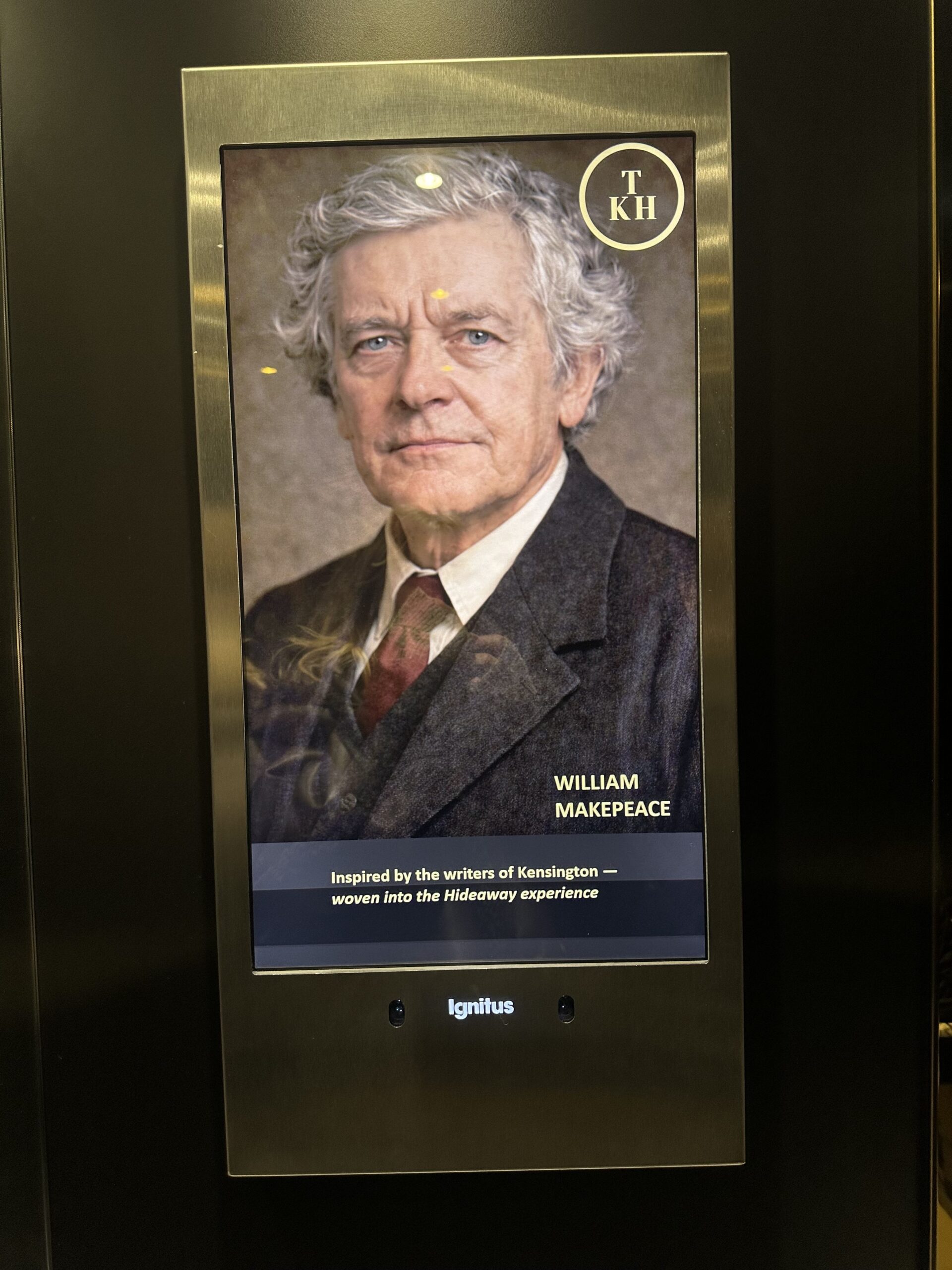
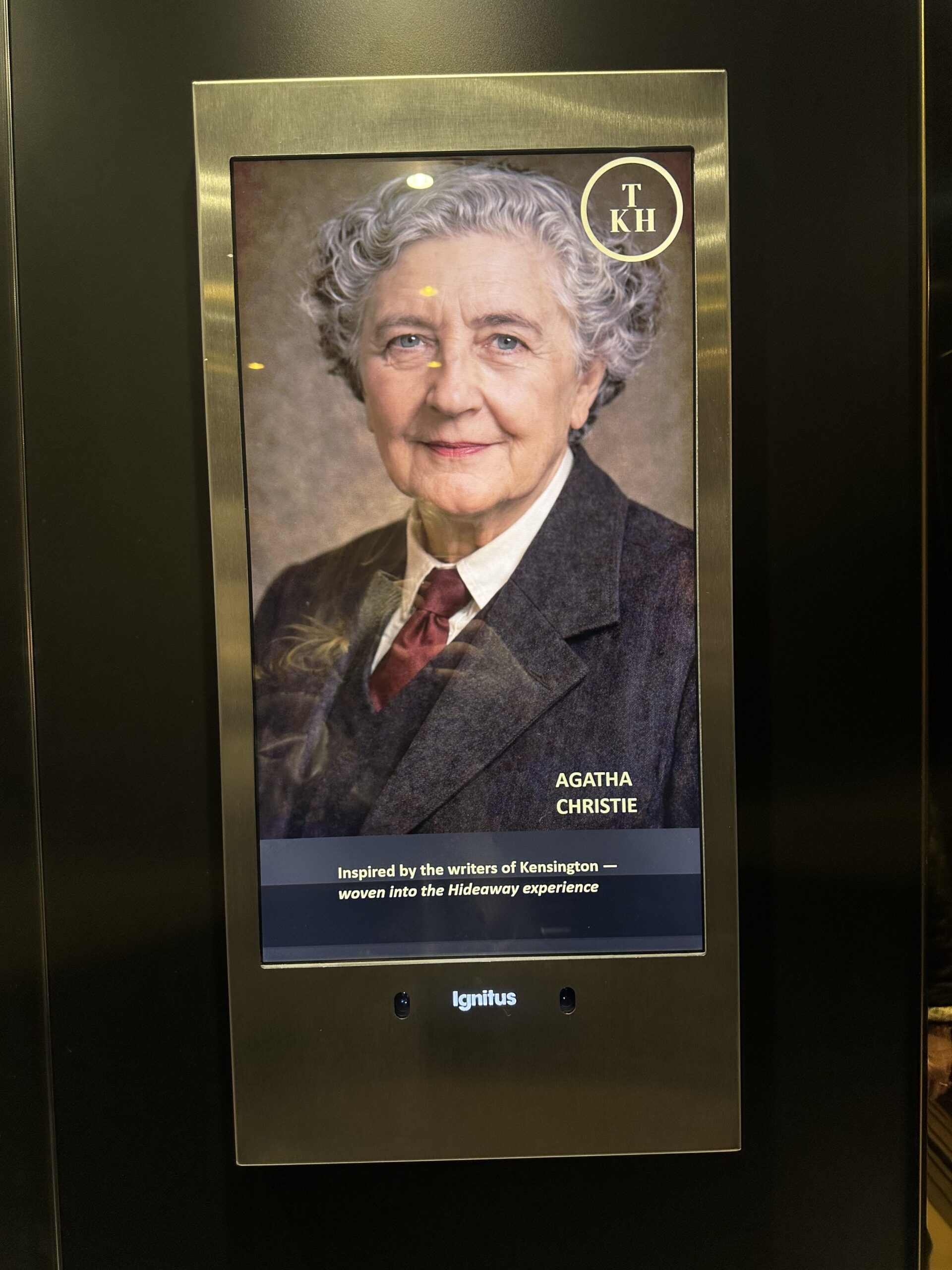
Located on Kensington High Street, the Hideaway claims to have been inspired by the area’s own literary heritage. This includes the likes of Agatha Christie, who lived in Kensington in the 1930s, along with P.L. Travers, William Makepeace Thackeray and T.S. Eliot, the latter who spent his final years in the area. “These celebrated authors, each closely tied to Kensington, have inspired the hotel’s distinctive character – weaving literary heritage into every detail of the Hideaway experience,” so the hotel claims. Ha.
In practice, this means in the lift you will be beamed upon by a cycle of AI-generated images of said authors. Even more bizarrely, Agatha Christie and William Thackeray’s share a body and hairline, only the expression gently shifting.
#mc_embed_signup { background: #fff; clear: left; font: 14px Helvetica, Arial,sans-serif; width: 100%; max-width: 600px; margin: 20px 0; } #mc-embedded-subscribe-form { margin: 20px 0 !important; } .newsletter-form-flex { display: flex; gap: 0; align-items: center; margin-top: -10px; } .newsletter-form-flex input[type=”email”] { flex: 1; padding: 2px 10px; border: 1px solid rgb(18, 22, 23) !important; border-radius: 12px 0 0 12px !important; } .newsletter-form-flex input[type=”submit”] { padding: 4px 10px !important; margin: 0 !important; background-color: rgb(18, 22, 23) !important; color: rgb(255, 255, 255) !important; border: 1px solid rgb(18, 22, 23) !important; border-radius: 0 12px 12px 0 !important; } .newsletter-banner-content { margin-bottom: 15px; } .newsletter-banner-content h2 { margin: 0 0 10px 0; font-size: 18px; font-weight: 600; } .newsletter-banner-content p { margin: 0 0 10px 0; line-height: 1.5; } .newsletter-banner-content ul, .newsletter-banner-content ol { margin: 0 0 10px 20px; } .newsletter-banner-content a { color: #0073aa; text-decoration: none; } .newsletter-banner-content a:hover { text-decoration: underline; } .newsletter-banner-content img { max-width: 100%; height: auto; margin: 10px 0; } #mc_embed_signup #mce-success-response { color: #0356a5; display: none; margin: 0 0 10px; width: 100%; } #mc_embed_signup div#mce-responses { float: left; top: -1.4em; padding: 0; overflow: hidden; width: 100%; margin: 0; clear: both; }
To escape this (Eliot’s is particularly daunting), you may choose to take the stairs, where you will instead be greeted with bookprint wallpaper and a carpet with letters on, a nod to literacy, literally, I guess. The design of the foyer has a dark academia feel in the most generic of ways (dark wallpaper, animal statues draped in pearls, a couple of stacks of books), while my room featured a framed image of book pages shaped as butterflies along with a couple of clearly hastily chosen hardbacks (what relevance Soups by Hannah Wright, a soup cookbook from the 1980s, has to Kensington’s literary heritage beyond being a book is beyond me). Other than that it was a struggle to find any trace of the literary heritage this hotel was supposedly so inspired by.
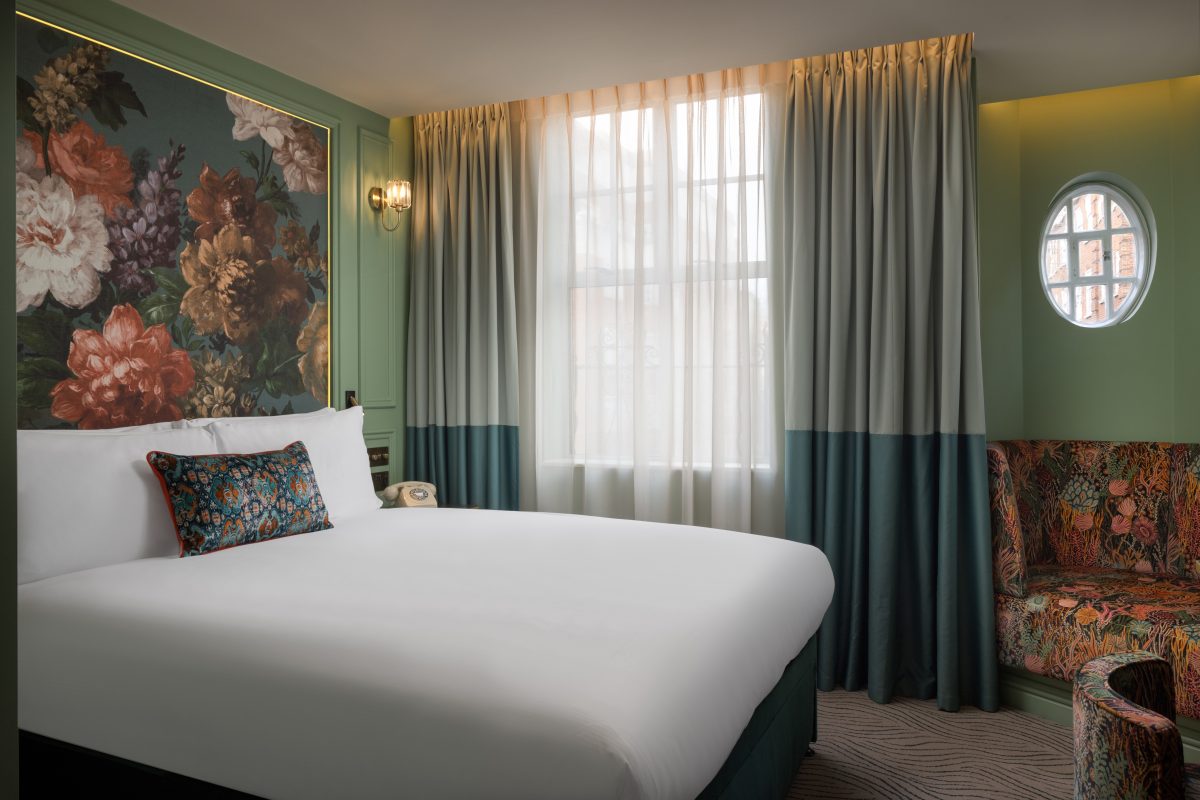
This is a shame, as otherwise it had many perfectly good qualities to recommend it. The opening comes after a multimillion pound renovation of the property (formerly the Seraphine Kensington) and at starting rates of £215 for a double room is well priced for the area. With 59 rooms and a small restaurant (35 covers), it has a boutiquey, intimate feel. The room itself (I stayed in the ‘Signature Hideaway) felt cosy and opulent, with a gorgeous window seat to curl up in (perhaps with a book!). Just a stone’s throw from the Design Museum, and a few minutes from High Street Kensington Tube station, it’s also well located, with plenty to explore just on its doorstep. Ffiona’s, a local institution of a restaurant helmed by indomitable namesake frontwoman Ffiona, just down the road, is more than worth a visit, serving high quality British comfort fare in a charming, candlelit venue with a host who will remember what you had last time.
The hotel restaurant itself is hit or miss (the Turkish eggs are good; the raspberry pancakes feature no actual raspberries) while the cocktail list, featuring the likes of ‘The Trust Fu nd Mule’ and the ‘Duke of York Martini’ (“a martini with a stiff upper lip and a slightly salty finish”), is downright questionable.
All in all, The Kensington Hideaway proves that no theme is better than a poorly executed one.
Rooms start from £215 at The Kensington Hideaway
Read more Don’t Miss Alobayyah in competitive Kensington Palace
Similarly tagged content: Sections Categories People & Organisations