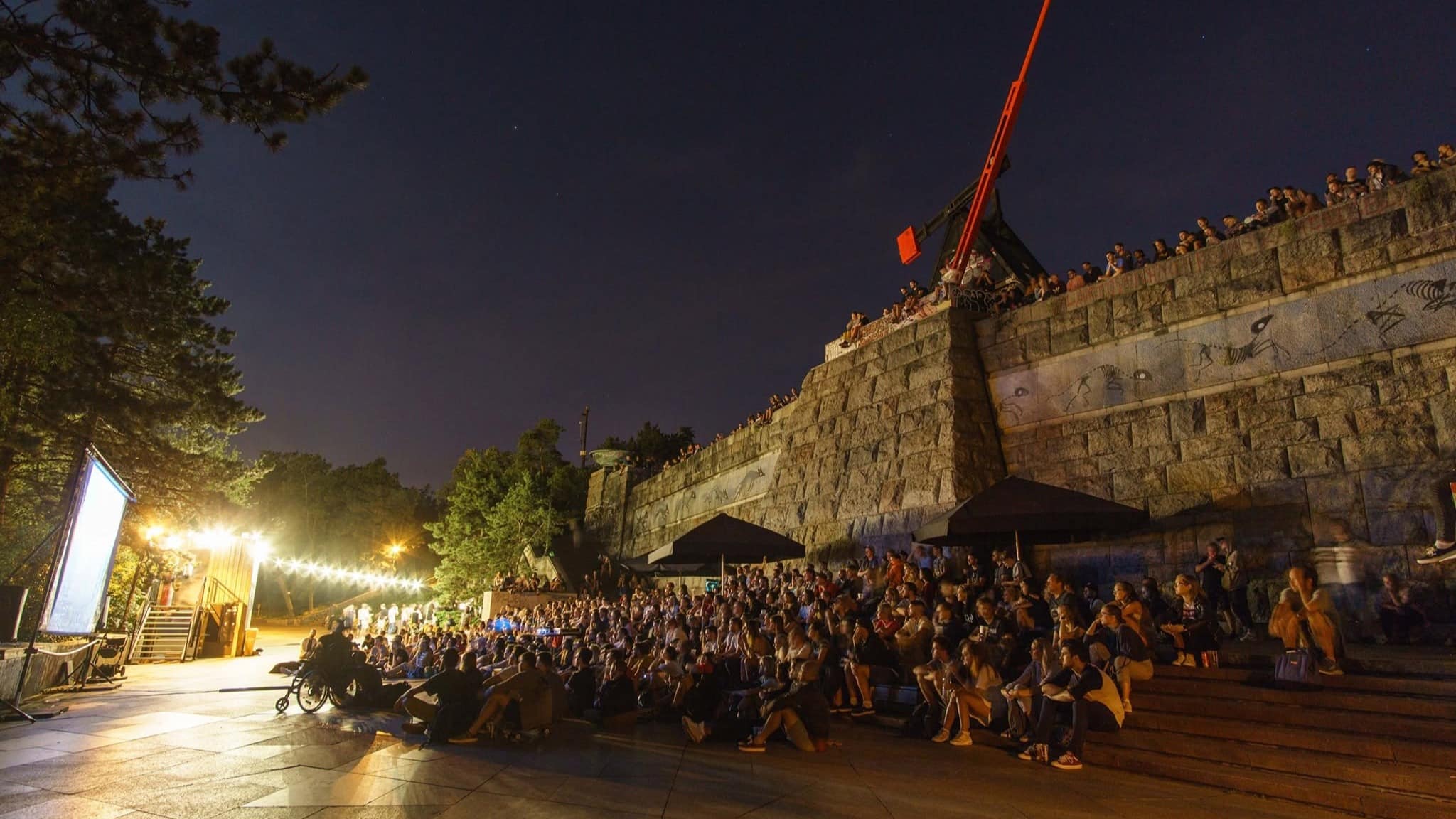
Looking out over Prague from where a monument of the Soviet dictator once stood, the Stalin Cultural Centre has long been a hub for the city’s alternative culture scene. Now it’s fighting for survival.
 Jules Eisenchteter



While the recent measure came from the top of the Prague City Council, pushback is expected from local politicians of the Prague 7 district, where the venue is located.
Hana Trestikova, who is deputy mayor of Prague 7 and who represents the Praha Sobe (Prague Together) movement, has called the attempt to shut down Stalin “a very bad decision, because this is a popular place that significantly contributes to the revitalisation of the entire locality”.
“Thanks to the cultural programming, the area around the former Stalin monument was alive with a rich community life, which also helped to increase safety in this part of Letna Park”, she continued.
Others fear petty political rivalries connected to upcoming municipal and mayoral elections may be behind the move against the cultural centre. “I have not heard any relevant reason whatsoever that should lead to this”, Prague 7 Mayor Jan Cizinsky has said, in reference to attempts to close Stalin
“It seems to me that the councilors from ODS, TOP 09 and STAN were inspired by Minister Oto Klempir on how to damage culture in Prague as much as possible”, Cizinsky said, in reference to the budget cuts introduced by the current culture minister and to fears about the government’s attacks on the independent cultural sector.
“I see it more as an attack against Prague 7”, theorised Adam Zabransky, a Prague city councillor for the Pirate Party who voted against the new ordinance.
“It seems to me that colleagues, especially from the ODS, repeatedly act quite hostile towards Prague 7. That’s what I’m reading between the lines”, Zabransky said, highlighting the reluctance of the municipality to invest in the revitalisation of other popular venues in the district, like the Vystaviste exhibition grounds or the Holesovice market.
Prague 7 Mayor Jan Cizinsky has echoed this assessment, while Stalin co-founder Jan Faltys remained more cautious. “I don’t want to speculate”, Faltys said to BIRN.
Controversial as it may be for some, using the name “Stalin” for an open, free-spirited and inclusive cultural hub was a conscious choice by its founders to reclaim the space once dominated by a 15-metre-high, granite Soviet dictator who evoked political repression and cultural censorship.
“Stalin probably wouldn’t be very happy that people, especially young people, are enjoying themselves in their free time under the sky, listening to music or just, you know, chatting, meeting, having a good time”, Faltys has quipped.
How much longer will Prague residents be able to do just that is now up in the air. All eyes are on the bright-red pendulum, and where it will swing next.