A ceasefire in name only, a blocked civilian committee in Cairo, and EU threats of sanctions that may not materialise — this episode unpacks why Gaza’s path to peace keeps slipping away.
 Léa Marchal




Production: By Europod, in co-production with Sphera Network.
EUobserver is proud to have an editorial partnership with Europod to co-publish the podcast series “Briefed” hosted by Léa Marchal. The podcast is available on all major platforms.
Find the full transcript below:
Since the ceasefire signed in October 2025 between Israel and Hamas, more than 1,000 Palestinians have been killed, according to the local health ministry.
The EU hopes that Hamas stepping down from the Palestinian government will pave the way for an end to the hostilities.
But will that be enough for Israel to stop its attacks on the people of Gaza?
On 29 June, several Israeli strikes killed five people in the Gaza Strip, in Deir al-Balah and Khan Younis.
Since the ceasefire, the attacks have not stopped. Gaza’s health ministry, which operates under Hamas authority, has recorded at least 1,045 deaths since October. The UN considers this source to be reliable.
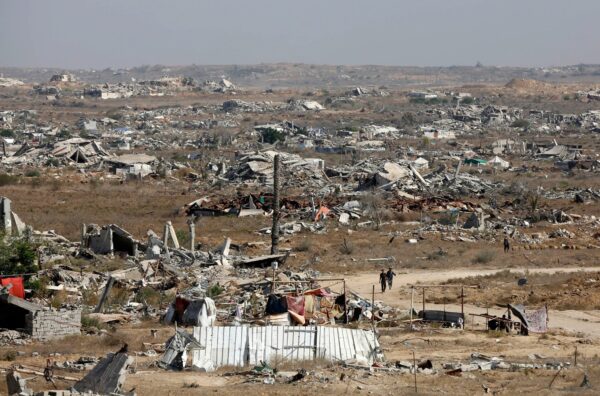
Restrictions on humanitarian aid and media access to Gaza remain in place. And the health situation in the displaced persons camps is disastrous.
In recent weeks, the Israeli army has further expanded its zone of control in the Gaza Strip, while it is supposed to remove from it.
And it is in this context that Hamas announced on 6 July that it would relinquish governance of Gaza. This marks a new step in the implementation of the peace plan, which provided for the creation of a technocratic administrative committee, known in English as the NCAG.
The committee has already been formed. It is headed by Ali Shaath, a civil engineer by training and a former member of the Palestinian Authority. The problem is that the Israeli government is refusing to allow the committee, which is currently in Cairo, to enter the Gaza Strip.
So does Hamas’s announcement solve all the problems?
No.
First, because Hamas wants all of its personnel currently in Gaza to remain in place and continue working under the authority of the National Committee for the Administration of Gaza.
Israel opposes that.
Second, because what Israel is primarily demanding is the complete disarmament of Hamas, and Hamas does not appear willing to do that at this stage.
The situation therefore remains deadlocked, and the population of the Gaza Strip is caught between the Israeli military operations and the broader political impasse.
What can Europeans actually do?
Last Friday, through its foreign affairs spokesperson, the EU called on both Israel and Hamas to fully implement the peace plan.
It also advocated the disarmament of Hamas and the withdrawal of Israeli forces from the Gaza Strip.
This Monday, the European Commission is holding the second meeting of the donor group for Palestine.
For a time, the EU hoped this forum could rival Donald Trump’s Peace Council and exert influence over the negotiations. In reality, the format is mainly used to gather support for the Palestinian Authority and coordinate humanitarian aid.
Could the EU play a more decisive role?
To some extent, yes.
Today, EU foreign ministers are discussing potential new sanctions against Israel.
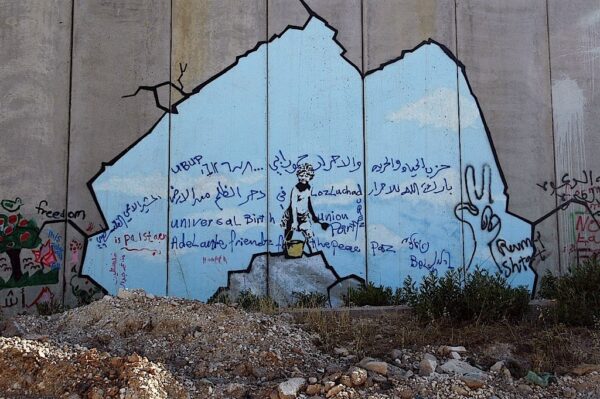
This time, the focus is on trade in products made in Israeli settlements in the West Bank.
As I mentioned in a previous episode, civil society groups and several EU countries have long called on the EU to ban products manufactured and sold by Israelis in settlements they consider illegal.
After months of pressure, the Commission has finally put options for restrictions on the table, and those options will now be presented.
No decision will be taken today. But EU countries will have to position themselves and show how far they are prepared to go both to warn about the conduct of the Israeli government and to sanction it.