As Giorgia Meloni turns Italy into a test case of far-right rule, her mix of compromise in Brussels and hardline policies at home is quietly shaping how France’s National Rally sells itself to wary voters.
 Léa Marchal



Production: By Europod, in co-production with Sphera Network.
EUobserver is proud to have an editorial partnership with Europod to co-publish the podcast series “Briefed” hosted by Léa Marchal. The podcast is available on all major platforms.
Find the full transcript below:
Within the EU, [Italian PM] Giorgia Meloni has proven to be a much easier partner than many had expected. In Italy, she also enjoys an image of stability that reassures at least part of the business community.
Can the Italian experience strengthen other far-right movements in Europe?
Giorgia Meloni is not the first far-right leader to govern in the EU. We have seen similar experiences in Poland and Hungary. But Italy is one of the EU’s six founding members, and it is often described as Europe’s political laboratory.
Why is that?
Because Italy saw the rise and success of populist movements earlier than most European countries. We saw it in the 1990s with Silvio Berlusconi, and later with the emergence of contemporary anti-establishment populist forces such as the League, the Five Star Movement, and Giorgia Meloni’s party, Brothers of Italy.
But let’s get back to the main story.
Giorgia Meloni has now been in power for three years — quite an achievement compared with many of her predecessors.
As a result, and because she has shown an ability to adapt on the European and international stage and make compromises, she is often seen as a leader who brings stability.
But is her record really that encouraging?
On the economic front, the picture is mixed. On the one hand, unemployment has fallen steadily since she took office. It has even reached a historically low level of around five percent. But this is largely because economic conditions were favourable at the time and, above all, because the size of the workforce is shrinking.
Exports are performing well, but productivity remains sluggish. Investment in innovation is still too limited.
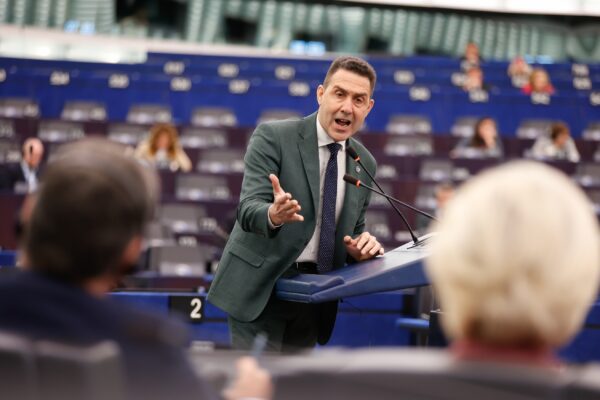
Meanwhile, the middle class has been gradually losing purchasing power.
On social policy, Meloni has unsurprisingly pursued a conservative right-wing agenda. For example, she abolished the Citizens’ Income scheme, Italy’s equivalent of a minimum income benefit, and replaced it with a much more targeted allowance that is no longer universal.
She also scrapped the home renovation bonus scheme. Together, these measures helped reduce the country’s public deficit. But public debt remains very high and difficult to bring down.
On climate policy, Meloni has maintained what she calls a pragmatic environmental approach. What does that mean? She does not deny climate change, but she is making little effort to prevent it.
She strongly supports electricity generated from natural gas and therefore, fossil fuels. She wants to expand nuclear power and places little emphasis on renewable energy.
There are therefore quite a few similarities with the National Rally’s programme in france, although the French party is even more openly hostile to renewable energy.
So, could Meloni’s qualified success help the National Rally in France, which faces an election next year?
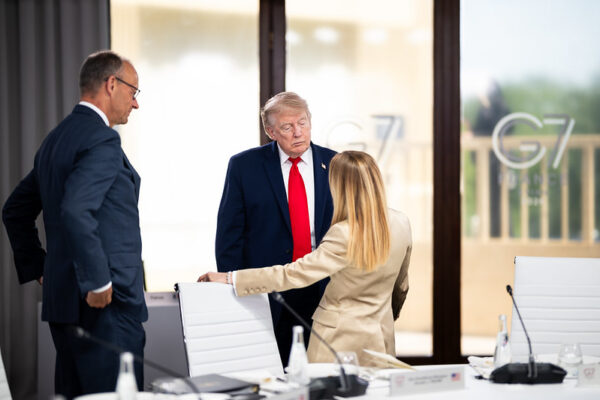
Yes, to some extent. Some conservative voters may be reassured by Meloni’s conduct in office, especially at a time when the Italian leader has distanced herself from a form of Trumpism that has become increasingly alarming to many Europeans.
At the same time, it would be wrong to assume that the Italian formula could simply be replicated in France. The context is very different. France is wealthier than Italy. Wages are higher, making it less fertile ground for populism.
Even if the National Rally were to win the 2027 presidential election, it is unlikely that it could form a fully far-right government, as is the case in Italy with Brothers of Italy, the League and Forza Italia.
In other words, France could become difficult to govern under the National Rally, which might struggle to implement its programme.
And if we look at other major countries where the far right is gaining ground, such as Spain and Germany, the conclusion is broadly similar.
With one additional nuance: Germany’s AfD and Spain’s Vox hold more radical positions than either the National Rally or Brothers of Italy, making them even less acceptable to potential governing partners.
To sum up, Jordan Bardella, who is very likely to be the National Rally’s candidate, can certainly draw inspiration from Italy. But that will probably not be enough to replicate the Meloni model in France — and perhaps not even enough to win power.