The Rwanda fiasco, Australia’s island camps and Italy’s controversial deal with Albania all haunt EU leaders as they gamble on return hubs as a controversial fix for irregular migration that could redefine Europe’s moral and political red lines.
 Léa Marchal



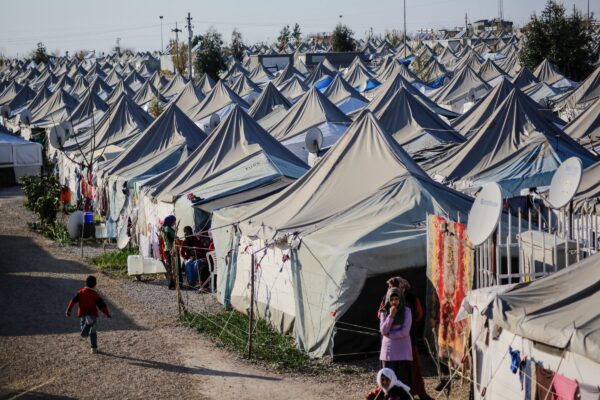
Production: By Europod, in co-production with Sphera Network.
EUobserver is proud to have an editorial partnership with Europod to co-publish the podcast series “Briefed” hosted by Léa Marchal. The podcast is available on all major platforms.
Find the full transcript below:
The taboo around deportation centres, known in EU jargon as “return hubs”, has fallen.
Not only do several EU member states want to build such centres in third countries, but they also hope to have them financed by the European Union.
Which countries support these return hubs, which oppose them, and what are they likely to get?
You may have seen or heard about these images: members of the European Parliament in Strasbourg shouting “send them back” after a vote.
The scene unfolded last Wednesday after parliament adopted the regulation on the return of irregular migrants.
On the far right of the chamber, some MEPs chanted “send them back”, referring to migrants. In response, lawmakers on the left side of the hemicycle shouted, “Shame on you.”
The text was adopted with the support of far-right, conservative and centrist liberal lawmakers.
We’ve already covered this issue in a previous episode. The return regulation is designed to make it easier to remove people who are staying irregularly in the European Union. If you’d like more details, you’ll find a link in the description.
Today, we’re focusing on the controversial deportation centres that would be located outside the EU. The idea is to transfer migrants there when they cannot be returned to their country of origin.
The return regulation has not yet been formally adopted, but that should happen within the next few weeks.
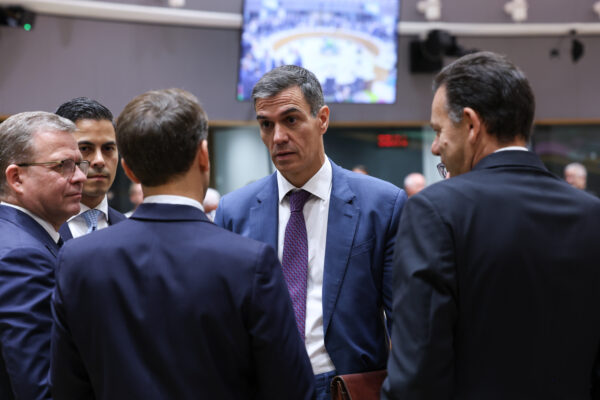
Last week, however, during the European Council summit, 19 countries, led by Italy and Denmark, called for work on the project to be accelerated.
In a joint letter, they stressed the need to move quickly on establishing return hubs and, more importantly, urged the European Commission to provide financial support.
Which raises an important question: is that actually possible?
So far, EU funds cannot be used to finance this type of facility.
There is a precedent of sorts. Back in 2021, twelve member states asked the EU to fund anti-migrant walls along the Union’s external borders.
At the time, the commissioner for home affairs, Ylva Johansson, opposed the proposal.
But things have changed considerably since then.

Today, the Commission says it is willing to examine any mature proposal put forward by member states.
In other words, if a majority of countries want the Commission to contribute financially to these centres, the discussion is open.
So, who stands where?
Opposing the 19 member states that support return hubs are eight countries: Germany, France, Spain, Portugal, Finland, Ireland, Croatia and Luxembourg.
Unsurprisingly, Spanish prime minister Pedro Sánchez, who advocates a more open migration policy, opposes both the centres themselves and the broader return regulation.
According to him, this new migration policy offers no real solutions and sends the wrong message to countries of origin and transit, with which Europe should instead strengthen cooperation.
Even French president Emmanuel Macron openly voiced his disagreement after the summit.
In his view, the very concept of return hubs is incompatible with European values. He also argues that none of the existing models has yet proven effective.
The United Kingdom attempted to establish a similar system with Rwanda, but British courts ruled that Rwanda could not be considered a safe country for asylum seekers. The project was later abandoned altogether after the Labour Party came to power.
Australia has long operated a comparable system in Papua New Guinea and on the island of Nauru, but those centres have repeatedly been criticised over detention conditions and reports of violence.
A more recent example can be found much closer to Europe.
Italy reached an agreement with Albania to build two such centres on Albanian territory. In 2025, several transfers were blocked by Italian courts, but new transfers have since taken place. Nearly one hundred people are believed to have been sent there since the beginning of the year.
For now, all 27 EU member states will have to formally adopt the return regulation in the coming months.
Even if the regulation were somehow blocked by the eight countries that oppose return hubs — which appears unlikely — Italy’s example shows that member states do not need the EU’s approval to pursue such arrangements.
A country can independently strike a deal with a third country to host deported migrants.
The real question, therefore, is who will pay for it.
And that debate is likely to go hand in hand with negotiations over the EU’s next long-term budget.