


A Red-Green-Red coalition is looking the most likely outcome of September’s election in Berlin, Europe’s so-called capital of cool.
 Matt Tempest



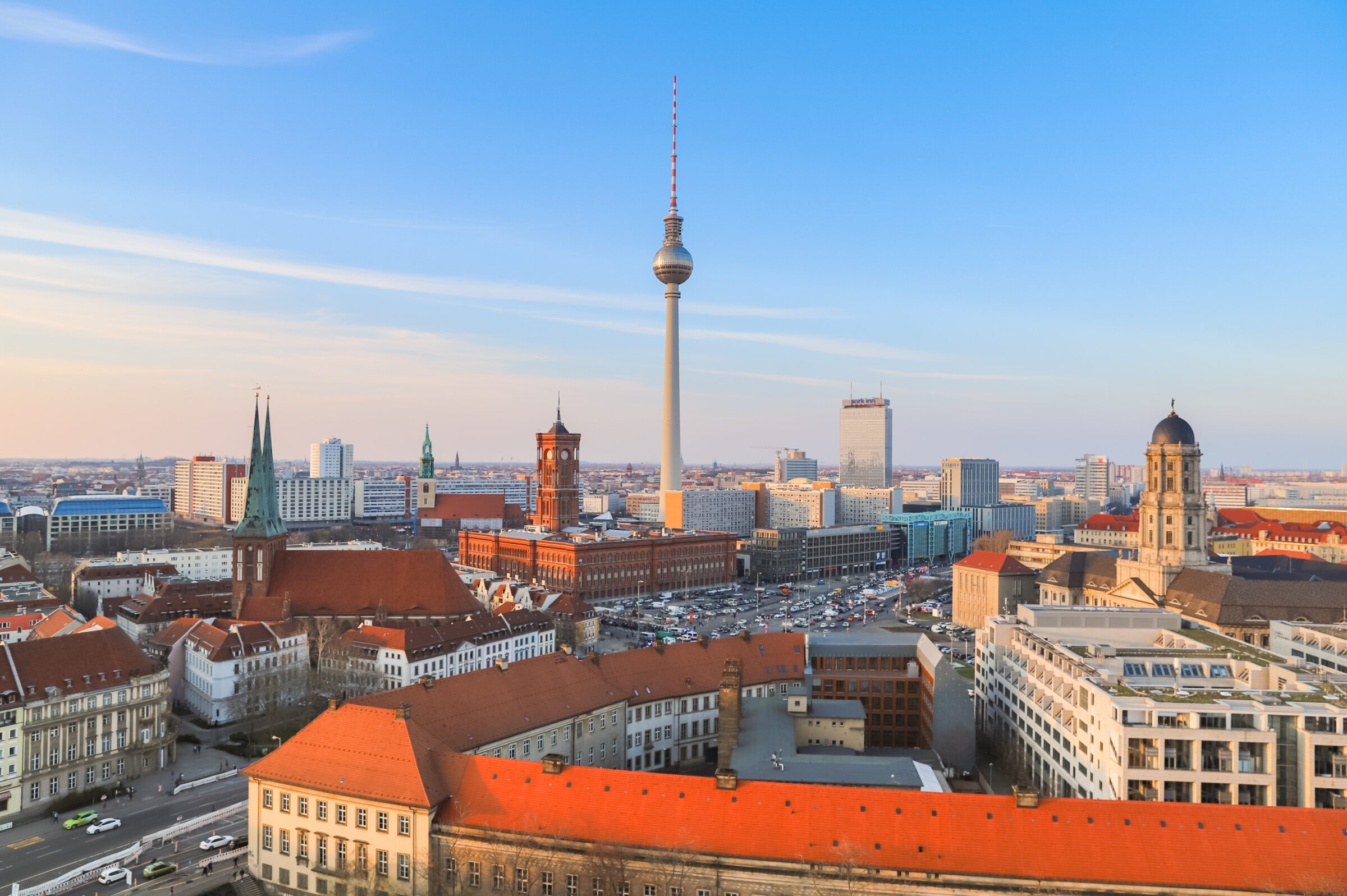
Long gone are the days when Berlin was “poor but sexy”, the catchphrase of former mayor Klaus Wowereit in 2003 to sum up the German capital’s appeal to the continent’s young creatives.
When I first moved here in 2004, my rent – for a one-bedroom apartment in Prenzlauer Berg, probably the city’s most trendy middle-class district – was an astonishingly low €175 a month. That’s right, per month. (For comparison, my rent in London at that time was €1,000+/month. And fast forward to 2026 and my Berlin rent is now also €1,000/month). Eating out costs roughly €2 for a starter and €5 for a main course. Spending €35 one day on ingredients for one meal at one of the city’s many organic supermarkets, I realised it was actually cheaper, if less healthy, to permanently eat out.
Not only that, but apartments were plentiful, so no problem finding a new or better apartment somewhere else.
Of course, the reason for that was the city was €50bn in debt, the laughing stock of the rest of Germany for its poor public services and schools, and with a serious unemployment problem.
Despite the fall of the Wall in 1989, or rather because of the division of Germany into two separate states (with West Berlin merely being a symbolic administrative and cultural outpost buried inside East Germany for 44 years), there were few, if any, serious employers in the German capital.
West Germany’s media was in Cologne and Hamburg, heavy industry in the Ruhr valley, and the automotive giants in Munich (BMW), Audi (Ingolstadt) and Volkswagen (Wolfsburg).
A city that had been divided by a wall for nearly half a century had two of everything – zoos, opera houses, orchestras, even planetariums – but no jobs and a seemingly infinite empty warehouses and apartment blocks, often squatted.
Even the formal relocation of the German government from Bonn to Berlin in the late 1990s didn’t solve the unemployment problem, although it brought an army of civil servants, but not many more private sector jobs.
But over the past decade and a half, all that has now changed. The semi-success of Berlin marketing itself as ‘Silicon Allee’ has brought an influx of digital-nomad workers who benefit from EU freedom of movement from across the continent, plus a huge and steadily growing number of expat Americans disgusted at their country’s trajectory.
A failure to build more social housing has pushed rents through the roof, despite a half-hearted and loophole-filled bid to ban Airbnb in the city in 2014 (landlords simply put an IKEA kitchen table and chairs in the apartment and call them short-term furnished lets).
Most surprisingly of all, for a city famed for its antifa movement, squatters’ rights and general techno and gay rights philosophy, the city has been run for the past two years by…the Conservative Christian Democratic Union (CDU).
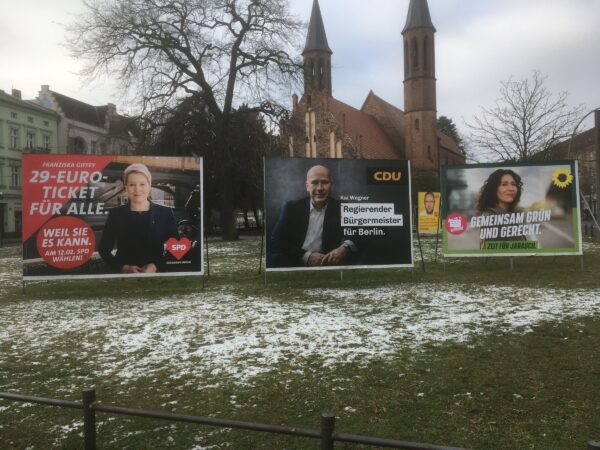
Quite a contrast when the supposedly staid, wealthy and conservative rival city of Munich is led by a young (34), gay, Green mayor, as many Berliners have sardonically noted.
It all came about due to a cock-up with the 2021 election, which had to be re-run by the governing centre-left SPD due to election day logistical problems with voting due to the Berlin Marathon and a lack of polling cards.
That 2023 re-run, partly due to anger at the SPD’s sheer incompetence, saw the CDU’s former insurance salesman Kai Wegner slip into poll position, siphoning off some car-voters from the Berlin suburbs on a platform of reversing bike lanes and finally completing an unfinished 1960s inner-city ring road motorway.
That motorway has been a disaster, as has Wegner’s personal ratings.
When in January this year 45,000 homes in the (prosperous) south-west district of the city had a blackout lasting several days in the middle of winter, Wagner claimed he was working flat-out to restore power (it was the weekend) from home. I was “on the phone all day”, “locked in my home office,” Wagner said.
Diligent reporting by Tagespiegel and the RBB broadcaster proved it turned out he’d actually gone out to play tennis.
A lie-by-omission that his opponents enjoyed exploiting by carrying tennis balls at press conferences. But Wegner’s junior partners, the SPD (in yet another centrist Grand Coalition that echoes that of the federal German government, also housed in Berlin), are not set to benefit from the CDU’s declining polls.
A shock opinion poll this month now puts Die Linke (the Left party) in first place, on just under 20 percent. In second place, the Greens in second-place, the CDU plummeting into fourth place, and the SPD in a distant fifth.
In third place, of course, sadly, is the far-righth Alternative for Germany (AfD), who all parties have pledged not to govern with, so stand no chance of taking over the famous Berlin Rotes Rathaus [Red Townhall, so named for it’s brickwork, not it’s politics.]
So, three years after Berlin shocked Germany – and much of Europe – by going conservative, this September’s most likely current coalition would be a Red-Red-Green team of Linke, the Greens and the SPD.
If the SPD have the courage to go for it.