




Ignore the outcry, Fifa’s plans to sell a minority stake in the World Cup will make international football more transparent and accountable and raise huge sums to develop the game, says Chad Teixeira Football’s governing bodies agree on almost nothing, so when UEFA announces that the World Cup “isn’t Fifas
 Chad Teixeira



Wednesday 29 July 2026 2:59 pm
Ignore the outcry, Fifa’s plans to sell a minority stake in the World Cup will make international football more transparent and accountable and raise huge sums to develop the game, says Chad Teixeira
Football’s governing bodies agree on almost nothing, so when UEFA announces that the World Cup “isn’t Fifas to sell”, it’s worth asking who the status quo has been working out for. Historically, the answer is administrators. Whenever they close ranks this quickly around a principle, it’s usually worth checking whether the principle has an office and a car allowance.
I spent time consulting for Fifa’s commercial and gaming operations a few years ago, and the thing I remember most clearly is the sheer volume of good ideas that walked into a meeting room and never walked out again. Nothing was ever killed outright. It was more of a gentle smothering, carried out by a process that answered to nobody in particular and therefore had no reason to move at any particular speed. That is the actual problem here, and it happens to be the one thing private capital is reliably good at fixing.
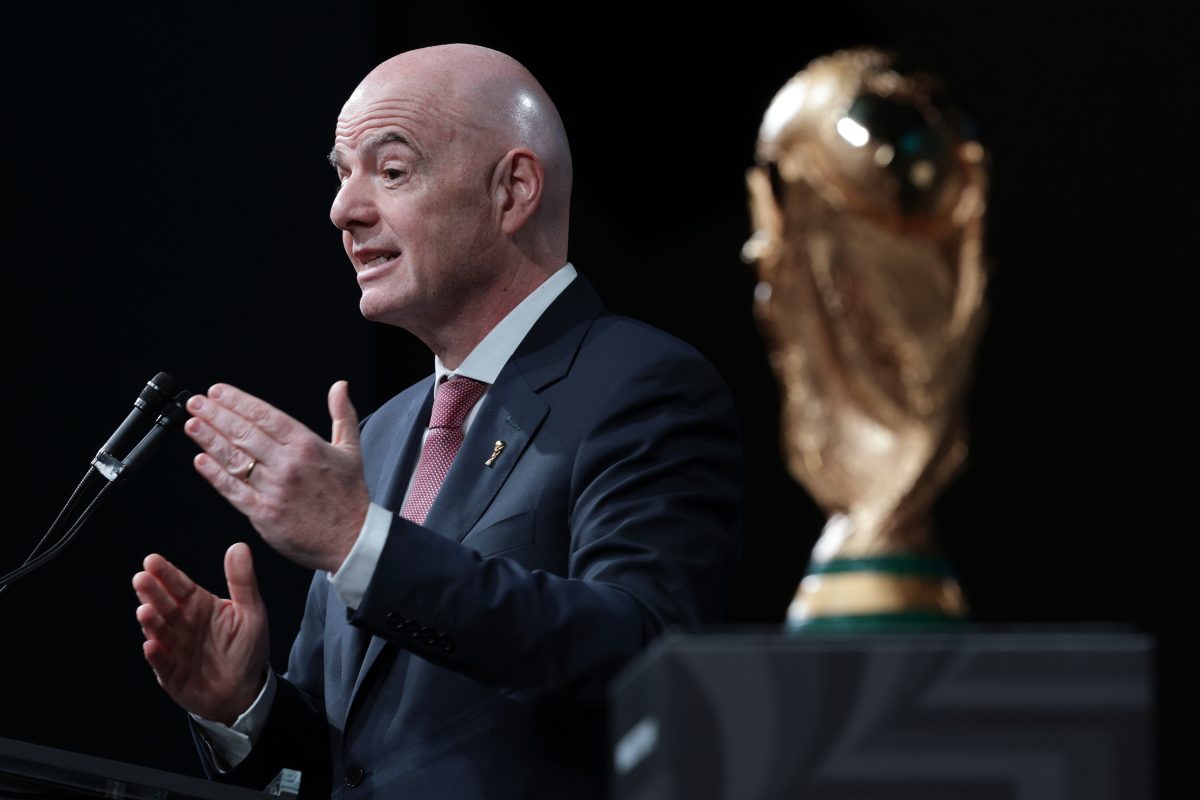
Gianni Infantino’s proposal to sell 20 to 30 per cent of a new commercial entity running the World Cup and Club World Cup is being covered as an asset-stripping raid, which I think flatters it. It is a minority stake sale. It is the least interesting document a corporate lawyer will draft all year. The only novel thing about it is that it is happening to an organisation that has spent most of a century treating financial discipline as an optional extra, like travel insurance.
The structure, once you strip the outrage out of it, is almost boring. Fifa keeps majority control. Outside investors, reportedly including JPMorgan and Joshua Kushner’s Thrive Eternal, buy in at a proposed $20bn valuation, raising up to $4.2bn. The 211 member associations share a further slice, each guaranteed a stake reported at around $20m, which they can hold or cash out immediately. Place your bets on which way that goes. Development funding to those same associations climbs from $8m to $20m per cycle, and higher again after that. Whatever you make of the politics, that is real money arriving at federations who have spent decades explaining, at length, that they have none.
#mc_embed_signup { background: #fff; clear: left; font: 14px Helvetica, Arial,sans-serif; width: 100%; max-width: 600px; margin: 20px 0; } #mc-embedded-subscribe-form { margin: 20px 0 !important; } .newsletter-form-flex { display: flex; gap: 0; align-items: center; margin-top: -10px; } .newsletter-form-flex input[type=”email”] { flex: 1; padding: 2px 10px; border: 1px solid rgb(18, 22, 23) !important; border-radius: 12px 0 0 12px !important; } .newsletter-form-flex input[type=”submit”] { padding: 4px 10px !important; margin: 0 !important; background-color: rgb(18, 22, 23) !important; color: rgb(255, 255, 255) !important; border: 1px solid rgb(18, 22, 23) !important; border-radius: 0 12px 12px 0 !important; } .newsletter-banner-content { margin-bottom: 15px; } .newsletter-banner-content h2 { margin: 0 0 10px 0; font-size: 18px; font-weight: 600; } .newsletter-banner-content p { margin: 0 0 10px 0; line-height: 1.5; } .newsletter-banner-content ul, .newsletter-banner-content ol { margin: 0 0 10px 20px; } .newsletter-banner-content a { color: #0073aa; text-decoration: none; } .newsletter-banner-content a:hover { text-decoration: underline; } .newsletter-banner-content img { max-width: 100%; height: auto; margin: 10px 0; } #mc_embed_signup #mce-success-response { color: #0356a5; display: none; margin: 0 0 10px; width: 100%; } #mc_embed_signup div#mce-responses { float: left; top: -1.4em; padding: 0; overflow: hidden; width: 100%; margin: 0; clear: both; }
The Premier League and Formula One went through exactly this, and neither of them looks obviously ruined
The commercial case is more interesting than the row about it. The 2026 tournament was the most successful in the competition’s history, banking Fifa somewhere near $12bn across the cycle, and it got there largely through record ticket and hospitality pricing. That is a polite way of saying Fifa found out precisely how much a family would pay before it stopped being something a family could do. It works, but it is a blunt instrument, and it is the sort of thing you resort to when your planning horizon is the next election rather than the next generation. Investors holding equity in the brand in 2040 have every reason to build something more durable: media rights structured properly, sponsorship that isn’t sold by the yard, digital and data revenue, real expansion into markets that have been treated as an afterthought. The Premier League and Formula One went through exactly this, and neither of them looks obviously ruined.
Remarkable coincidence
Then there is the part nobody at Fifa wants to talk about, which is that Infantino is reportedly in line to run the new entity as commissioner once his presidency ends in 2031. A coincidence of remarkable timing. It is not a good look, pretending otherwise would insult everybody’s intelligence, and the governance around it deserves a great deal more scrutiny than it has had. But a conflict of interest is an argument for better rules, not for abandoning the model entirely. Plenty of well-run companies have chief executives whose incentives sit roughly alongside their shareholders’. The board’s job is to turn “roughly” into “precisely,” and if Fifa can’t manage that, the problem was never the investors.
Which brings us back to Uefa’s objection. It sounds principled right up until you notice that Fifa isn’t selling football. It is selling a minority stake in the commercial rights to two tournaments it already owns and already runs. No supporter’s ticket changes, no club’s fixture list changes, no nation’s qualification path changes because a bank holds equity in a holding company. What changes is that somebody in the room now has to answer a direct question about where the money went, which I accept is a distressing and unfamiliar concept for the people currently objecting loudest.
The World Cup does not need saving from capitalism. It has been comfortably marinating in capitalism since roughly 1974, just the unaccountable kind, where nobody’s name goes on the invoice. Given the choice between an investor asking difficult questions about capital allocation and a federation answering to nothing but its own reflection, I know which version of the game I’d rather watch.
Chad Teixeira is a seasoned media commentator, investor and communications strategist covering culture, identity and the stories shaping modern brands
Read more Overseas games: Will World Cup success force Fifa’s hand over divisive issue?
Similarly tagged content: Sections Categories People & Organisations