
Europe fears escalation with Russia, but by clinging to an “old world” mindset it may be quietly losing a war it refuses to acknowledge.
 Petra Pavlovičová



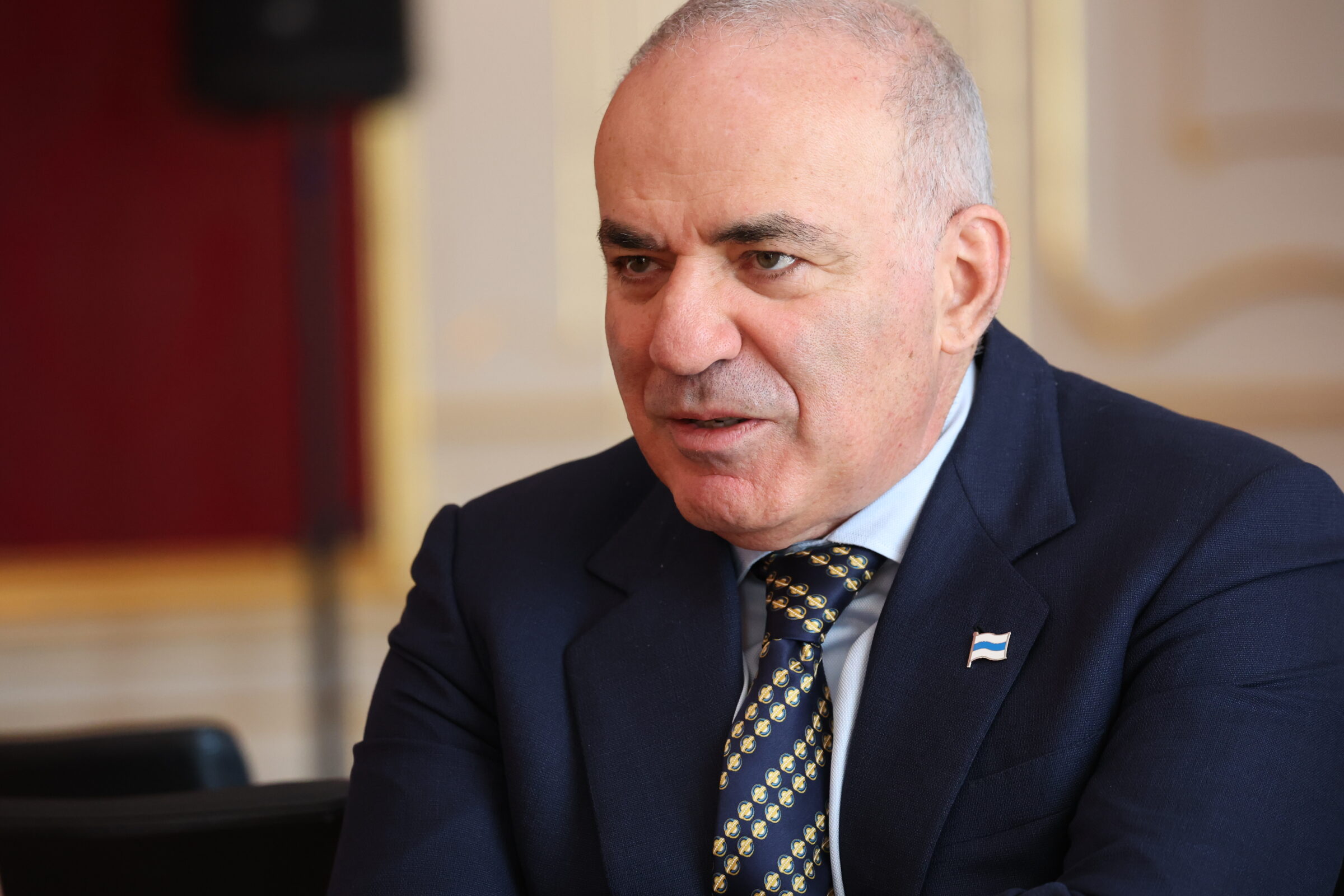
Recent debates over whether the European Union should pursue diplomatic contacts with Moscow have exposed divisions about Europe’s role in peace negotiations between Kyiv and Moscow. But for chess legend Garry Kasparov, now Moscow’s ardent critic and voice of opposition, the debate rests on a false premise. “Europe is already at war, whether it wants to admit it or not,” Kasparov told EUobserver in an interview in Vienna. “[Russian president Vladimir] Putin has already made the choice,” he said.
Europe continues to misunderstand both Putin’s objectives and the nature of the war itself, Kasparov said.
In his view, Ukraine is not the end-game of Russia’s imperialistic ambitions, but the first battlefield in a much broader struggle against the post-Cold War international order.
And Kasparov said Europe had repeatedly ignored what Putin has openly declared.
“He has always responded to strength or, rather, to the lack of strength on the other side,” Kasparov told EUobserver. “He was never hiding his intentions. He wanted to push Nato back behind the 1997 borders.”
The EU’s failure was never due to lack of information, but lack of political will, and inability to see the bigger picture, he said.
“I think it is psychological,” Kasparov said. “They [EU politicians] became too comfortable. I call them managers rather than leaders. They panic when they have to challenge the status quo.”
After Russia’s annexation of Crimea in 2014, Europe largely failed to prepare for what was to follow, he said.
“After Crimea … basically nothing was done to prepare for the inevitable aggression,” he said. “Putin made it very clear that he intended to erase Ukraine from the map once he had enough power to do so.”
A historically driven argument
Looking back over the past two centuries of history, Kasparov saw a recurring pattern: meaningful political change in Russia has almost always followed military defeat.
Victories, by contrast, have strengthened authoritarian governments, regardless of whether they ruled under the Tsars, constitutional monarchies, or Soviet dictatorships.
Russia’s defeat in the Crimean War in 1856 triggered sweeping reforms under Tsar Alexander II. The Russo-Japanese War in 1905 exposed the weaknesses of the imperial state and helped pave the way for revolution. The Soviet Union’s disastrous 10-year war in Afghanistan in 1979 to 1989 also accelerated the collapse of the communist system.
The lesson, Kasparov said, was that Russia’s political culture has repeatedly proven incapable of abandoning imperial ambitions. He described this as an “imperial virus”, a deeply embedded belief that Russia’s greatness depended on expansion and domination of its neighbours.
And for that mentality to change, military failure was necessary, history showed.