Far from the front, ordinary Russians are starting to feel a war their leaders can no longer afford.
 Soňa Weissová



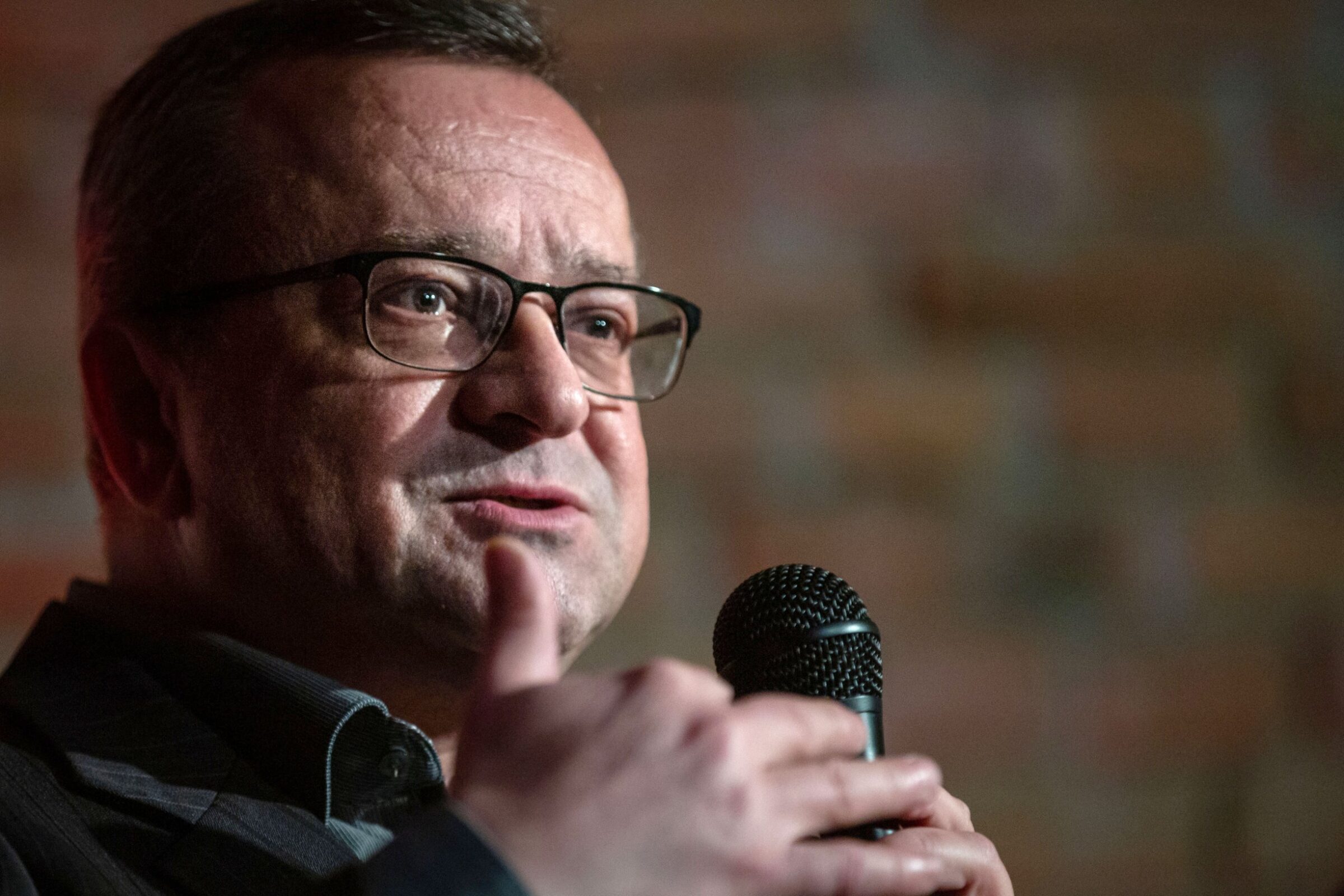
Thanks to artificial intelligence and the development of drones, Ukraine has gained a technological advantage over Russia, which, under the pressure of attacks on refineries, is hurtling into a deep economic crisis, foreign policy expert Alexander Duleba said in an interview.
According to him, Russian president Vladimir Putin is dragging out the war for the sake of his own political survival. Europe, meanwhile, was paying the price for wasting time and for the lack of a unified vision of the post-war security order.
Slovakia, meanwhile, has isolated itself and is slipping into passive dependence on decisions taken by others.
“The whole debate about some kind of sovereign foreign policy is completely sick and false. This government has completely destroyed our country’s foreign policy,” he added.
In the interview you will read:
about Ukrainian attacks on Russian refineries and their significance for Putin’s regime; the scale of the economic crisis in Russia and the deep misunderstanding of the situation among those who question it; how Ukrainians defeated the Russians with the help of drones; whether it is right for the European Union to try to open talks with Moscow and what role Slovakia can play in this.
Last week saw the worst attack on Moscow since the start of the war. The Ukrainians hit a refinery fifteen km from the Kremlin and people filmed how the explosion literally blew the lid off one of the oil tanks. Two days earlier, the Ukrainians had attacked the same refinery. Are these just symbolic videos or do they also reveal a deeper Russian problem?
Alexander Duleba: The attack on Moscow has a very large symbolic dimension, but we should not focus only on that. It is the consequence of a long-term systematic operation by Ukraine that has been under way since the end of last year. Its aim is to destroy Russia’s oil infrastructure and oil processing. The Moscow refinery in Kapotnya is key, with an annual processing capacity of more than ten million tonnes of oil. In the Moscow region and Moscow itself, around forty percent of fuels came from this refinery. It is now out of operation.
It is also important that in May and June the Ukrainians managed to take seven large Russian refineries completely out of operation, which together have an annual processing capacity of roughly eighty-three million tonnes. The total processing capacity of all 38 Russian refineries – 30 of them can process more than one million tonnes of oil per year – is roughly 270 million tonnes, and these 83 million tonnes are almost 30 percent.
Footage of a Ukrainian attack drone hitting a storage tank at the Moscow Oil Refinery this morning, sending the tank lid perfectly soaring hundreds of feet. pic.twitter.com/2GIHEGk52M
— OSINTtechnical (@Osinttechnical) June 18, 2026
Is it not a disgrace for the Russians that the Ukrainians have managed to hit so many refineries so deep inside their territory?
Of course it is. They claimed to have a super air defence that was impenetrable, that they were able to protect themselves. This is a fundamentally new development we have been witnessing in the first half of this year. The Ukrainians are capable of carrying out massive attacks on targets that are located deep in the rear. Recorded successful strikes have, for example, hit the refinery in Orsk – that is roughly up to one thousand five hundred km away – and three days ago they managed to strike the refinery in Tyumen, which is almost two thousand km away.
We are in the fifth year of the war. Until now, only the Russians could afford the luxury of being able to attack targets deep in the Ukrainian rear. Now the Ukrainians have the same capacity. This is a fundamental change in terms of both countries’ ability to continue the war. It is a major success, because there is a shortage of fuel in Russia. More than 53 federal entities of the Russian Federation out of 88 have introduced limits on how much people can fill up.
Over the last weekend, the Crimean authorities completely stopped selling fuel.
That is a paradoxical situation in Crimea. According to various reports, there are roughly 400,000 tourists in Crimea. That is about 35 to 40 percent fewer Russians than last year. Nevertheless, there are still 400,000 people there and transport is basically paralysed. And when transport is paralysed, it means that the shops and the entire infrastructure are not being supplied. And the question now is, if many of them arrived by car, how they will actually be able to get out of Crimea.
In the first half of this year, two key things happened: Ukraine’s ability to successfully hit targets deep in the Russian rear (mainly oil infrastructure) and the triggering of a deficit, that is, a crisis on the Russian market. One more thing needs to be understood – why are there limits on refuelling for individuals? Because, essentially, the petrol stations that are still operating, albeit with these limits, are those run by large companies like Rosneft, Tatneft, Lukoil and the like.
Forty percent of the market was supplied by private companies that do not extract oil but operate networks of these stations. The state subsidises the final price for the consumer – that price rose in the first half of the year by about six percent. Private operators of their own petrol stations could buy on the commodities exchange. There, the price went up by thirty-five percent. They closed down, because it made no sense for them to sell petrol.
How might Putin’s oligarchs, who are tied into the Russian oil industry, react to this?
It has a broader dimension; this is just one aspect. The recent economic forum in St Petersburg was very gloomy and basically everyone now understands that Russia has enormous economic problems that will continue to grow. The question is when a full-fledged economic crisis will break out. Economic growth is around zero, zero point three percent. These are official figures, which are usually embellished a bit.
Thus, economic activity in Russia is declining. Small and medium-sized companies in particular are shutting down, since VAT was again raised from January this year. Total revenues from oil exports, one of the key sources of the state budget, fell in the first five months of this year by 45 percent. The crisis in the Persian Gulf that began in February did not help either, even though the closure of the Strait of Hormuz pushed prices high. Because of sanctions, Russian oil has always been sold at a discount, and that helped them somewhat in April to increase state budget revenues.
However, since they have the so‑called dampener mechanism, which says that when the price of oil on the international market is high, in order to prevent Russian companies from exporting everything abroad, the government compensates them for supplying Russian refineries. So on the one hand, revenues were higher, but at the same time the dampener took away a lot of that money. Compared with last year, they had 40 percent lower revenues.
Oil processing in Russia is now roughly at the level of 1996. The problem is the state deficit, because it is growing dynamically. The figures for the first five months of this year speak of approximately six trillion roubles. The overall planned deficit for this year was 3.6 to 3.7 trillion roubles.
Defence spending is growing dramatically. Total state budget expenditure in the first five months of this year increased by 17 percent compared with the plan. Revenues are also falling, because economic growth is declining, economic activity is shrinking and small and medium-sized enterprises are closing, while the big ones are also having problems.
You ask what the oligarchs make of this. One thing is petrol, which is a consequence of the Ukrainian attacks. But the other thing is the overall development of the Russian economy, because there we are really talking about the long-term interests of the oligarchs.
And they certainly do not like how the situation is developing.
Today, the outcome of the war will no longer be decided by what is currently happening near Kostyantynivka or beyond Pokrovsk, which the Russians have occupied. Something else will decide whether the countries are capable of continuing the armed conflict.
Russia is heading into an economic crisis. Bad loans in the banks – according to financial analysts, ten percent is the maximum sustainable level – are now around 11 to 12 percent. One thing is the state budget deficit, but the entities of the Russian Federation also have their own deficits and they are the ones that mainly finance the mercenaries. When Russians are recruited to fight in the war in Ukraine, it is the federal entities that pay the bulk of the cost. They say: we do not have the money to pay for this, the mercenaries’ pay is set very high. And the Kremlin says: then borrow. So they are taking out private loans.
The interest rate is now 14.25 percent. The head of the central bank mysteriously disappeared for three weeks, the security detail at her house also disappeared, and now she has reappeared. Many say this was pressure from the oligarchs, because Elvira Nabiullina was supposed to have told Putin that she would continue in her post only if this war ended as soon as possible. Her term runs until 2027. These are the small signals we have to watch if we are to understand what is happening in Russia.
How can Putin explain this to his people?
We no longer know. It is forbidden to publish data on Putin’s popularity and public trust, because it has fallen below 30 percent. And this, mind you, was measured by the nationwide state public-opinion research agency VCIOM. Now they are officially no longer allowed to publish the data. As a result of the war, there are major shifts in Russia. Russians can now feel it on their own skin. Everyone is surprised by the Ukrainian attacks and by the fact that they have pierced the indestructible defence that was supposed to protect Moscow.
That was probably just propaganda, and in reality they relied on their air defence.
The Ukrainians are gradually gaining a technological edge in waging the war and the Russians are falling behind. Today it is no longer decisive whether you conscript one hundred thousand soldiers into the army, but whether you have one thousand quality drone operators. Why was it possible to hit targets in St Petersburg during the economic forum? There were foreign guests there, Putin was there, so security was very tight.
From the start of the war, the Ukrainians have been using their online platform Delta. This is a unique tool, because it collects all information from the combat frontline, from satellites, from open sources, and processes it. It is based on artificial intelligence and they were greatly helped by cooperation with the American company Palantir, which offered them its technologies. They are now using them mainly for attacks on distant targets. But you need to feed artificial intelligence and its models.