Researchers found that the initiative gives large chemical producers, who stand to benefit directly from how the critical minerals list is drawn up, a central role in deciding what goes on it.
 Wester van Gaal



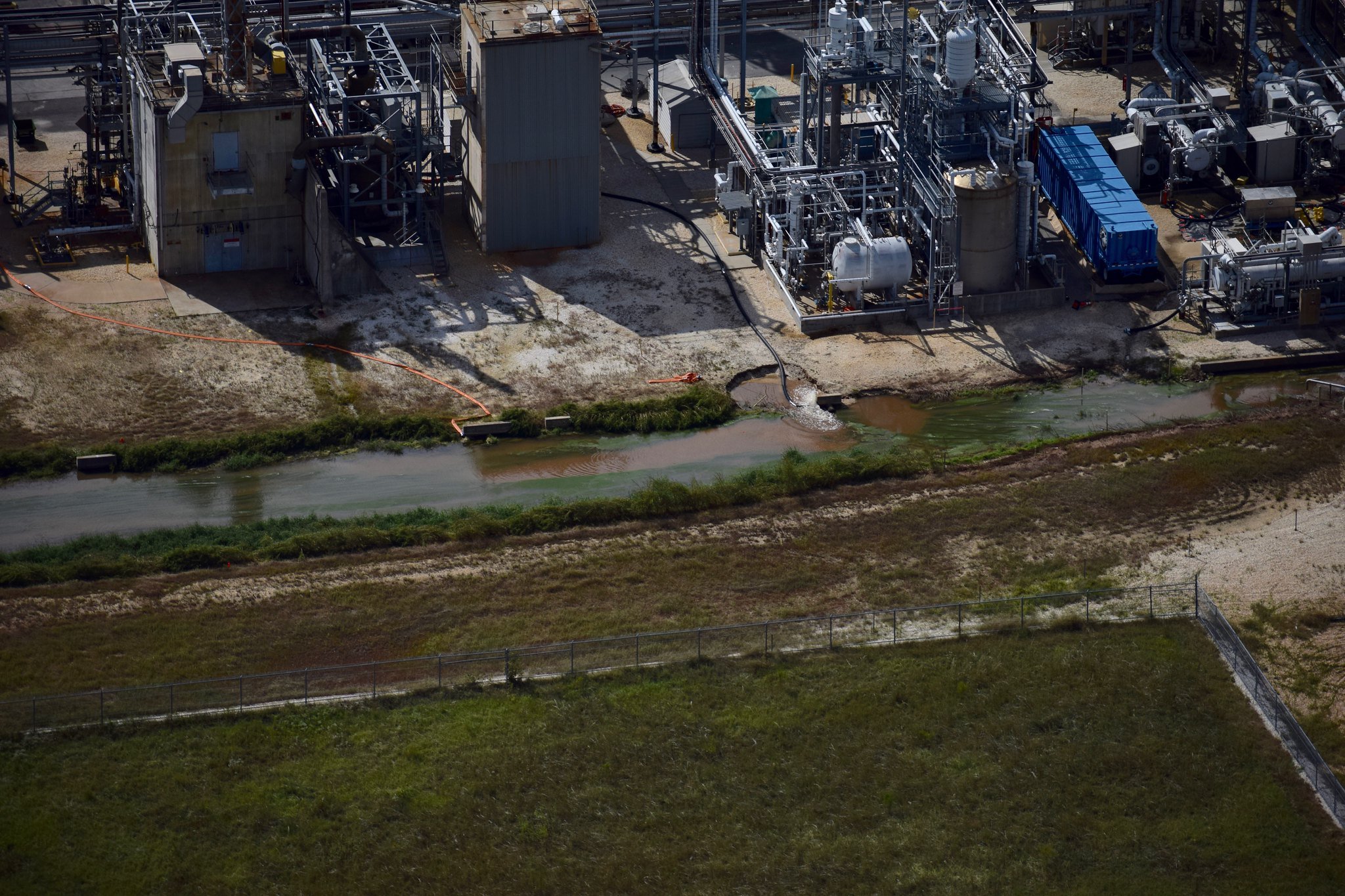
The European Commission’s new Critical Chemicals Alliance (CCA) has been effectively taken over by the industry it is meant to scrutinise.
The alliance, launched at the Chemelot industrial park in the Dutch province of Limburg in January this year, is tasked with identifying chemical molecules and production sites deemed “critical” to the EU economy.
Those designated as such could qualify for EU or national subsidies. But a report published this week by Corporate Europe Observatory (CEO) and the European Environmental Bureau (EEB) found that the initiative gives large chemical producers, who directly benefit from the way this list is shaped, a central role in what goes on it.
The alliance’s defenders present it as a response to a real crisis, with the sector facing both high energy costs and competition from China.
But the report’s authors, citing research, point out that the chemical sector paid out three-quarters of its €322bn in net profits to shareholders between 2010 and 2023, rather than invest it in trying to update its facilities.
Meanwhile, chemical contamination of our environment, soils and waters is entirely absent from the alliance’s agenda.
Simplification
The report was published earlier this week and is well worth a read.
It is illustrative not just of how EU policy is picked apart by the chemicals industry and recast to serve its own narrow interests, but of how the commission’s entire simplification agenda is being overwhelmed by a cacophony of business demands.
Yesterday, the European Ombudsman announced it would launch an inquiry into the commission’s so-called “Reality Checks,” a new form of closed-door consultation reserved for large businesses to complain about EU rules — complaints that then fed directly into the EU’s simplification and deregulation drive.
Hundreds of meetings on sensitive topics such as online privacy, defence and artificial intelligence took place in this way, sometimes exclusively with businesses and corporate lobbyists.
In the case of the critical chemical alliance: its steering board is largely controlled by industry representatives, including the ever present European Chemical Industry Council (CEFIC).
These industry bodies also hold the chair or vice-chair positions in three of the alliance’s four working groups tasked with drafting policies for the roughly 450 million plus EU citizens.
The first working group, for example, decides the “criticality” of chemicals. But 13 of its 20 members are large chemical companies or sector trade unions, which is enough to sway any vote in their favour.
It means that, over the past few months, chemical giants such as BASF, INEOS, TotalEnergies, Evonik and Syensqo have been testing whether their products should count among the ‘critical molecules’ eligible for public investment and support.
These include a well known carcinogen benzene, and hydrofluoric acid, a precursor to the ‘forever chemical’ PFAS.
Unsurprisingly, most of them do qualify for funding. Of a 70-molecule sample run through an industry-designed methodology, around two-thirds came out as ‘critical,’ according to the EEB.
To prevent all pollutants from making the cut by default, the authors want ‘criticality’ to be redefined around essential societal needs, rather than economic ones, with any public funding tied to strict conditions on detoxification.
In a letter out later on Thursday, CEO and — by my own count — thirty other civil society organisations formally call on the commission to heavily reform the way the alliance functions, or shut it down altogether.
The commission has until October to decide whether it wants to listen.