



Parliament has abolished Viktor Orban’s Sovereignty Protection Office, which was used to smear and intimidate NGOs and independent media.
 Edit Inotai



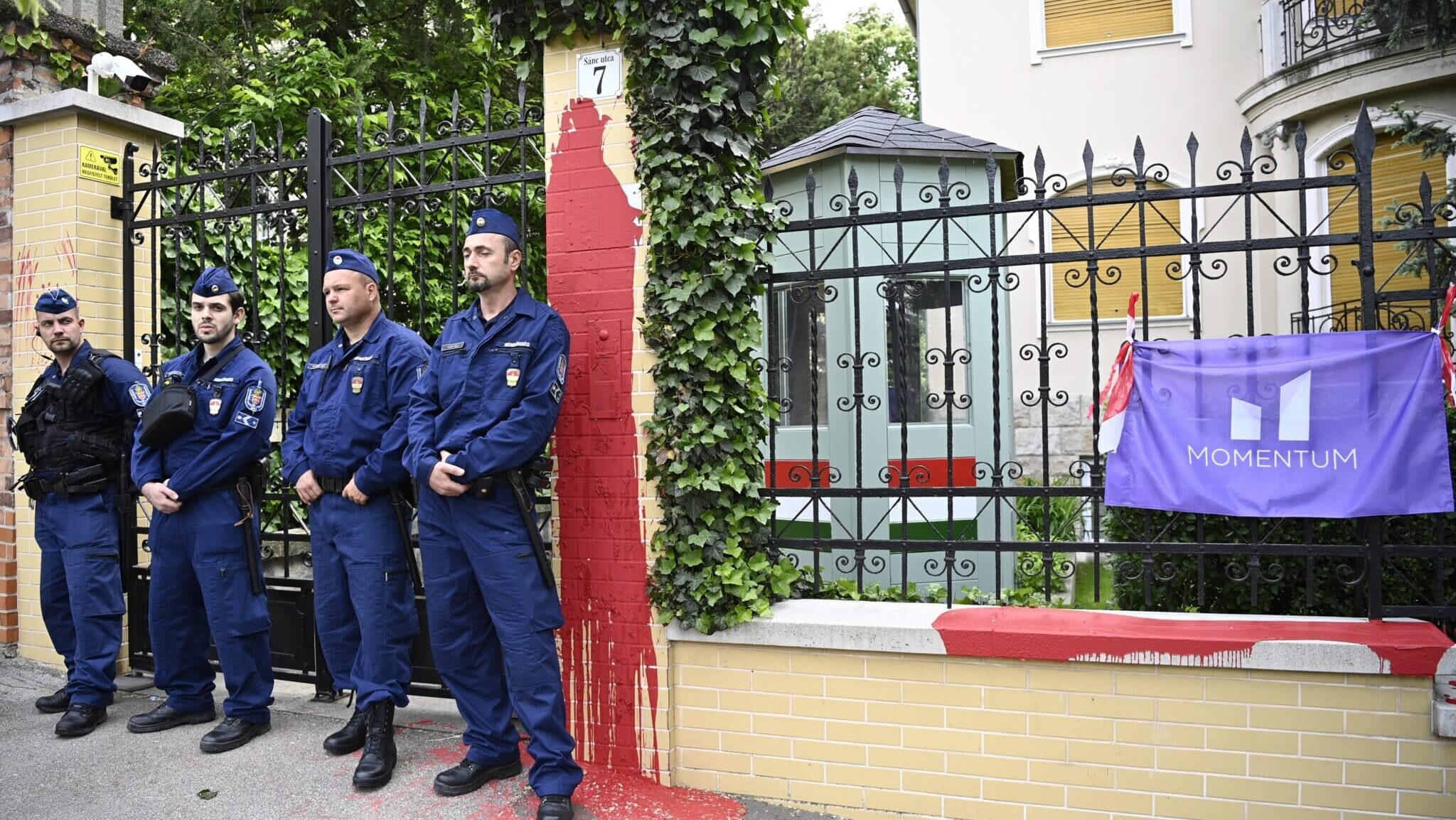
Hungary’s parliament voted on Tuesday to dismantle the country’s Russian-style Sovereignty Protection Office by a sweeping majority.
The institution, established by then Prime Minister Viktor Orban’s government in 2024, was tasked with investigating critics of the government and intimidating independent media. Its closure is symbolic, marking the end of Hungary’s illiberal era.
Widely regarded as one of the most controversial creations of the Orban era, the office, established shortly before the 2024 European Elections, targeted organisations such as Transparency International Hungary and the investigative news outlet Atlatszo.
It accused them of receiving foreign funding, influencing voters and undermining Hungary’s national sovereignty. Although its investigations carried no direct legal consequences, they served to erode public trust in independent organisations and boost smear campaigns against journalists and media outlets, portraying them as serving foreign interests.
Both Transparency International and Atlatszo challenged the office in court. Transparency International turned to the Strasbourg-based European Court of Human Rights, where the case is still pending, while Atlatszo won a first-instance ruling against the office in a Budapest court.
“When the office launched its investigation against us, we saw it as a kind of painful acknowledgement of our work,” Miklos Ligeti, the legal director of Transparency International Hungary, told BIRN. “It proved how our anti-corruption work really irritated the Orban system.”
Ligeti believes the Orban administration tilted towards an increasingly radical course in its final two years, a trajectory which proved unsustainable and led to its colossal defeat on April 12, 2026. “We will certainly not miss this office,” he said, dryly.
Although some say the Sovereignty Protection Office was more like a paper tiger, with no legal powers, it employed more than one hundred staff, including a former communist-era intelligence agent who also served as a senior security commentator for the pro-Orban daily Magyar Nemzet.
The institution was generously funded, operating from an annual budget exceeding 6 billion forints, or about 17 million euros. Its director, Tamas Lanczi, a former speechwriter for Orban, earned over 10,000 euros a month.
Reacting to the abolition of the office, Lanczi described it as “part of a broader process leading to the gradual dismantling of the institutions of national self-defence … This includes all efforts that weaken the Hungarian state’s ability to act,” Lanczi posted on Facebook.
The law eliminating the office did not come out of the blue. The now governing TISZA Party, which defeated Orban’s Fidesz party and won a two-thirds majority in the April 12 election, had pledged to dismantle the office in its manifesto.
“The Sovereignty Protection Office’s true purpose was to exert political pressure on citizens, as well as on certain organisations and media outlets. Such activities are incompatible with a constitutional democracy,” the bill says.
The office was only one element of Orban’s broader campaign against civil society and independent media. Last summer, Orban wanted to go even further, passing a so-called Law on Transparency on Public Life, which would have blacklisted media and NGOs as foreign agents and threatened to stop their funding from abroad, even from EU grants.
The law later disappeared from the parliament’s agenda, allegedly due to internal dissent within Fidesz and pressure from Brussels.