


Nuclear power remains attractive from an energy security and decarbonisation perspective, but as Hungary is showing such projects have become more complicated economically and geopolitically to build than a decade ago.
 Nicholas Watson



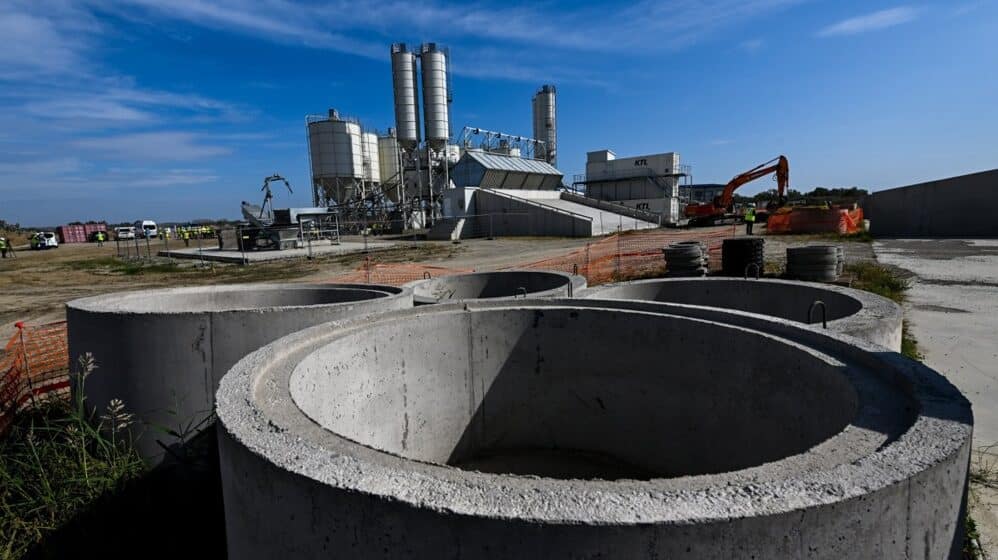
The main challenge in translating those expectations into reality, say experts, is the delivery model. As one points out, “Czechoslovakia was probably one of the most developed countries in Central Europe in terms of running nuclear reactors, but I don’t know how much that means, because to run a nuclear power plant and to build one – these are two very different issues.”
The countries that have successfully built fleets of nuclear reactors over the last three decades – China, France, Russia, UAE and South Korea – have been pursuing fairly standardised design, engineering and supply chains. Contrast this with the bespoke projects in countries that have not built a new reactor in decades, which are taking 10-17 years to complete and going massively over budget. The UK’s Hinkley Point C’s projected completion cost has climbed to 35 billion pounds and will now be delivered 13 years after the first concrete was poured.
“The common thread isn’t anything mysterious about those countries: it’s continuity and repetition. They committed to multi-decade programs, built the same or similar designs again and again, and kept experienced delivery organisations, supply chains and financing arrangements intact between projects,” says Qvist.
Crucially, pursuing a fleet strategy enables huge economies of scale, as the infrastructure, engineering, workforce training and site preparation costs are shared across the entire plant rather than repeated for each reactor. At the Barakah Nuclear Energy Plant in the UAE, for example, all four of the identical APR-1400 reactors constructed at the single site were completed in under 10 years, while each reactor cost an estimated 8 billion dollars.
“That serial, fleet-based approach is what drives down costs and schedule. Tellingly, when France broke from it and built a first-of-a-kind [European Pressurized Reactor] at Flamanville, it ran years late and multiple times over budget,” Qvist says.
That doesn’t mean developing a single pan-European reactor is likely – nor even the goal. Rather, convergence around a small number of designs deployed across borders would allow countries coordinating on the same technology to share licensing, supply chains and orders.
The fleet approach becomes especially important when considering the introduction of small modular reactors (SMRs), which many regard as the future of the industry.
SMRs are not necessarily all that small (the Rolls‑Royce SMR produces 470 Mwe, not far off the reactors at Finland’s Loviisa plant), but their key advantage is that the units are built from modules manufactured elsewhere, transported to the site and installed into place. This means efficient, standardised factory-like construction with less quality issues and uncertainties. The global market for SMRs is projected to be worth 150-300 billion dollars by 2040, according to Natural Resources Canada.
“A fleet approach is non-negotiable for small modular reactors; there is no way to have small modular reactors with a successful business model in our market if there is no fleet approach,” says a nuclear expert at the European Commission.
Holoda points out that the key challenge for nuclear projects in the region is no longer only technology, but now also financing, construction risk, political stability and long-term regulatory predictability. The requisite skilled labour is also in short supply, add others.
Qvist points out that financing and risk-sharing is the hardest and least developed piece of the puzzle. First-of-a-kind reactors – and all technologies that are built in the EU for the first time should be counted as such – bring capital risk that private investors are not equipped to carry, she says.
Regulatory streamlining and predictability would involve reducing duplication so that a design licensed in one member state doesn’t have to be re-litigated and re-designed from scratch in the next. And, as we see in Hungary, political durability and commitments that survive changes of government are crucial for such huge projects with such long timelines.
“None of these is automatic; each requires real institutional work, money and sustained will. And the gap won’t close on enthusiasm alone,” says Qvist.