

Getting rid of the Orban-appointed president was a big victory for Hungary’s new government, but the rushed attempt to nominate chess legend Judit Polgar as his successor is its first major blunder.
 Edit Inotai



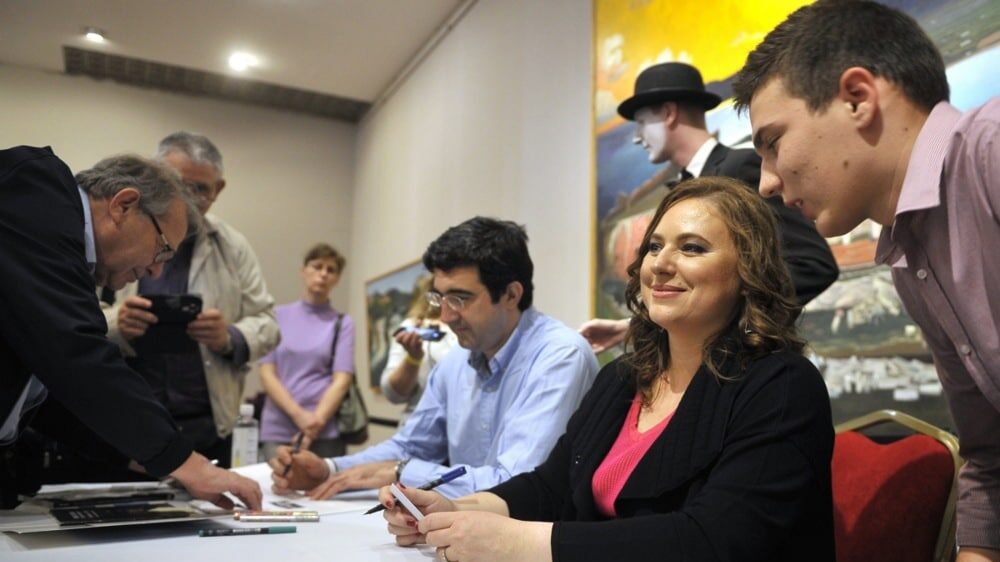
“The responsibility is entirely mine,” Hungarian Prime Minister Peter Magyar admitted on Monday night, after he had failed to convince the world’s greatest female chess player of all time, Judit Polgar, to accept the nomination to be the country’s next president.
“I don’t feel the strength to take on the historic responsibility, therefore I am unable to accept the invitation,” Polgar, 49, posted last night, ending a day of intense speculation in Hungary and abroad.
Nominating a grandmaster as Hungary’s next president was just the latest in a series of unconventional moves by the government headed by Magyar’s Tisza party. It was a hasty decision by a government that seems to be under constant time pressure to deliver on the numerous promises it made during the campaign for the April 12 election, which it won by a landslide.
“The selection of Hungary’s next president should not be rushed, Peter Magyar is acting as if there were no time for a meaningful public debate about the country’s next head of state,” the human rights watchdog Amnesty International said in a statement.
Tamas Sulyok was regarded as an ideological presidential appointee of former prime minister Viktor Orban. According to Sulyok’s critics, he stood by as the previous government weakened democratic institutions and undermined the rule of law. As a result, voters had lost confidence in him, Magyar argued during the campaign, and his removal would be an essential step in rebuilding democracy and the system of checks of balances in Hungary.
Sulyok refused to budge for weeks until a constitutional amendment was passed on July 13 by the Tisza-dominated parliament which, among other measures, term-limited MPs to 12 years, pensioned off constitutional court judges at 70 and, in a single sentence, terminated the president’s mandate with immediate effect. Sulyok announced on Saturday he would sign the constitutional amendment, “fulfilling my obligation under the Fundamental Law [Hungary’s constitution] after carefully weighing my legal options and my conscience”.
In a lengthy video posted on Facebook, the outgoing president lamented the “end of constitutionalism” and warned that the Tisza government posed a threat to Hungarian democracy. The president has a largely ceremonial role but can block some legislation and delay appointments.
Hungary’s parliament now has 30 days to elect a new head of state, who will be in office until a new constitution is drawn up and adopted, but no longer than five years.
Magyar had promised broad public consultation in choosing the next president, saying he wanted a person capable of uniting Hungary’s deeply polarised society and representing the country abroad. But on Sunday, only hours after Sulyok had stepped down, a group of Hungarian intellectuals, athletes and public figures – mainly critics of the former Fidesz government but also some more aligned with it – published an open letter on Facebook endorsing Polgar for the presidency.
Magyar replied in a Facebook post that he would discuss the matter on Monday with Polgar, who he saw as the most suitable candidate. Tisza’s parliamentary group leader Andrea Bujdoso also described Polgar as the party’s preferred candidate for the presidency.
Some sensed a stitch-up after evidence emerged showing Magyar meeting with Polgar two weeks earlier at the US embassy’s Fourth of July reception in Budapest, where she quickly defeated the prime minister in a chess match. It remains unclear whether they discussed a possible political role before or after the event.
Polgar and her two older sisters were born into a Hungarian Jewish family and educated by their father, Laszlo Polgar, who developed an unconventional method aimed at proving that geniuses are made rather than born. The sisters did not attend school in Communist Hungary but instead spent eight to ten hours a day playing chess. The family travelled extensively around the world at a time when few Hungarians enjoyed such opportunities.
Polgar won her first championship at the age of nine and became the world’s highest-ranked female player at just 12. Throughout her career she played in the men’s league, and defeated several world champions, including Garry Kasparov and Anatoly Karpov. “They thought I was this little girl with a cute ponytail, but I wasn’t that cute when I played,” she once said in an interview.
At the age of 15, she became the youngest grandmaster in history at the time, breaking Bobby Fischer’s longstanding record. A documentary of her life, Queen of Chess, was released earlier this year and became an instant hit on Netflix. Since retiring from competitive chess in 2014, Polgar has focused on educational initiatives and promoting chess among children. She is married to a veterinarian, has two children, and lives in Budapest.
Her potential nomination prompted a variety of reactions. Critics argued that Polgar has never shown any interest in politics and was never publicly critical of Orban’s government. Supporters argued it is an advantage that she has never been affiliated with any political party or movement, but is admired across the political spectrum as one of Hungary’s most accomplished and internationally respected public figures.
But most criticism was focused on the speed with which Tisza tried to rush through the nomination process, arguing that there had been little genuine public consultation despite the lack of urgency.
Fidesz politicians maintain that whoever is elected under the current circumstances will lack democratic legitimacy because of the manner in which the previous president was removed.