Last year, Zilch founder Philip Belamant sat down with then-boss of Monzo, TS Anil. As the two friends caught up, Belamant was fizzing with ideas to turn his $2bn British fintech into a global powerhouse, according to sources familiar with the matter. Not long ago, Zilch had set up shop
 Samuel Norman




Wednesday 08 July 2026 3:00 am | Updated: Tuesday 07 July 2026 4:40 pm
Last year, Zilch founder Philip Belamant sat down with then-boss of Monzo, TS Anil.
As the two friends caught up, Belamant was fizzing with ideas to turn his $2bn British fintech into a global powerhouse, according to sources familiar with the matter.
Not long ago, Zilch had set up shop across the pond, and Belamant was of the view that overseas markets would become the firm’s biggest growth driver in the years ahead.
Zilch had hoped to take off across the Atlantic when it rolled out its buy now, pay later offering to a waitlist of over 150,000 Americans in 2022. But in its 2024 accounts, the fintech confirmed it had “curtailed” its US operations whilst it focused on investing in its home market. Ambitions would still remain high for expansion across the Atlantic, however.
“They wanted to hit the US,” a former senior manager says, adding, “the way their product was structured and built… the US was on their radar”.
#mc_embed_signup { background: #fff; clear: left; font: 14px Helvetica, Arial,sans-serif; width: 100%; max-width: 600px; margin: 20px 0; } #mc-embedded-subscribe-form { margin: 20px 0 !important; } .newsletter-form-flex { display: flex; gap: 0; align-items: center; margin-top: -10px; } .newsletter-form-flex input[type=”email”] { flex: 1; padding: 2px 10px; border: 1px solid rgb(18, 22, 23) !important; border-radius: 12px 0 0 12px !important; } .newsletter-form-flex input[type=”submit”] { padding: 4px 10px !important; margin: 0 !important; background-color: rgb(18, 22, 23) !important; color: rgb(255, 255, 255) !important; border: 1px solid rgb(18, 22, 23) !important; border-radius: 0 12px 12px 0 !important; } .newsletter-banner-content { margin-bottom: 15px; } .newsletter-banner-content h2 { margin: 0 0 10px 0; font-size: 18px; font-weight: 600; } .newsletter-banner-content p { margin: 0 0 10px 0; line-height: 1.5; } .newsletter-banner-content ul, .newsletter-banner-content ol { margin: 0 0 10px 20px; } .newsletter-banner-content a { color: #0073aa; text-decoration: none; } .newsletter-banner-content a:hover { text-decoration: underline; } .newsletter-banner-content img { max-width: 100%; height: auto; margin: 10px 0; } #mc_embed_signup #mce-success-response { color: #0356a5; display: none; margin: 0 0 10px; width: 100%; } #mc_embed_signup div#mce-responses { float: left; top: -1.4em; padding: 0; overflow: hidden; width: 100%; margin: 0; clear: both; }
But Anil, who was all too familiar with the vicissitudes of overseas expansion, was “very keen” on reminding Belamant of his view: “Closer to home is better at the moment than the US.”
The conversation took place before it publicly emerged that Monzo had retreated from operations in the US, and instead shifted focus to continental Europe.
A view across Zilch’s top brass would later emerge, according to insiders, that now was not the time for world domination. In a nod to Anil’s counsel and following its 2024 redirect, resources have instead been targeted at establishing Zilch as one of the most important British fintechs – a move that has cemented Belamant’s position as a mighty powerbroker in the industry’s relationship with government and regulators.
A seat at the top table
Key to Belamant finding a voice in the industry has been the influence of his lieutenant or ‘chief business officer’, Ryan Mendy. The pair were “catalytic” in co-founding and helping steer the UK’s Unicorn Council, a $150bn assembly of fintech chiefs, according to one member.
Mendy and Belamant are “strong voices” in meetings, the fintech boss says, adding “not everyone agrees all the time but it’s needed”.
One Zilch insider said embedding the firm within the council was “a very smart play in making the business extremely relevant and getting them into a lot of rooms”.
They added it gave them “as much of a seat at the table as the likes of Monzo and Revolut” despite being “a much smaller and much newer business”.
But unlike some of his peers, Belamant’s voice is as loud outside the meetings as it is behind closed doors.
“Phil is very in touch with politics,” a former insider says, adding “he’s advocated for fintechs to be front and centre in government policy-making”.
Earlier this year, City AM revealed that the government and Financial Conduct Authority (FCA) was holding a flurry of crunch meetings with the sector to mark UK Fintech Week.
Then-City minister Lucy Rigby represented the Treasury and faced a meeting where over an hour of the 90 minutes allotted was spent discussing how to unlock pension funds to get the UK’s capital taps turning, according to insiders.
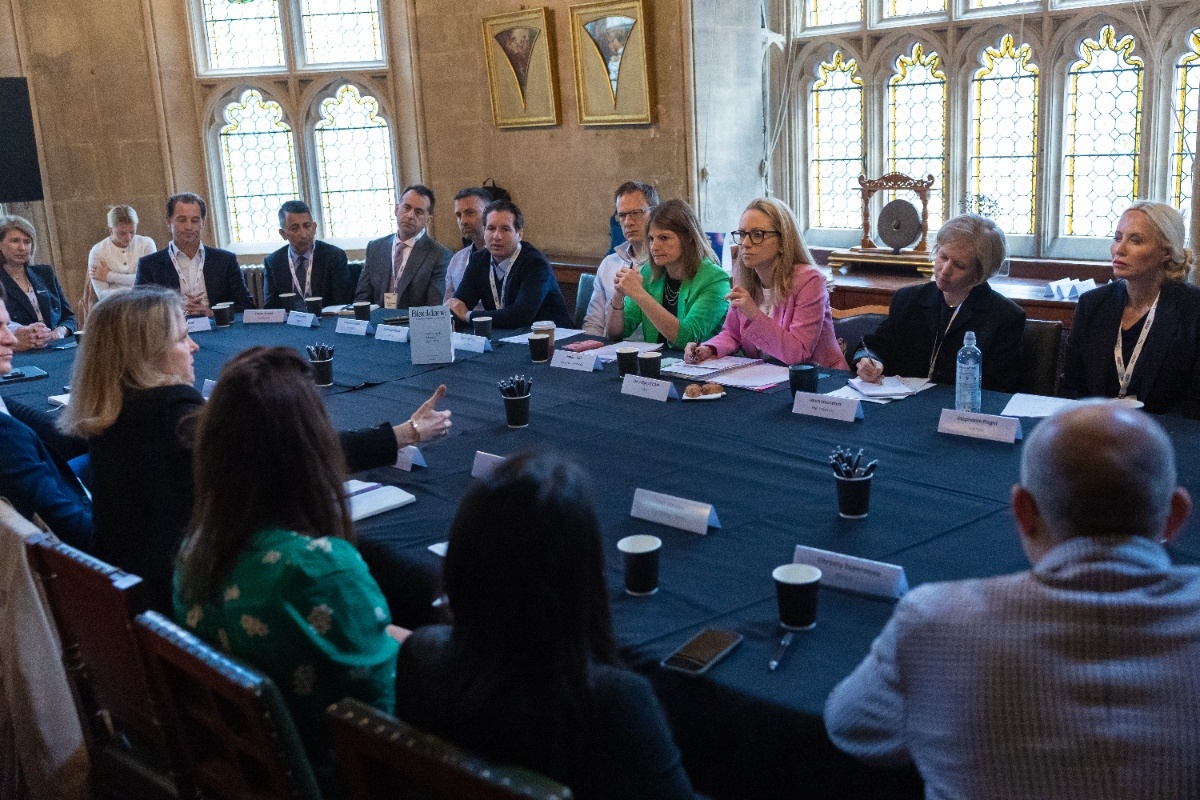 Lucy Rigby meets the Unicorn Council. (Image credit: Treasury on Flickr)
In the aftermath of the meeting, one fintech boss in attendance described the matter as “complex”.
“The Zilch guys – they get it, they articulate it very well,” they added.
But participating in a meeting wasn’t bold enough for Belamant. In what one industry source referenced as the magnitude of Zilch’s “industry pull,” the firm convened its own separate roundtable graced by FCA chief executive Nikhil Rathi.
Those close to the meeting said it focused on jump-starting sluggish regulatory progress to enhance the UK’s global standing in fintech.
One industry source praised the firm as “one of the few industry companies that will say the quiet part out loud,” adding “it helps as a bit of a fintech North Star”.
Growing in the solar system
Zilch secured its $2bn valuation in 2021, just three years after it was founded.
The price tag is dwarfed by industry titans Monzo ($6bn) and Starling ($5.4bn), not to mention, the $75bn juggernaut Revolut.
Yet inside Zilch’s headquarters, observers are noting a culture borrowed from the Revolut playbook of radical accountability and forthright founders. Colleagues described Belamant as a hands-on founder that fostered a “firm but fair” atmosphere.
“It’s very report-orientated – every couple of days, if not every week, people will be reporting,” a former senior staffer adds.
“If it’s not done, you get a grilling pretty much straight away.”
Another alumnus points to a culture of rapid scaling and equally rapid restructuring.
“They get excited and hire quite quickly, but then they realise they don’t need certain people…. They would grow quickly, but then they would be like ‘actually, we need to restructure the company, this is not where the focus needs to be’,” the insider says.
One source called it a “‘hire loads, fire loads’ mentality”.
In the firm’s 2023 accounts, it spent north of £2m on restructuring costs as it undertook an aggressive cost-saving exercise on the path to profitability. Zilch also kicked off a hiring freeze that year as it set out “optimising and automating processes, and reducing the headquarters foot print.”
Read more UK fintech Monovate posts £8.3m loss as Visa and Mastercard partner dumps European arm
Around £8m in cost-savings were recorded for the year.
But hiring has picked up since and its latest account showed a steady eight per cent increase in 2025 to 255.
Escaping the pink shadow
The start-up friction didn’t slow down its bottom line, however. Just last year, Zilch tipped over the £100m revenue mark for the first time after a 93 per cent year-on-year surge, whilst gross merchandise value – the total sales completed using the firm’s services – swelled by three quarters to just shy of £2bn.
In June, Deloitte named the firm the fastest-growing fintech unicorn in Europe – for the second year-running.
This explosive scale has landed heavy financial backing from the likes of Goldman Sachs Asset Management, Deutsche Bank, eBay ventures and the venture capital arm of the Daily Mail.
An identity crisis would emerge in the second half of 2025, however, as Zilch made the decision to shed the skin it had become known for.
In October, the firm drafted in fitness guru Joe Wicks for a keynote speech at the inaugural ‘Zilch Summit’, a glitzy conference showcasing the firm’s latest offering headlined by a Laura Whittemore DJ set.
Wicks, who built his career becoming a symbol for helping people quit a short-term sugar rush, delivered a speech on how to build a brand.
Meanwhile, behind closed doors, Zilch was working on its own pivot from the quick financial fix reputation of buy now, pay later.
The buy now, pay later (BNPL) industry has come under mounting scrutiny over the last 18 months, magnified by the government’s own pledge to crackdown on what it dubbed the “Wild West” sector.
But contrary to many of its peers, Zilch was one of the first BNPL providers to operate outside of the regulatory shadows.
It secured its consumer credit licence from the City watchdog in 2020 and launched its pay-over-six-weeks model to the UK public the same year.
Despite treading a different path, it was unable to shake comparisons and for years found itself positioned as the ‘Klarna rival’ – a view echoed as much internally as it was outside.
One former senior insider describes it as a period of “Klarna tourettes,” where the top brass of Zilch were “always looking to them”.
But since Klarna’s woeful Nasdaq IPO last year, the Swedish startup’s magnetic pull over Zilch has waned. Klarna’s stock has shed over 50 per cent since its September launch and its valuation has been slashed to $7.6bn from $15bn.
“Post the IPO, the view was that if we’re pegging ourselves too closely to Klarna, then we’re not going to achieve the target valuation,” an insider said.
As Zilch saw this sight, the insider says a conclusion was reached: “We can’t continue down this narrative”.
A spokesperson for Zilch said it was “committed” to its mission of “to transform consumer credit” as it continued “expanding into Europe and continuing to scale the business”.
Belamant launched a bid to build this distance in an interview with City AM last year, where he said point-of-sale companies like Klarna were “renting the audience from the merchant”.
The fintech chief took aim at Klarna’s attempt to pivot into a digital banking model.
“We’re a bit confused by some of these other companies’ messaging… we don’t understand exactly what they are or what they think they are.”
But Zilch, too, was figuring out exactly how it was to present itself and used the Wicks and Whitmore-backed summit to re-introduce itself to UK retailers, tech providers and its partners as a payments platform.
The distance from BNPL was cemented with the acquisition of Lithuania-based Fjord Bank for an undisclosed sum at the beginning of the year. The deal – that sources say came with a $38m price tag – handed the fintech a full-fat European banking licence.
Belamant positioned the takeover as “expressly not about banking” and instead laying the foundations to move “at pace with the corporate finance strategy”.
Nonetheless, a renewed focus on the land closer to home was likely to be met with a sigh of relief from City officials, who are viewing Zilch as a top candidate ripe for an IPO on the London Stock Exchange (LSE). Belamant has publicly flirted with the prospect of a London float on and off for five years – though as yet, there is no sign of any paperwork being filled in.
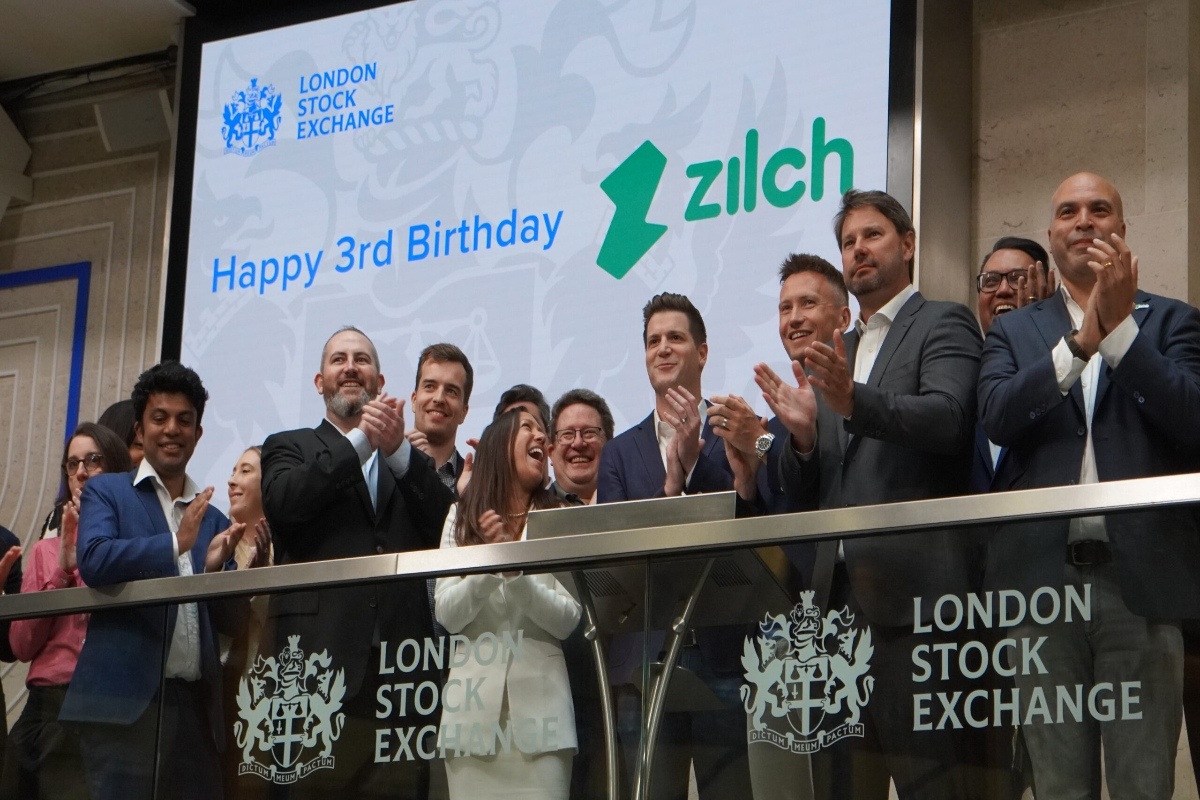 Zilch celebrated its third birthday at the London Stock Exchange. (Image: Zilch)
The City market crusade
A source close to Zilch said they expected to see the firm list as early as the end of 2026 or into 2027, though added the market frenzy ensued by the Iran war had likely dented this.
Treasury and LSE officials have courted Zilch and its peers over the last year with hopes of luring them into a London float, but insiders close to those meetings suggest Belamant has continued to bang the same drum as he has for the last few years.
Back in 2024, he cast doubt on whether London would be the IPO destination of choice as he warned the firm was waiting to see “pension funds investing in high-growth British companies” and “incentives for retail investors to buy and hold British stocks.”
“If this all happens, I’m not sure why you wouldn’t want to list on the LSE… if it doesn’t happen then we have to take the appropriate decision and that might be to go somewhere else,” he said.
Whether Zilch decides to list in London rests on whether Belamant’s power broker status bears fruit. And as anticipation builds for reviving London’s lacklustre IPO market, fintech startups are looking to their industry champion to lead the charge.
One fintech unicorn chief admitted they wouldn’t mind being the first in their industry to jump into the public market… provided there was an orderly queue forming behind them. They named Zilch as the immediate second in line.
Read more This is why the City’s fintech IPO boom hasn’t happened yet
Similarly tagged content: Sections Categories People & Organisations