

Andy Burnham has gone from the “King of the North” to Downing Street in a matter of weeks. But what does this mean for the UK and its relationship with the EU?
 Benjamin Fox



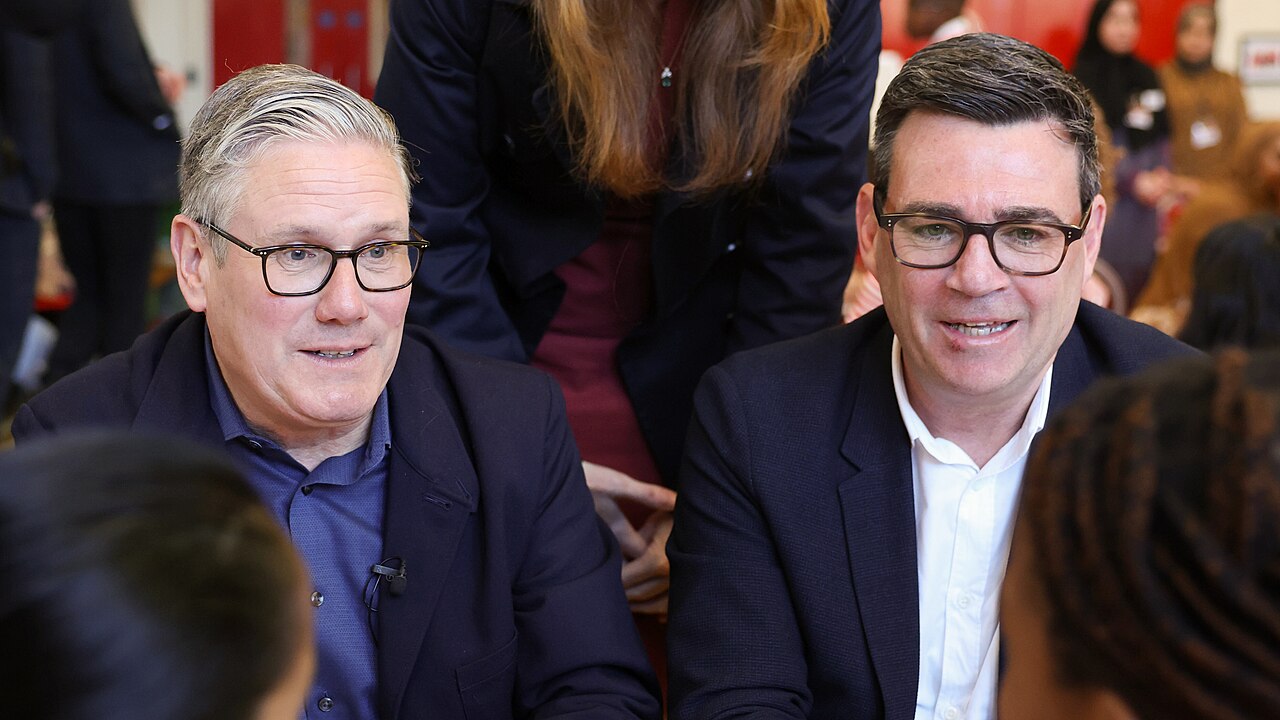
Andy Burnham’s unlikely, but then inevitable rise to become UK prime minister is a classic tale of having the politician’s greatest talent: being in the right place at the right time.
A month ago, Burnham wasn’t even an MP. But he pounced on Keir Starmer’s deeply unpopular leadership style, making his candidacy in a by-election in Makerfield, a town between Manchester and his birthplace Liverpool, a de facto poll on his becoming prime minister. 72 hours after Burnham won by a landslide, Starmer announced his resignation rather than face a leadership challenge he knew he would lose.
Last week, Burnham was nominated as Labour party leader by more than 320 of Labour’s 403 MPs with no other candidates standing against him.
It is a case of third time lucky for the Labour leadership.
Having been culture secretary and then health secretary in the Tony Blair and Gordon Brown governments some 20 years ago. Burnham finished fourth in the leadership poll that followed Brown’s election defeat and resignation in 2010.
Five years later he was initially the favourite to win the leadership, following Labour’s second successive election defeat, only for party membership to swing to the left and elect Jeremy Corbyn.
Though Burnham stayed on as home affairs spokesman in Corbyn’s shadow cabinet, he could easily have faded into obscurity.
King of the North
Instead, he took a gamble and left Westminster in 2017 to become the first mayor of Greater Manchester, second only to the London mayoralty in terms of public profile.
It was a shrewd move on many levels; it meant that Burnham sat out the bitter civil war between Corbynists and his more moderate critics inside Labour; avoided the equally poisonous debate over Brexit in 2016 and, crucially, gave him the platform to position himself to a volatile British public increasingly angry with political elites as an ‘outsider’, earning the sobriquet of ‘King of the North’.
But what does he believe in?
Eyelashes and a T-shirt
The critique from some in Labour and opposition parties is that it’s not clear what Burnham stands for.
“A black T-shirt and eyelashes,” is how Conservative party leader Kemi Badenoch has described him, a reference to Burnham’s decision as mayor to ditch the professional politicians’ suit-and-tie uniform.
Unlike most politicians, he is very affable, comfortable in his own skin, and makes few enemies.
It is his personal popularity that has made him so attractive to Labour lawmakers panicked by more than 18 months of dismal opinion polls that consistently put Labour behind Nigel Farage’s rightwing Reform party. They see him as their best chance of keeping their jobs.
Like the beer-swilling and chain-smoking Farage, who is also facing a by-election over the summer, it’s easy to imagine having a beer with Burnham.
Polling over the past fortnight suggests that a Burnham-led Labour would take a narrow lead over Reform.
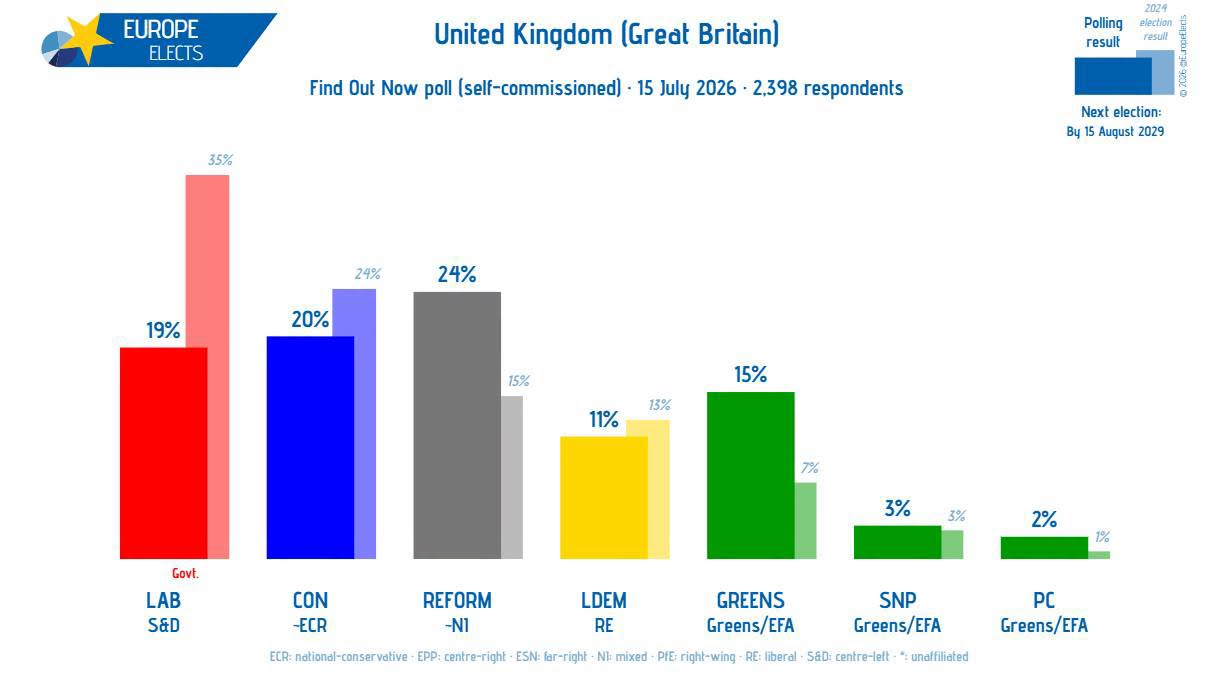 Labour would take a narrow lead over Reform. Source: Europe Elects
Reuniting the Blairite band
Who Burnham picks for the biggest UK government jobs, particularly chancellor and foreign secretary, will go a long way towards defining his premiership.
His new chief of staff, James Purnell, was an uber–Blairite who quit Brown’s cabinet in 2008, and then politics two years later, taking a series of executive jobs in the arts and at the BBC.
Also doing the rounds are rumours that David Miliband, who narrowly lost the Labour leadership to his brother Ed in 2010, and subsequently quit politics to lead the International Rescue Committee in New York, is being readied to return as foreign secretary.
Ed Miliband, meanwhile, has been touted as a possible chancellor – essentially the UK’s finance minister – but will almost certainly be offered a key ministry.
The return of David Miliband, who was offered and turned down the chance to be the EU’s first high representative on foreign affairs in 2009, would encourage EU officials that the UK wants to cleave itself ever closer to the bloc.
Burnham himself has rarely shown interest in matters beyond UK domestic policy.
Though he used his leadership bids in 2010 and 2015 to emerge as arguably Labour’s most innovative thinker on tax policy – he called for the replacement of stamp duty with a land value tax, and has since called for the UK to move away from taxation on income towards more wealth and asset levies – he has never held a portfolio covering foreign policy.
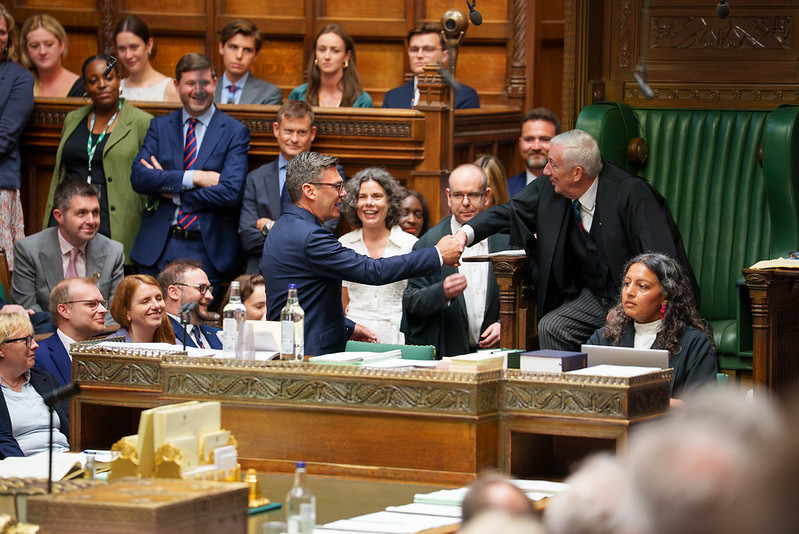 Burnham himself has rarely shown interest in matters beyond UK domestic policy (Source: House of Commons)
Remain to Reset
A ‘Remainer’ in 2016 and after the referendum, he was – unlike Starmer – not a vocal supporter of a second referendum ahead of the 2019 election which saw Boris Johnson’s Conservative Party sweep to a landslide win.
After telling an interview that he wanted to see the UK rejoin the EU in his lifetime, several months before launching his campaign to replace Starmer, Burnham was a lot more circumspect when asked in June about the prospects of reversing Brexit.
“My view is that Brexit has been damaging, but I also believe the last thing we should do right now is re-run those arguments. Britain will be stuck in a permanent rut if we’re just constantly arguing and people are pulling away from each other,” he said.

His first task vis a vis Brussels will be building on Starmer’s modest ‘reset’ of EU-UK relations starting with a summit that had been scheduled for 22 July but was postponed by EU leaders hours after Starmer announced his resignation.
Defence co-operation is likely to be an early priority, particularly obtaining UK access to the EU’s €800bn ‘ReArm’ defence procurement programme. Talks between EU and UK officials on this collapsed last year over money; specifically the EU’s demand – largely at the behest of France – for a UK contribution of between €4bn and €6bn.
However, one of Starmer’s final acts as prime minister was to agree terms with the EU on UK’s participation under the €90bn Ukraine Support Loan, which will allow UK defence companies to bid for procurement contracts funded by the loan.
Although the details, including how much the UK will pay Brussels, have been left for later, a joint EU-UK statement said that the fee will be “proportionate” to the value of the contracts UK firms win.
Even so, that could establish a precedent from which to agree UK firms’ accessing ‘ReArm’.
On paper, Burnham inherits the political Earth: a 170 seat majority and no need for an election for three years.
But he is also the UK’s seventh prime minister since the June 2016 Brexit referendum and popularity is often fleeting in the hothouse British climate.