Our favourite music, clothes and books used to be markers of individuality – but the algorithm has made us all sheep. Meet the style rebels fighting backWhat are you into? What floats your boat? What music, films, clothes, art, books – anything, really – do you actually like? Do you
 Rachel Aroesti



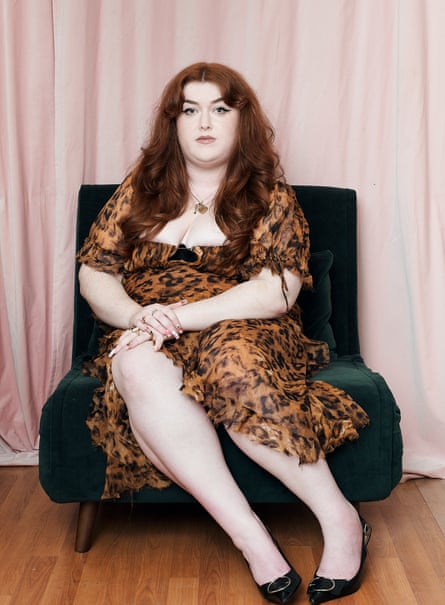
What are you into? What floats your boat? What music, films, clothes, art, books – anything, really – do you actually like? Do you find these questions more difficult to answer than you would have done 10 years ago? How about 20? You do? You’re not alone.
It has become impossible to ignore: personal taste has been seriously debased – if not completely destroyed – by technological advancement. We know the internet has radically altered the way we form our opinions and beliefs. Now we’re waking up to another sobering truth: it has wrecked our capacity to form our own preferences.
It used to go something like this. We experienced the outside world – including arts, culture and fashion – via a combination of community, geography, mass and specialist media, and serendipitous accidents. Exposed to a range of styles, genres and ideas, we would decide what appealed to us, and then attempt (with varying degrees of success) to consume and engage with those things.
This is no longer the case. We increasingly encounter most aspects of the world through a single aperture: streaming and social media platforms. Or, more specifically, the algorithmic feeds of streaming and social media platforms, plus algorithmically optimised search engines and e-commerce sites, from Amazon to Vinted. In many cases, these are programmed to show each individual specific content based on data gathered from their own activities and those of other users – content that will ideally keep them on the platform for as long as possible. On Spotify, that can mean serving customers songs with superficial similarities to the tracks they didn’t skip last time; on Instagram, it might result in multiple appearances from an influencer whose videos have previously held our attention for a couple of minutes. We now experience reality via a limitless stream of content tailored around previous preferences.
It’s a bewildering paradox: these platforms made personalisation a major part of their business model, then synthesised, commodified and automated individual taste into oblivion. We no longer choose what we want to consume; we take what we’re given. And we are being given it in such overwhelming quantities that we no longer have the mental capacity to properly digest and assess what we have encountered.
It’s not merely the medium; it’s the message, too. In his 2024 book Filterworld, Kyle Chayka explains that because content that is “accessible” and “ambient” is most conducive to uninterrupted scrolling, “the least ambiguous, least disruptive and perhaps least meaningful pieces of culture are promoted the most” by algorithms.
This is not a new phenomenon, but years of living like this have started to take their toll. I began noticing that it was affecting me at some point last year. Scrolling through reams of overtly nostalgic clothes, skipping through playlists of forgettably inoffensive pop and beholding endless promotional campaigns for films and TV shows indebted to existing IP, I felt zero enthusiasm for any of it. Consumer trends – from childlike wall art to splatter ceramics, mesh ballet flats to bandanas, Dubai chocolate to putting cottage cheese in everything – seemed to become inescapable overnight, buoyed by the algorithm and reaching tedious saturation point before I had even had the chance to decide what I thought of them (that said, I did make time to reconfirm my longstanding conviction that cottage cheese tastes like sick). For the first time since childhood, I had the disconcerting sensation of having no clue what it was I really liked.
Perhaps I’m spending too much time on my phone. Perhaps I’m just getting old. To find out, I decide to step back in time and into the real world: to Portobello Road market in west London, to be precise – the place I spent hours and hours honing my own personal taste in the pre-algorithmic age (the mid-to-late 2000s). Alongside my unreasonably stylish school friend Lara, I would hunt for unusual secondhand things nobody else was wearing but that could just about pass for cool in a mainstream way. It was a creative challenge that I generally failed at, and my main hobby for most of my teenage years.
I haven’t been back in a decade, so I’m heartened to discover it all completely unchanged: stalls of antique cameras and chintzy royal ceramics, of faded band T-shirts and cricket jumpers and mountains of tangled silver jewellery, plus a fair few rails of the kind of peculiar vintage items that it turns out still thrill me. It seems like a world immune to the algorithm-abetted taste crisis – until I start talking to stallholders and shoppers, all of whom describe a herd mentality among their customers and peers.
Over the eight years she has had her vintage clothing business, Kerry has noticed a significant uptick in younger generations “wanting to fit in – they want to look like they belong”. It’s a concept she finds strange: she started vintage shopping as a teenager when she “couldn’t bear the thought of stepping out and looking like someone else”. Stephanie, 37, is visiting from California and searching for 1930s slip dresses. She sees her friends at home “wearing the exact same outfit – it’s very interesting to me because it takes away that personal aspect of your dressing”. Even if you do want to plough your own furrow, algorithm-sating fashion fads confuse matters. Helena, a 25-year-old stylist, is bored with the endless parade of microtrends. “They come around all the time and it’s always something that’s been done before. I hate when I see something that’s my vibe being turned into a microtrend – I’m, like, have I been influenced or is this actually me?”
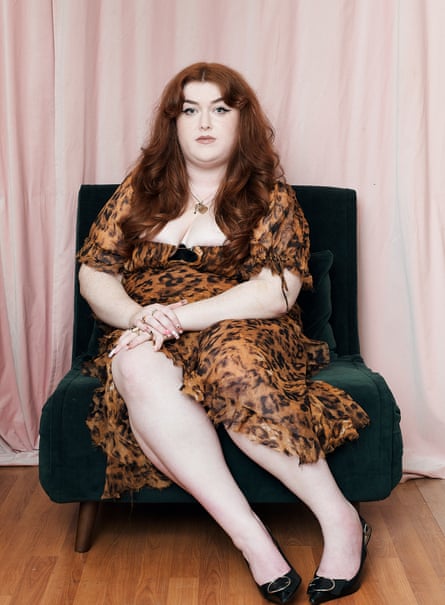
Ione Gamble has spent much of her career thinking about taste. In 2014, she founded Polyester, an alternative fashion and culture publication that uses the John Waters quote “Have faith in your own bad taste” as its tagline. Nowadays, “we’re always being told what to like and what not to like rather than being able to seek it out for ourselves”, she says. “It’s making us all feel powerless – we don’t have the power to train our own taste because there’s not the room in the day any more.” Recently, Gamble invited a selection of writers to muse on the subject for an essay collection titled The Polyester Book of (Bad) Taste. In her chapter, the novelist Nicola Dinan writes about feeling like “a driverless car” when it comes to her cultural consumption in today’s landscape. I can’t think of a better analogy.
This sorry state of affairs has been broadly tolerated. However, this year has provided us with two pop cultural moments that neatly illustrate that the mood could be souring.
First, there’s the ascension of Carolyn Bessette Kennedy – who died alongside her husband, John F Kennedy Jr, in a 1999 plane crash – to 2026’s number one fashion icon. The New Yorker’s neutral, distinctively pared-back, turn-of-the-millennium style has long served as a fount of inspiration online, but when the biopic TV series Love Story aired in February, it catapulted her outfits to ubiquity. Cue blanket media coverage on how to imitate her dress sense in the most literal way imaginable: Marks & Spencer promoted its “90s edit” by dressing a Bessette Kennedy lookalike in small sunglasses and monochrome outfits to recreate paparazzi images. Vogue even provided a checklist: boot-cut jeans, tortoiseshell headband, camel skirt … It reminded me of being 14 and scouring the rails of Topshop for something I could imagine Kate Moss wearing. Except nowadays no scouring or imagination is required; the e-commerce algorithms will sort you out in milliseconds.
“CBK-core” is one of a catalogue of intense crazes fashion revolves around while maintaining a baseline of nondisruptive monotony (see also: the relentless churn of TikTok aesthetics – tomato girl, balletcore, coastal grandmother – that codify taste in a juvenile but also very risk-averse way). Yet the fact this particular trend had an actual person at its centre highlights how far into adolescent copy catting we have drifted – something Bessette Kennedy’s friend Carole Radziwill has pointed out. “She did what felt natural to her,” she told a podcast, claiming the appropriation of her style was “irritating […] The takeaway is not to mimic her style. The takeaway is to do and wear what feels most authentic to you.”
But working out what feels authentic to us has become very difficult since we subcontracted out those instincts – and left them wide open to corporate manipulation.

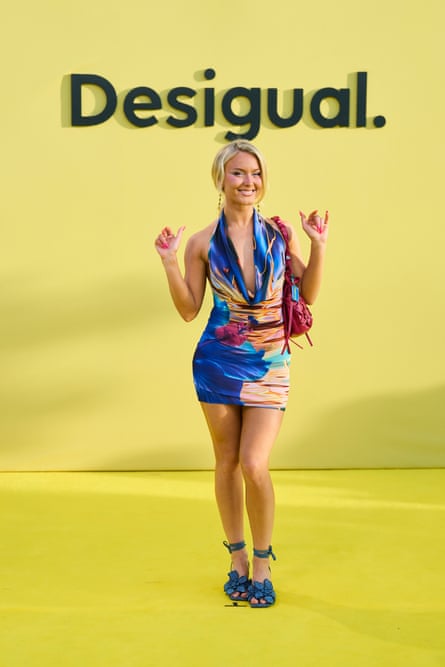
Last year, a young guitar band began gaining a lot of attention on both sides of the Atlantic. Yet the hype around New York outfit Geese was so extreme and pervasive that some people began to suspect they were a music industry “plant”. Not without justification, it turned out. In March, it was revealed that Geese (alongside acts including Alex Warren, Sombr and Zara Larsson) had made use of the marketing services of a firm called Chaotic Good Projects, whose founders half-jokingly claim to have studied TikTok algorithms at “collegiate level”. To help tracks go viral, Chaotic Good runs a huge number of social media accounts, which post content soundtracked by its clients’ songs in order to synthesise virality – a tactic it calls “trend simulation”.
Of course, cultivated excitement is one of the bedrocks of the music industry; acts don’t usually become popular through a groundswell of organic sentiment. Yet until a couple of months ago, many of us were under the impression that online popularity was at least partly a reflection of genuine interest and enjoyment. Wrong. In May, the New York magazine writer Lane Brown explained the art of “clipping” – stealth advertising campaigns that involve paying members of the public to flood social media with content about a specific musician, say, or TV show. This can trick the algorithm into detecting widespread enthusiasm and therefore promoting the product further (among many others, the writer found evidence for campaigns related to the singer-songwriter Noah Kahan and Netflix thriller The Night Agent). One person in the industry estimated that “90% of what you see on the internet is advertising in disguise”.
The reason Geese’s use of algorithm-gaming marketing garnered so much interest was – I suspect – because for many people becoming a fan of the band had proven they were still able to feel genuine zeal for sophisticated, slightly subversive new music. By which I mean they might have felt tricked into believing they still had good taste.
This is probably a good moment to define what taste is and explain why it matters. On one level, it is extremely simple: it’s what you like and what you don’t. Taste can be superficial – in fact, it’s often a joyfully frivolous act (preferring one jumper to another, for example) – but it is also right at the core of our identities. Taste isn’t just your takeaway order, the comedy that tickles you or what you call your children; in her seminal 1964 essay Notes on Camp, Susan Sontag sets out taste’s all-encompassing nature. “There’s taste in people, visual taste, taste in emotion […] Intelligence, as well, is really a kind of taste – a taste in ideas.” It is crucial for making art, not just consuming it. Taste, Sontag writes, “governs every free – as opposed to rote – human response”.
Some of these responses will be pre-programmed. Taste is shaped by class and background. There is also a strong social element: buying a specific model of car or going to a particular gig is often nothing more than a way of signifying that you belong – or want to belong – to a certain group. This was the argument put forward by the French sociologist Pierre Bourdieu in his 1979 work Distinction: A Social Critique of the Judgement of Taste – a theory that now seems so obvious it’s barely worth stating. (For an excellent visualisation of interior design taste in the British class system, see Grayson Perry’s 2012 tapestry series The Vanity of Small Differences.)
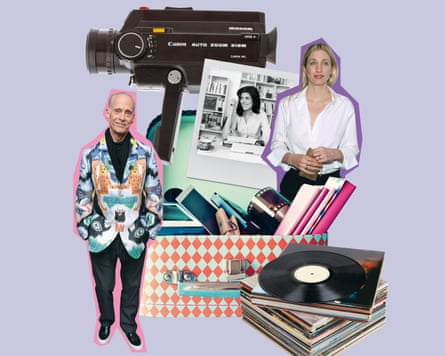
To flout or subvert stylistic codes you have to be fluent in them – and the higher up the class structure you sit, the more latitude you have to do so. Think of the lord of the manor free to indulge his sartorial eccentricities versus uniformed blue-collar workers. In theory, though, anyone can break the rules; the most experimental dressing in the 20th century came from grassroots subcultures such as punk and the New Romantics.
In an ideal world, personal taste is a privilege and a pleasure we should all have – it is the closest thing most of us get to self-expression or a creative act. At best, we can use it to consolidate our identities. It involves commitment and consistency (the opposite to all those microtrends) and some element of risk: knowing the things you like won’t appeal to everyone. “Taste, when it’s successful, is a tool to make you feel more like yourself,” says Gamble. If you dismiss taste as trivial, or see it as purely imitative, you are dismissing what it is to be a person.
And yet, perplexingly, one of the ways the internet destroyed personal taste was by prioritising it above anything else. By making taste – at least the most passive yet performative version of it – our defining quality, streaming and social media platforms boiled humanity down to data-producing nodes of consumption. Nathalie Olah’s book Bad Taste examines the politics of taste in the 2010s. In it, she writes about how middlebrow millennial “good” taste – muted colours, expensive candles, pot plants, coffee-shop coffees – became an online performance of capability and authority amid post-2008 financial precarity. We had little economic capital, but we had the supposed cultural capital of curating our lives, tastefully, on social media. It was a neoliberal con – and proof that being reduced purely to our tastes is just as dehumanising as having none.
On that front, it’s bad news: tech bros are the architects of our destinies and they have big taste‑based plans for humanity. In February, OpenAI’s president, Greg Brockman, posted on X that “taste is a new core skill”. He was echoing the sentiments of his former colleague Krithika Shankarraman, who last year told an interviewer that “taste is going to become a distinguishing factor in the age of AI”. Taste, the thinking goes, is the one human quality artificial intelligence will not be able to replicate. The concept of personal taste being a “moat” – a tech‑world term meaning a unique structural advantage that protects a company’s profitability – has taken root across the board.
In fact, Silicon Valley’s sudden interest in taste goes way beyond such pronouncements. Tech companies are increasingly attempting to align themselves with current ideas of good taste: the spy tech firm Palantir released a blue chore jacket; the AI company Anthropic produced caps embroidered with the word “thinking” (in all lowercase); while OpenAI’s merch includes football shirts and hipster-coded graphic hoodies. It is also muscling in on old-school gatekeepers. Exhibit A: Jeff Bezos’s involvement in May’s Met Gala – high fashion’s biggest night of the year – which saw the Amazon boss and his wife pay a reported $10m to serve as “honorary chairs” (and therefore VIP guests). Meta CEO Mark Zuckerberg was also present, fresh from sitting in the front row at Prada’s Milan show in February.
Why is this happening? In a March column for the New Yorker, Chayka referred to this as “taste-washing” – an attempt to make our AI-dominated future more palatable. “To me, Silicon Valley’s use of taste is just PR or a marketing effort that gives them a veneer of humanity to hide automation behind,” he tells me.
It’s no coincidence that this obsession with taste is happening at a time when AI content is dominating our feeds. It is estimated that about 71% of the images shared online are now AI-generated, as are more than a third of podcasts, while last year Spotify removed 75m AI tracks. While such content may seem novel, it will only take us further down the same path. “I see generative AI as a successor to algorithmic sameness,” says Chayka. “Algorithms encouraged humans to produce generic content, while AI just generates the generic content right away. Now we call that kind of generic content ‘slop’. So the patterns are still there, and we often are consuming AI content through the same algorithmic feeds. It remains a vicious cycle.”
That driverless car we’re currently in? The wheels are falling off and it’s heading straight for the nearest AI swamp. Algorithms are dropping the pretence of being digital tastemakers and now often present us with content that appeals insidiously to our “primal instincts”, says Gamble. AI phenomena such as Fruit Love Island (the reality show fictionalised, with fruit) “is really colourful. It uses all the specific plot devices to hook you in. It’s basically content that’s tailored for eyeballs, not even enjoyment.” In The End of Taste, the final chapter of her book, Gamble writes that “we’re entering a new era in which good and bad taste is no longer a barometer worth thinking about”.
But perhaps there’s an off-ramp for this nightmare. Carmen Vicente, a social media strategist in the tech world who writes a newsletter about the internet titled Scroll Sick, thinks the motivation “ultimately underpinning all of this taste-washing is fear – fear of losing power”. Tech bosses are trying to up their cultural capital and convince humans there is still meaning online because they can see a more unwelcome trend on the horizon.
To reclaim our personal tastes (and cultural standards) we must abandon algorithm-driven platforms. And we kind of already are: the big worry for tech bosses is that social media use is only going in one direction. According to the Financial Times, time spent on social media peaked in 2022; a recent Ofcom survey showed a 12% drop in people posting on platforms in the past year. There are a few reasons for this, but one of them is algorithmic fatigue. “There’s plenty of backlash to algorithmic feeds,” says Chayka. “The active user base of Facebook has begun declining and I