From harvests dampened by El Niño to wage and tax rises, getting coffee beans from crop to cup costs more than everDrinkers across the UK were shocked when a pint in some London bars hit £10, and now a cup of coffee is facing a similar inflationary rate. Some baristas
 Helena Horton



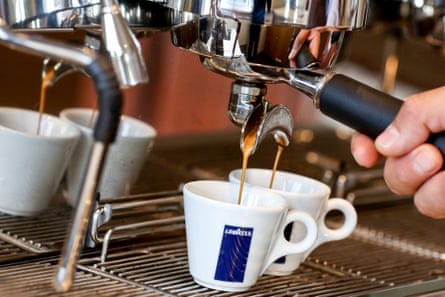
Drinkers across the UK were shocked when a pint in some London bars hit £10, and now a cup of coffee is facing a similar inflationary rate. Some baristas are now charging £6.50 for a flat white.
Higher energy bills, inflated by the war in the Middle East, as well as government policies which have increased tax and wages, are filtering through into coffee prices, experts said.
The price is also being raised by volatile weather in coffee growing regions, with a “super El Niño”, a weather phenomenon which causes extreme rainfall and drought, forecast for the end of the year. There was heavy rain in Brazil throughout June already, which will dampen harvests and cause prices to rise. In the week ending 28 June, rainfall was nearly 2,000% higher than the historical norm. Waterlogged fields precluded machinery from entering, and the rain severely worsened bean quality, delaying harvests to 52%.
In Vietnam, the largest producer of robusta beans, farmers are fighting early drought, and fertiliser and fuel prices in the country have jumped by 30% year-on-year, and labour costs by 33%.
The Italian coffee company Lavazza warned that the sector faced “exceptional volatility”, with arabica bean prices increasing by 230% since 2021 and robusta up 325% over the same period.
Giuseppe Lavazza, the company’s chair, said: “Volatility is the new constant. This has been a year of high turbulence and pressure, not just in the coffee market but in the general economy. The coffee market now shows fundamental changes compared with the past. We are living in an environment we don’t know very well.”
He said at least two years of good harvests from Brazil and Vietnam would be needed to calm the market. The weather conditions make this unlikely.
The conditions, he said, have created “the perfect environment for speculators to step in to move the price to the record levels we’ve seen”.
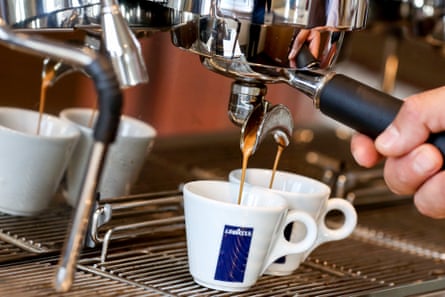
Lavazza has had to pass costs on to consumers. A flat white at Lavazza’s main cafe near Regent Street in London has risen from £4 to £4.40 to take away, and from £5.50 to £6.50 to drink in.
Coffees at other high street chains are also becoming expensive. A flat white is £5.20 to take away in a central London Starbucks, and £4.70 in Costa.
Susannah Streeter, a chief investment strategist at Wealth Club, said that this trend was likely to continue.
“Arabica coffee prices have been highly volatile over the past two years, as extreme weather has disrupted supplies and fuelled sharp swings in the market,” she said. “With coffee prices still prone to volatility and operating costs remaining elevated, many companies are building a buffer into their pricing to protect already tight margins.”
Lavazza said sales of its coffee remained strong despite the higher prices.
Streeter said: “For now, many customers appear willing to absorb higher prices. But there are limits to how much consumers will pay if the cost of a daily coffee continues to rise. While coffee enthusiasts may be prepared to pay more for a premium experience, businesses could find it increasingly difficult to sustain casual walk-in trade as prices climb.”

The founder of the artisan coffee chain Grind, David Abrahamovitch, has kept his flat white at £4.10, but said this only yielded an 18p profit. He said that for a £4.10 flat white, £1.60 was spent in staff costs, 55p for the mugs and paper cups, 96p for core operating costs, 68p on VAT, and various other costs added another 13p. He said the price of green coffee beans, which have yet to be roasted, had more than doubled since 2024.
Paul Rooke, the executive director of the British Coffee Association, said: “We’ve seen significant volatility in global coffee markets over the past few years, and that looks set to remain a feature of the sector for the foreseeable future.
“The price consumers pay is also influenced by domestic factors facing all businesses, such as rising energy, labour, and regulatory compliance costs. Despite these challenges, demand for coffee remains strong, supported by continued innovation across the sector, especially in the growing ready-to-drink market.”