Over decade in the making, the new EU asylum rules are finally kicking into force on Friday. But EU member states delays are posing challenges amid critics who warn of rights abuses when it comes people seeking international protection.
 Nikolaj Nielsen



New EU asylum rules come into force on Friday (12 June), spanning 10 legislative files that have taken years to develop, as far-right forces gain momentum amid a wider backlash against migration.
The European Commission has framed the package as a major policy achievement, despite uneven implementation across member states and mounting concerns that detention-like facilities could proliferate along the EU’s external borders.
EU states have had two years to prepare for the new rules, first adopted in June 2024, when officials insisted they were ready to move ahead with the reforms.
At the time, then EU migration commissioner Ylva Johansson emphasised the package’s interdependence. “They all have to be implemented because if you take out one, it will fall down,” she warned on 12 June 2024.
Two days later, a dozen member states published a letter demanding “outside the box” ideas on migration, underscoring the little faith they had in new laws.
Johansson’s warnings have since been muted by her successor, Magnus Brunner, who struck a more reassuring tone. He told European lawmakers only last week that the “European house is in order,” even as he admitted that reforms still require “significant work”.
The apparent discrepancy between past statements and present-day reality points to an EU institution that has itself ignored widespread illegal pushbacks at the external borders, side-stepped Libyan coast guard violence, while cutting cash for migrant deals with autocrats in Tunisia, Egypt, Mauritania and now possibly even with the Taliban.

For the reform package to succeed, it will most likely depend on a system that prevents people from arriving and continues to push people back with impunity by a commission that has refused to penalise EU states for the illegal practice, with Hungary being the sole exception.
“The pact will ultimately be evaluated not by the legislation adopted but by the results on the ground,” conceded Nicholas Ioannides, deputy migration minister for Cyprus, which currently holds the EU presidency.
Those results are hinged and measured on numbers with Brunner citing a 55 decrease of arrivals in the last two years on some routes. Asylum applications have also dropped.

The asylum and migration pact, and by wider extension the soon-to-be ratified deportation regulation, has been described by the commission as a house with three floors.
The ground floor is external borders with mandatory screening at all borders of all arrivals.
The second is solidarity, whereby EU states help each other in case of need. And the final floor or roof is convincing countries outside the EU to stop arrivals and take back their nationals.
A house of cards is perhaps a more apt description, given the ground floor of this metaphor is far from being constructed, and is by some extensions, the most important.
Ground Floor – what is supposed to happen?
In broad strokes, authorities will have seven days to screen a person arriving at the external border, including those rescued at sea. Identity, health and security checks will be carried out.
Although physically present on the territory of an EU country, the person is still not considered to have legally entered the country through a concept known as the legal fiction of non-entry.
The checks include biometric data collection entered into the Eurodac, an EU-wide database used to help prevent people from claiming multiple asylum claims and moving to other EU states.
Once those checks are done, the person is either deported or has their claim for international protection evaluated.
Nationalities that typically don’t get asylum are quickly processed in a 12-week procedure, including appeals, whereby they will be detained. Children aged 13 years old and older are not excluded.
Mass arrivals could also trigger a rule allowing EU states to deny people the right to apply for asylum.
People considered from countries already deemed “safe” will also not be spared and EU states will need to have the capacity to process at least 30,000 people, spread among them using a complex formula.
The list of “safe” countries includes Bangladesh, Colombia, Egypt, India, Kosovo, Morocco and Tunisia, alongside EU candidate countries.
The more irregular entries a member state has, the greater its share of having to fast-track people at the border and send them home.
Others will be processed in a normal procedure lasting up to six months, including possible detention.
People ordered to leave may end up being shipped abroad and kept in facilities in a country outside Europe if their home states refuse to accept them back.
Kenya, Senegal, Uganda, and Uzbekistan are among those previously reported as possible host countries of these facilities.
And a new entry-exit system is also promising to weed out visa overstayers.
Ground Floor – what is the problem?
Experts have for months been warning that EU states are far from ready, including the head of the EU’s asylum agency. More recently, Homelands Advisory, a UK-based consultancy tracking the implementation of the reforms, says the ground floor is peppered with holes.
“The ground floor needs the most practical work: screening, border procedures, reception capacity, Eurodac readiness, staffing, case-management systems and safeguards at the external border,” said Loksan Harley, its executive director.
While some EU state facilities, staff and procedures are close to readiness, others are relying on interim arrangements or still need to finalise locations, facilities, procurement and staffing, he said.
“The pact depends heavily on rapid registration, biometric checks, data exchange and case-routing. If those systems are not working smoothly from day one, the whole chain from screening to responsibility allocation and return becomes weaker,” he added.
Harley says the reforms will stand or fall on whether member states can process people quickly and lawfully at the border without creating bottlenecks, unlawful detention, poor-quality decisions or onward movement.
“That is where the system is most exposed,” he added.
Concerns have also mounted that the fast-track procedure along the external borders may act as an incentive for pushbacks.
Even getting legal help during the screening process appears unlikely, says Diana Radoslavova, a lawyer at the Centre for Legal Advice Voice in Bulgaria.
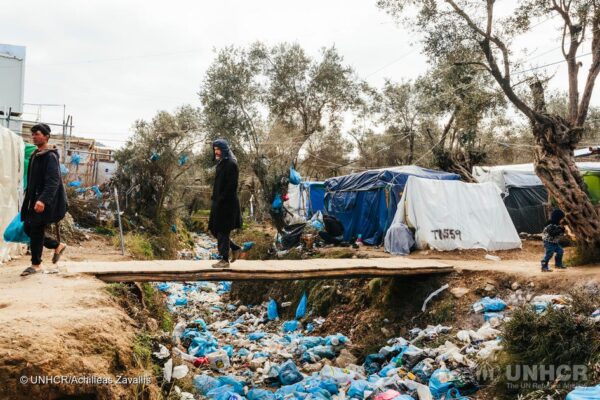
Similar facilities to screen people already exist in Greece, seen as a precursor to what might be expected in other EU states.
Christiana Mourouzi, who works at Doctors Without Borders in Greece, says faster procedures mean no guarantee of basic rights.
“When you have survivors of torture or survivors of violence, two weeks is not enough for that person to feel safe and disclose what has happened,” she said, adding that people will end up imprisoned for having come to Europe to seek protection.
Similar views were echoed by Jean-Nicolas Beuze, who heads the UN refugee agency in Brussels. He warned that people may end up being de facto detained.
“When you arrive in a country, except if you are security risk, you should not be detained, even if there is a risk for you to abscond and disappear,” he said.
First Floor – what is supposed to happen?