


Recep Tayyip Erdoğan’s pivot back toward Nato has brought drones, missiles and Black Sea leverage to the West. For this price, Europe is quietly tolerating rigged party leaderships and pre‑summit mass arrests at home.
 Tomáš Lindner



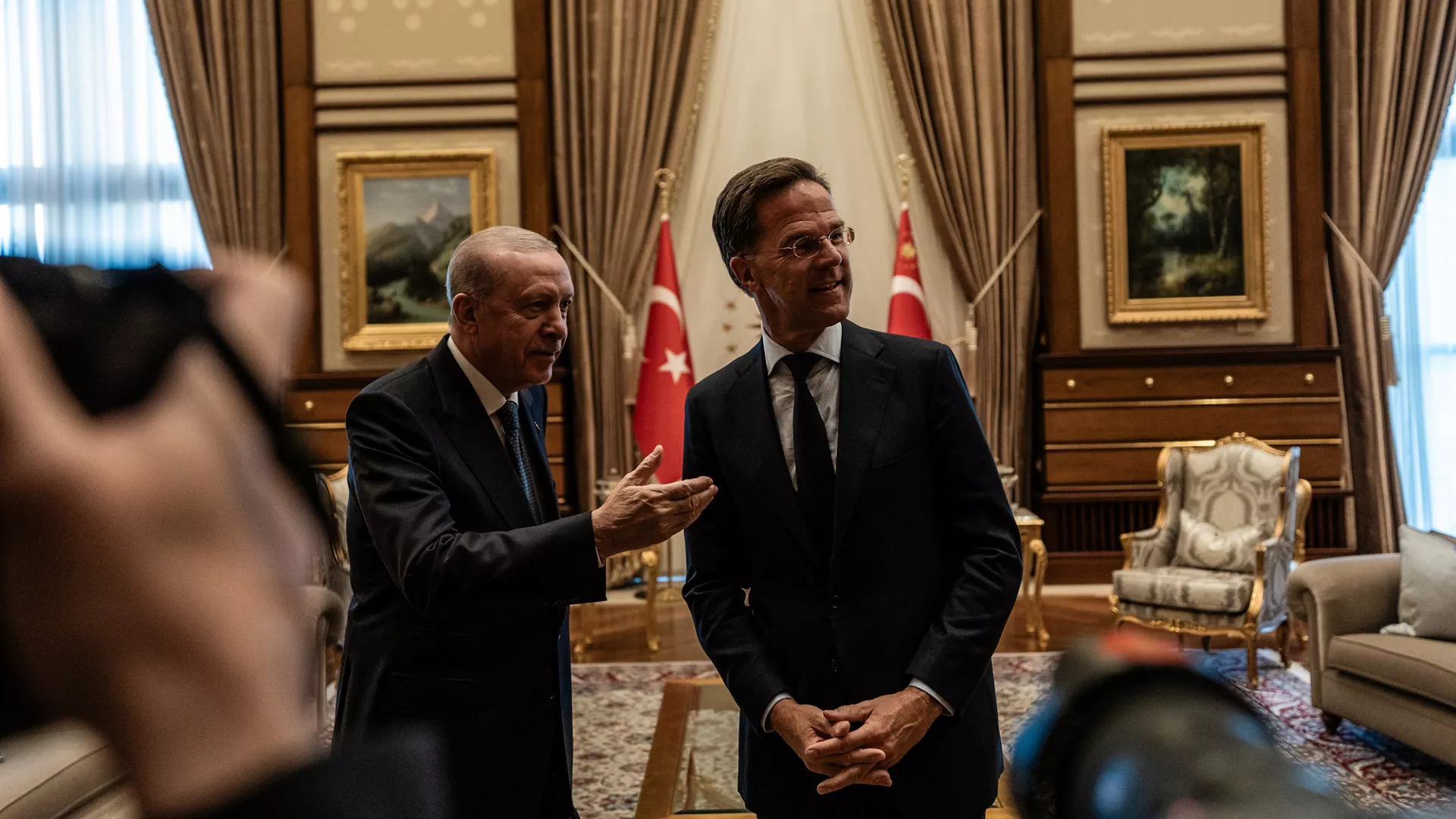
Turkey is becoming ever more important in security terms — and Europe is thus overlooking the ever-increasing repression of the local opposition.
Many times it seemed that the alliance between the West and Turkey was hanging by a thread – and could snap at any moment. When, 10 years ago, Turkish president Recep Tayyip Erdoğan sought the chance to host one of the Nato summits in Istanbul, many European allies – including Germany, France, and Denmark – opposed the idea because of his undemocratic behaviour.
Such caution is now passé: Europeans no longer resist Turkey’s invitation, and the Nato meeting in Ankara began on Tuesday (7 July).
And that is a good thing – even though Erdoğan is still in power.
Many European citizens have spent the past decade wishing we would distance ourselves from Turkey as much as possible. Because of the arrest of opposition figures and all manner of violations of democratic rules, because of military invasions against the Kurdish self-administration in northern Syria, because of a careless attitude towards the jihadists who travelled through Turkey to join the so‑called Islamic State.
Yet such a divorce between allies would always have been short‑sighted and would have represented a strategic triumph for Russia on the geopolitical chessboard. Nato would have lost strong Turkish security forces, as well as influence in the Black Sea and the eastern Mediterranean.
In Nato – but independently
Let us briefly recall the turbulence of recent years.
Exactly 10 years ago, an unsuccessful military coup against Erdoğan took place on the Bosporus. He barely escaped and suspected the US secret services of supporting the putschists.

By contrast, Russian dictator Vladimir Putin was the first to call the Turkish ruler in his hour of need. Turkey then bought Russian anti‑aircraft defence systems that were incompatible with Nato systems and, as punishment, lost access to the most modern American F‑35 fighter jets.
Putin and Erdoğan subsequently met repeatedly, found common ground, and, among other things, strengthened their energy partnership.
Fears of the Nato alliance breaking apart were nevertheless exaggerated. In part, Turkey’s approach was also a reaction to an issue whose sensitivity we underestimated from a European perspective.
At the same time, the US armed Kurdish militias that were fighting in Syria against the so‑called Islamic State. Yet a large part of the Turkish public – whether rightly or excessively, let us leave that aside – considered these militias to be the number one security threat.